

- All articles
Environmental Impact Assessment (EIA): Meaning, Process, and Case Studies
By Ketul
Updated 07 Feb, 2026
10 min read
Contents
Main Menu
Balancing economic development with environmental protection is one of the defining policy challenges of our time. Environmental Impact Assessment (EIA) is a key governance tool designed to address this tension by evaluating the potential environmental and social consequences of a project before irreversible decisions are made.
Rather than reacting to environmental damage after it occurs, EIA enables anticipatory planning—identifying risks to ecosystems, water resources, air quality, and local communities, and integrating mitigation measures at the design stage itself.
As infrastructure expansion, energy transition projects, and urban growth accelerate across India, EIA has become central to ensuring that development pathways remain environmentally responsible and socially equitable.
This blog traces the evolution of EIA in India, explains how the process works in practice, examines why it matters, and explores real-world case studies that highlight both its potential and its limitations.
Environmental Impact Assessment (EIA) in India
The origins of EIA in India can be traced back to the 1970s, when large infrastructure and industrial projects began raising concerns about environmental degradation and displacement.
The Bhopal gas tragedy in 1984 marked a turning point, exposing the consequences of inadequate environmental oversight and leading to the enactment of the Environment (Protection) Act, 1986.
The first official EIA Notification was introduced in 1994, making environmental clearance mandatory for specific categories of projects.
This framework was significantly strengthened in 2006 through the revised EIA Notification, which introduced project categorisation, formalised public consultation, and standardised appraisal procedures.
Proposed amendments in 2020 reignited debate around transparency, post-facto clearances, and dilution of public participation. These concerns continue to shape EIA discussions in India through 2025–26, particularly as project volumes increase.
Despite ongoing challenges, EIA remains a cornerstone of India’s environmental regulatory system.
The Environmental Impact Assessment (EIA) Process
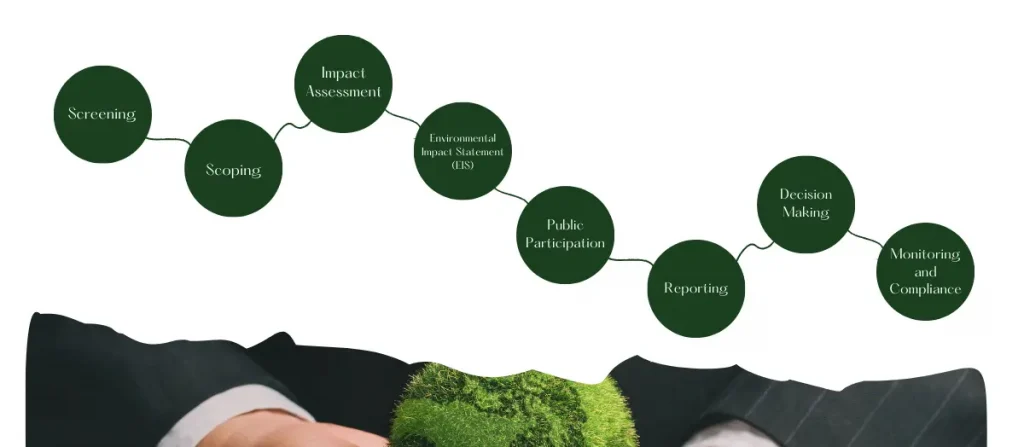
The Environmental Impact Assessment (EIA) process is designed to identify and address the potential environmental effects of a project. This ensures that development proceeds in a way that minimizes harm to the environment. Here’s a detailed look at each step in the EIA process:
1. Screening
The very first step of the EIA process is Screening. Its main goal is to determine whether a project requires an EIA. Not all projects need a full assessment; some might be too small or have minimal impact.
How is it done?
Some projects are automatically required to undergo an EIA due to their size or nature, like large industrial facilities or major infrastructure works. For other projects, the local or national environmental authority decides if an EIA is needed based on the project’s potential impacts.
2. Scoping
Scoping defines the scope of the EIA. It identifies which environmental issues are most important and need to be studied in detail.
How is it done?
Scoping can be done by consulting experts, stakeholders, and the public to identify key environmental concerns. There can be such significant issues e.g., air quality, wildlife, water resources, etc. These issues will be studied deeply.
3. Impact Assessment
Impact analysis in the EIA process assesses the potential effects of the project on the environment. This includes both positive and negative impacts.
How is it done?
Gather data on how the project will affect various environmental aspects. Then use tools and models to predict impacts, such as air and water quality models. Make sure to determine the significance of these impacts, including short-term and long-term effects.
4. Mitigation
Mitigation involves the strategies and such actions taken to reduce or manage negative environmental impacts found during the assessment.
How is it done?
Mitigation can be done in three actions. First, the types of project designs that harm the environment should be avoided. The second action is to minimize the impact of using advanced technologies. And, the third most important action includes, affected areas should be restored or new habitats should be created to offset losses.
5. Public Participation
Public participation involves engaging with the community and other stakeholders to gather their input on the project.
How is it done?
Do hold meetings or hearings to discuss the project and its potential impacts. Then collect and consider feedback from residents, local groups, and other interested parties. Use this feedback to refine the project and address concerns raised by the community.
6. Reporting
Reporting involves compiling all the findings from the EIA into a document known as the Environmental Impact Statement (EIS).
How is it done?
Write the EIS, detailing the project’s potential impacts, proposed mitigation measures, and how public input was addressed. The EIS is reviewed by regulatory authorities and made available to the public for further comments.
7. Decision Making
Decision-making in EIA is the process where authorities decide whether to approve, modify, or reject the project based on the EIS.
How is it done?
Authorities review the EIS and consider all the information provided. They make a decision on whether the project can proceed and under what conditions. The project is either approved with conditions, modified to address concerns, or rejected if it is deemed too harmful.
8. Monitoring and Compliance
Monitoring ensures that the project follows the approved plans and mitigation measures. Compliance checks that environmental standards are being met.
How is it done?
Conduct regular inspections and monitoring to ensure compliance with environmental regulations. And document the actual impacts and how they compare with predictions. Make adjustments to the project or mitigation measures as needed to address any unforeseen issues.
Why Environmental Impact Assessment (EIA) Matters
Environmental Impact Assessment (EIA) is a critical tool for ensuring that development decisions are informed, transparent, and environmentally responsible. Instead of addressing environmental damage after it occurs, EIA works as a preventive planning mechanism, identifying environmental and social risks early in the project lifecycle, as recognised by the United Nations Environment Programme (UNEP).
EIA helps anticipate and reduce environmental harm by assessing potential impacts on air, water, biodiversity, land use, and local communities. Evidence reviewed by the OECD shows that strong EIAs are most effective when mitigation measures are integrated at the project design stage, where changes are least costly and most impactful.
EIA also improves the quality of decision-making by providing regulators with structured, evidence-based information to balance economic benefits against long-term environmental and social costs. Institutions such as the World Bank recognise EIA and ESIA processes as essential for managing risks in large infrastructure and energy projects.
Equally important is public participation. Meaningful consultation allows communities to raise concerns and contribute local knowledge, strengthening accountability and reducing conflict, particularly in environmentally sensitive areas, as highlighted by the World Resources Institute (WRI).
In short, EIA matters because it strengthens environmental protection, improves development outcomes, and supports sustainable decision-making aligned with long-term societal goals, including those reflected in the UN Sustainable Development Goals.
EIA’s Role in Sustainable Development
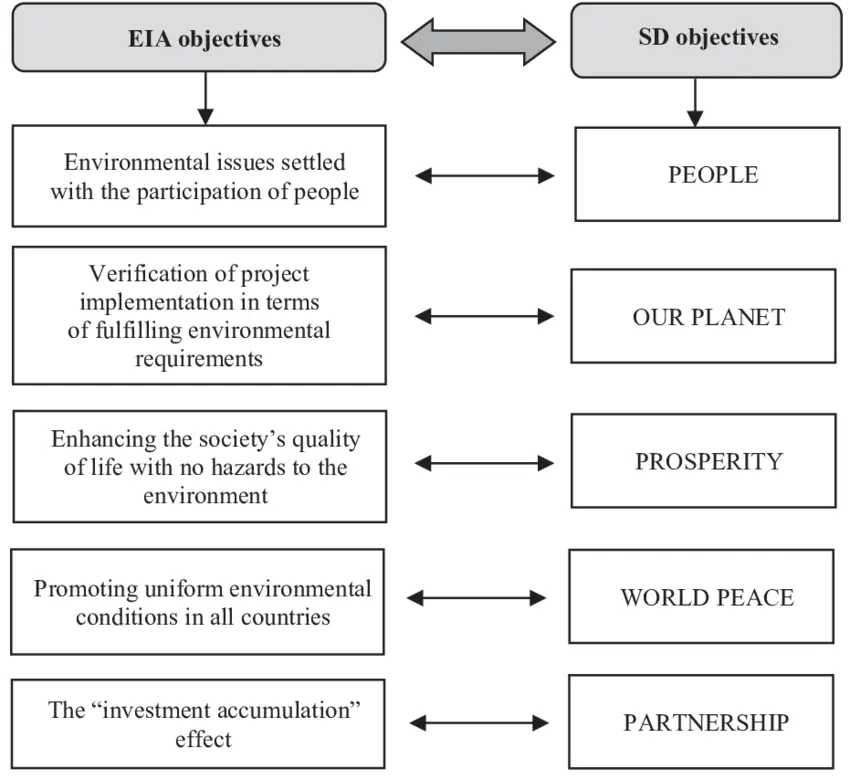
Environmental Impact Assessment (EIA) plays a crucial role in promoting sustainable development by systematically evaluating the environmental consequences of proposed projects before they are approved. Here’s how EIA contributes to sustainable development:
1. Identifying Environmental Impacts:
EIA helps in identifying potential negative and positive environmental impacts of projects. By understanding these impacts early, stakeholders can make informed decisions that balance development needs with environmental protection.
2. Promoting Environmental Protection:
By assessing potential impacts, EIA encourages the adoption of measures to prevent, minimize, or mitigate adverse environmental effects. This ensures that projects are designed and implemented in a way that reduces harm to ecosystems and natural resources.
3. Enhancing Decision-Making:
Environmental impact assessment provides decision-makers with comprehensive information about the environmental consequences of a project. This allows for more informed and balanced decision-making, considering both economic benefits and environmental costs.
4. Encouraging Sustainable Practices:
Through the EIA process, projects are often required to incorporate sustainable practices and technologies. This may include measures for energy efficiency, waste reduction, and resource conservation, contributing to the overall sustainability of the project.
5. Fostering Public Participation:
EIA processes often involve public consultations and stakeholder engagement. This ensures that the views and concerns of the community are considered, leading to projects that are more socially acceptable and environmentally responsible.
6. Supporting Long-Term Environmental Management:
EIA helps in developing plans for monitoring and managing environmental impacts throughout a project’s lifecycle. This long-term perspective supports ongoing sustainability by ensuring that environmental protection measures are maintained and adjusted as needed.
7. Contributing to Regulatory Compliance:
EIA ensures that projects comply with environmental regulations and standards. This helps in achieving legal and environmental requirements, contributing to the overall goal of sustainable development.
8. Facilitating Integrated Planning:
EIA integrates environmental considerations into the planning and design stages of projects. This holistic approach ensures that environmental impacts are considered alongside economic and social factors, leading to more sustainable outcomes.
Types of Projects That Need an EIA in India
In India, the Environmental Impact Assessment (EIA) is a mandatory process designed to evaluate and mitigate the potential environmental impacts of various projects before they begin. The specific projects that require an EIA are outlined in the Environmental Impact Assessment Notification, 2006, and include:
- Mining Projects
- Industrial Projects
- Thermal Power Projects
- River Valley, Multipurpose, Irrigation, and Hydroelectric Projects
- Infrastructure Development and Miscellaneous Projects
- Nuclear Power Projects
However, the EIA Rules categorize projects into two types based on their size and environmental impact:
- Category A projects involve large-scale activities with significant environmental effects. These projects require approval from the Central Government, specifically the Ministry of Environment, Forests and Climate change, following recommendations from an Expert Appraisal Committee (EAC). Examples include major infrastructure like harbors and airports, nuclear power plants, and large-scale industrial operations such as steel and copper production.
- Category B projects are smaller in scale but still need assessment. They require approval from the State EIA, guided by a State Expert Appraisal Committee (SEAC) established under the EIA Notification 2006. This category includes smaller industrial developments and infrastructure projects.
Projects are classified into Category A (central clearance) and Category B (state-level clearance), based on scale and environmental risk. This classification remains the backbone of India’s clearance framework in 2026.
Case Studies

1. POSCO Steel Plant Project
The $12 billion POSCO steel project in Odisha, India, launched in 2005, was one of the largest investments in the country. However, it faced significant controversies and POSCO withdrew in 2017. The impact assessment (IA) for the project was criticized for failing to address the complex local livelihoods and dissent, with weak stakeholder consultations and inadequate reporting on negative impacts and potential losses. Questions were raised about the legitimacy and comprehensiveness of the IA, which was deemed insufficient for addressing critical societal and project-related issues.
Impact Assessment Reports:
1. Rapid EIA:
The Rapid EIA by M. N. Dastur & Company only addresses the first phase (4 MTPA) of a 12 MTPA ( Million Tones Per Annum ) project. It was criticized for incomplete assessments, poor fieldwork, and neglecting broader environmental and social impacts, including community concerns.
The Rapid EIA by M. N. Dastur & Company only addresses the first phase (4 MTPA) of a 12 MTPA ( Million Tones Per Annum ) project. It was criticized for incomplete assessments, poor fieldwork, and neglecting broader environmental and social impacts, including community concerns.
2. Social Cost Benefit Analysis (CBA):
The Social Cost Benefit Analysis (CBA) by NCAER aimed to evaluate the economic benefits of the project. However, it was criticized for overestimating these benefits and not considering local livelihood impacts. Additionally, there was an issue with undisclosed POSCO sponsorship, raising concerns about potential conflicts of interest.
3. Socio-Economic Assessments:
Reports from the Tata Institute of Social Sciences (TISS) and Xavier Institute of Management focused on displacement and rehabilitation but were not publicly available, limiting their impact on public discourse.
4. Consultation Processes
Public consultation processes were problematic, with hearings held far from the project site and criticized for inadequate local involvement and excessive police presence. This limited the effectiveness of stakeholder engagement.
5. Regulatory Compliance:
Regulatory compliance was questioned as the MOEF granted initial clearance in December 2009 but imposed additional conditions in January 2010. The process was criticized for relying on an incomplete EIA and not fully addressing stakeholder concerns, raising doubts about the thoroughness of the review.
2. Sardar Sarovar Project
The Sardar Sarovar Project (SSP) is the most extensively studied water project in developing countries, especially regarding social and environmental impacts. The river Narmada and its tributaries form a complex system, making the Environmental Impact Assessments (EIA) challenging due to unpredictable interactions. The project’s success relied on how well government agencies, NGOs, academics, the public, and policymakers work together.
Impact Assessment Reports:
The report concluded that both the Indian government and the World Bank Group were at fault for the project’s failures, leading the Bank Group to cancel the remaining loan in 1993. Other EIA reports on the Sardar Sarovar Project include:
- No Canceling Tomorrow: A 1992 report by the World Bank’s Independent Review Mission critiquing the project.
- Environmental Changes Downstream of Sardar Sarovar Dam: A 1993 report by HR Wallingford, submitted to SSNNL in Gandhinagar, India.
- Environmental Assessment of Changes Downstream of Sardar Sarovar Dam: A 1995 report by HR Wallingford, also submitted to SSNNL in Gandhinagar, India.
3. Delhi Metro Rail Project (DMRC)
- Project context:
The Delhi Metro Rail Project is one of India’s largest urban infrastructure projects, with significant potential impacts related to land use, air quality, noise, energy consumption, and displacement.
- Role of EIA:
Environmental Impact Assessment helped identify key risks early, particularly around route alignment, construction-phase pollution, and long-term operational emissions.
- Monitoring and compliance:
Environmental Management Plans were implemented across construction phases, supported by continuous monitoring to ensure compliance with clearance conditions. - Climate and emissions impact:
The project’s energy-efficiency measures and modal shift benefits led to its registration under the UNFCCC Clean Development Mechanism, making Delhi Metro one of the first metro systems globally to earn carbon credits. - Key learning:
This case demonstrates that while EIA alone does not guarantee sustainability, early environmental integration, strong institutional capacity, and post-clearance monitoring can significantly improve environmental outcomes in large-scale urban infrastructure projects.
FAQs
1. What is Environmental Impact Assessment (EIA)?
Environmental Impact Assessment (EIA) is a formal process used to identify, predict, and evaluate the potential environmental and social impacts of a proposed project before it is approved or implemented. It helps decision-makers balance development needs with environmental protection.
2. What are the main steps of the EIA process?
The EIA process generally includes the following steps: screening, scoping, baseline data collection, impact assessment, mitigation planning, public consultation, reporting (EIS), and decision-making with monitoring and compliance. These steps ensure environmental risks are identified early and managed effectively.
3. What is screening in Environmental Impact Assessment?
Screening is the first step of EIA. It determines whether a project requires an environmental impact assessment and the level of assessment needed, based on factors such as project size, type, and location.
4. What is scoping in EIA and why is it important?
Scoping identifies the key environmental and social issues that need detailed assessment, such as impacts on air, water, biodiversity, and communities. Proper scoping is critical because it defines the focus and depth of the entire EIA study.
5. What is an Environmental Impact Statement (EIS)?
An Environmental Impact Statement (EIS) is a comprehensive report prepared as part of the EIA process. It documents baseline conditions, predicted impacts, mitigation measures, and outcomes of public consultations, and serves as the main document reviewed by regulatory authorities.
6. Why is public participation important in EIA?
Public participation allows affected communities and stakeholders to review project impacts, raise concerns, and contribute local knowledge. This improves transparency, strengthens decision-making, and reduces the risk of conflict during project implementation.
7. Which projects require an EIA in India?
In India, projects such as mining, large industrial units, thermal and nuclear power plants, river valley projects, and major infrastructure developments require EIA under the EIA Notification, 2006, depending on their scale and environmental risk.
8. How does EIA support sustainable development?
EIA supports sustainable development by integrating environmental considerations into planning and approval processes. It helps reduce long-term environmental damage, promotes responsible resource use, and ensures that economic growth does not come at irreversible ecological or social costs.
Related articles

What is Agroforestry? Everything you need to know — and why India needs it
Rittika Rana
November 7, 2025

Why Are the Issues of Sustainability Important for Development?
Himanshu Jangid
January 27, 2025
Ready to talk?
We work with individual initiatives, startups, and NGOs dedicated to forging a sustainable future with better design, marketing, technology & operations.