Most people who care about sustainability carry the same frustration: they want to do something meaningful, but they don’t know where to start—or what “doing it properly” even looks like beyond small lifestyle changes.
Ashit’s journey with Belgrey offers a grounded, practical answer. Not the glossy startup narrative—an honest one. One where impact is built slowly, where economics and values constantly collide, and where progress comes from designing systems rather than chasing slogans.
This is the story of how a concern for the environment turned into a business model capable of removing millions of plastic bottles from circulation.
A Sustainability Instinct That Never Left
For Ashit, sustainability was never a trend he adopted later in life. It was instinctive. As a child, he would protest even routine pruning at home. As a young adult, he pushed back when trees were cut for road widening and stayed engaged through local activism.
Yet like most people, his environmental concern didn’t translate into consistent work for a long time. Life moved forward—education, jobs, responsibilities, businesses. Sustainability remained a personal value, but largely something expressed in occasional moments: supporting a plantation drive, donating to a cause, speaking up when something felt wrong.
The bigger question stayed unanswered for years: Is there a way to contribute continuously, not sporadically?
The Moment That Triggered Everything
In 2019, during one of his work travels, Ashit came across a statistic in a magazine that instantly reframed the plastic problem for him.
One million plastic water bottles are sold globally every minute.
And 91% of them don’t get recycled.
The number wasn’t just shocking—it was clarifying. It pointed to a structural problem: plastic bottles aren’t designed to stay in circulation. They’re designed to be thrown away. Even when recycling exists on paper, the system often fails in practice.
That led to a simple but powerful question:
If the bottle had continuing value, would people still discard it?
And if we could design the product and the logistics around return and reuse, could we remove waste at scale—even in something as commoditised as packaged drinking water?
A Business Idea Built on Design, Not Guilt
Belgrey didn’t start as “we want to save the planet.” It started as a design problem.
Disposable plastic bottles are cheap, convenient, and treated as single-use by default. The only way to reduce their harm meaningfully is not just to recycle more, but to redesign the system so the bottle doesn’t become waste in the first place.
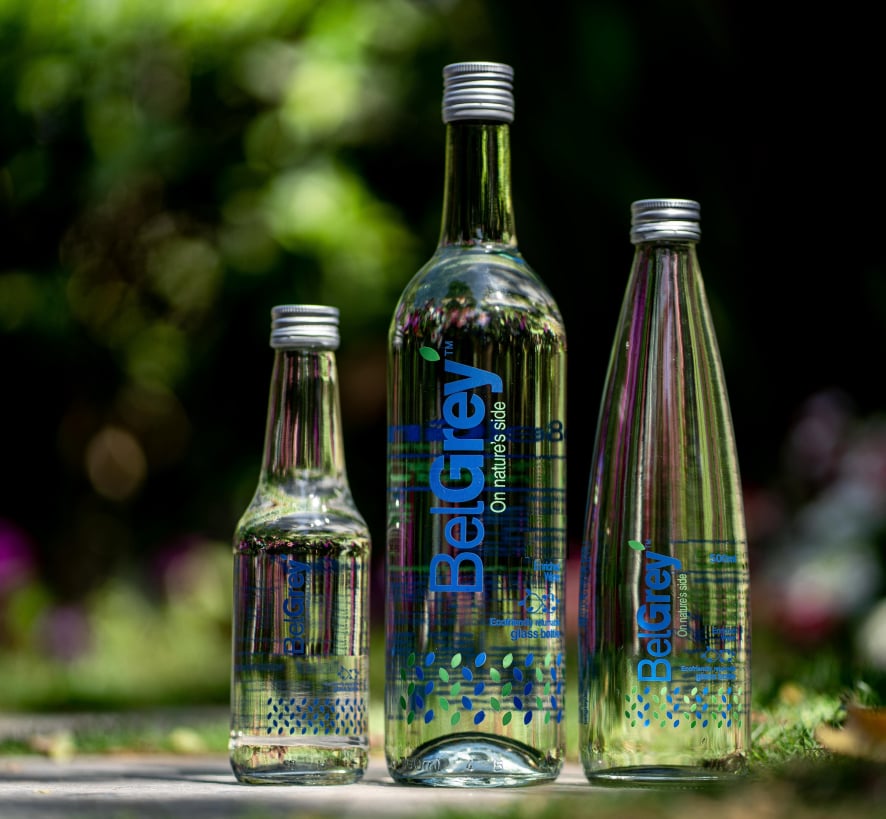
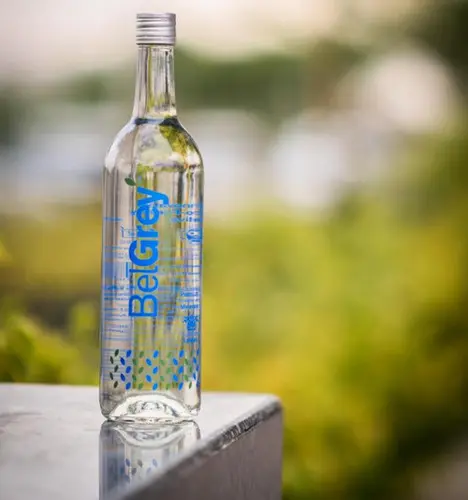
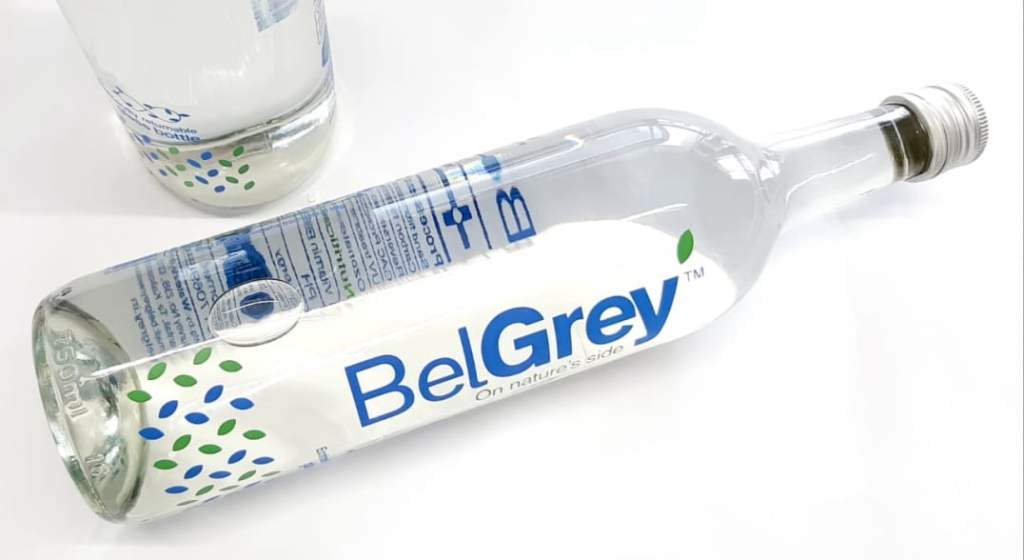
So the thesis was straightforward: create a premium, returnable bottle model that people don’t throw away. Glass became a natural medium. Not because it is perfect, but because it is reusable, retains value, and can be integrated into a circular model where bottles come back into the system.
This wasn’t about expecting consumers to behave better. It was about building a product that makes better behaviour easy.
Entering an Industry They Knew Nothing About
The interesting part is that Ashit and his co-founder weren’t from FMCG or hospitality. Their backgrounds were in other businesses, including exports. They had no existing network in the packaged water ecosystem, no distribution relationships, and no deep understanding of how hotels make purchasing decisions.
They also didn’t have large marketing budgets—especially not for a new brand trying to sell a higher-priced bottle in a market used to ₹20 plastic water.
On paper, it looked like a bad bet.
But their outsider position became an advantage. Because they weren’t conditioned by “how the industry works,” they were able to design a different way of operating. The focus wasn’t on competing on price. It was on competing on value and system design.
Why Belgrey Chose B2B Over B2C
One of the smartest early decisions came from constraints.
Without advertising budgets or retail reach, Belgrey leaned into a model that made distribution easier and customer acquisition cheaper: B2B through hotels and restaurants.
The logic was simple. If you convince one restaurant to switch, you instantly reach every customer who sits at their table. You don’t need to individually market to thousands of consumers. You don’t need a massive retail presence. You don’t need to fight for attention on e-commerce platforms.
The same constraint that could have slowed them down—limited resources—forced them into a strategy that was lean, focused, and scalable.
COVID Hit Before the First Bottle Was Sold
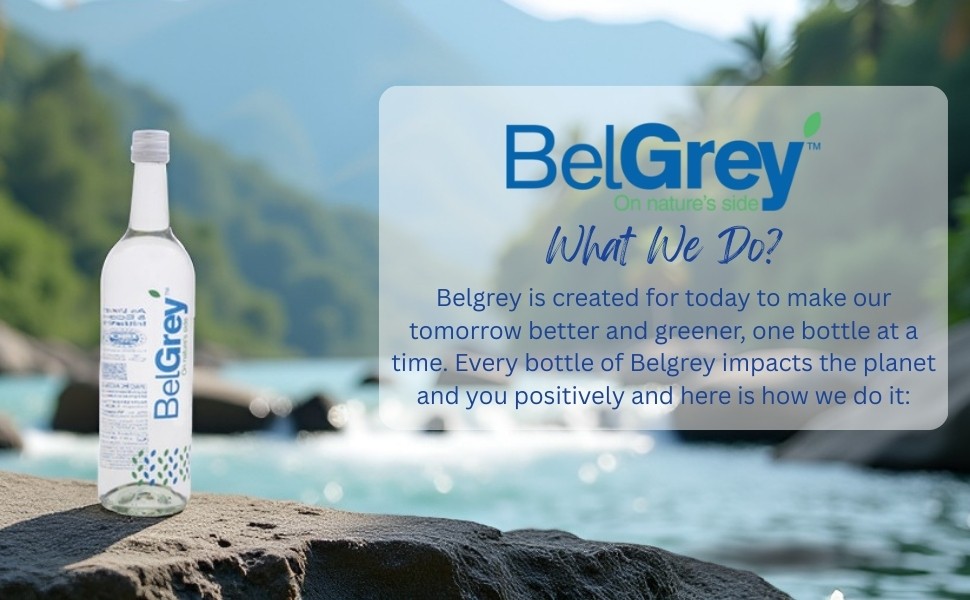
Belgrey’s manufacturing setup was ready—and then the lockdown arrived.
Before a single bottle could be produced at scale, the factory shut down. Salaries had to be paid. EMIs continued. Cash flow hadn’t started. For months, there was no output, no revenue, and no certainty.
Yet they chose not to lay off the employees they had hired, and not to cut salaries.
It would have been easy to question the entire decision: Why start something new when other businesses were already working? Why add risk during uncertainty?
But the reason Belgrey continued was not optimism. It was believed that the idea was necessary—and that if done right, it could become self-sustaining instead of dependent on donations or “good intentions.”
The First Signal That They Were Onto Something
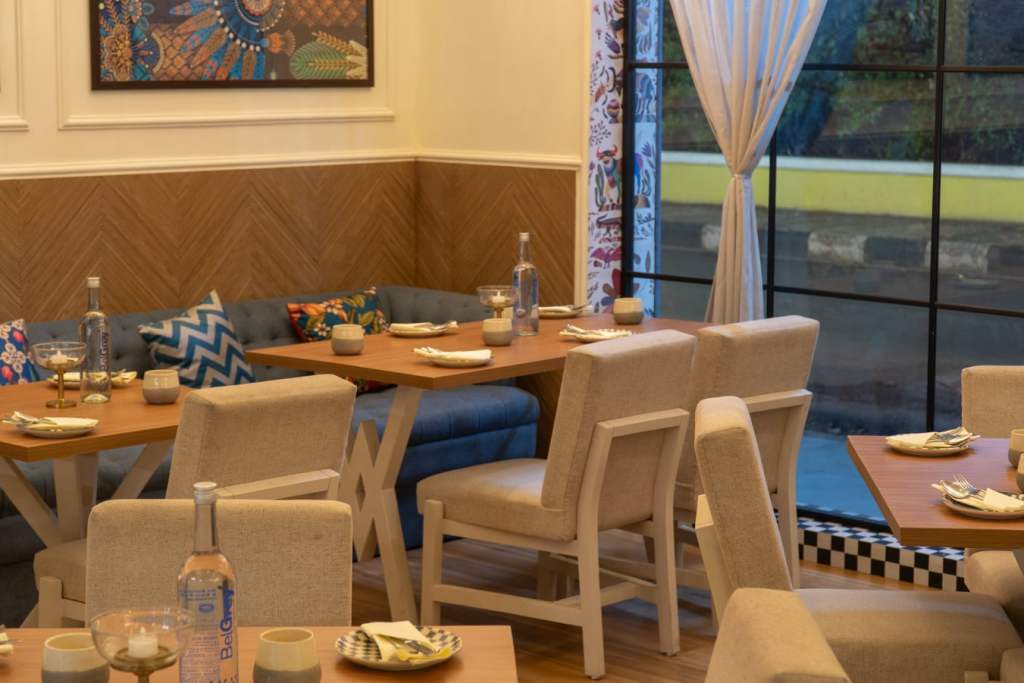
When restrictions eased in 2020 and they could finally take trial production batches, they personally went out with samples and pitched the concept.
What they received back wasn’t polite encouragement—it was strong validation.
Restaurants and premium hospitality properties appreciated three things at once:
The concept of returnable glass as a sustainable alternative
The premium look and presentation of the bottle
The economic opportunity (some even suggested raising the retail price)
That moment mattered because it proved something crucial: sustainability doesn’t have to be sold as sacrifice. If the product and experience are designed well, sustainability can be aspirational.
Knowing What to Do In-House and What to Outsource
As founders, they did many things themselves—especially in the early days. They personally pitched the concept. They explained the logic. They handled relationship-building because no one could communicate the conviction better than the founders.
But they were also clear about what they couldn’t do well.
Brand naming and positioning stayed close to them. Product design, however, was outsourced to an expert. The direction given was telling:
“Forget the market. Imagine you are designing something that belongs in a five-star property.”
That single decision shaped Belgrey’s identity as a premium sustainable brand, not a “green alternative” that looks compromise-driven.
Scaling Without Diluting the Mission
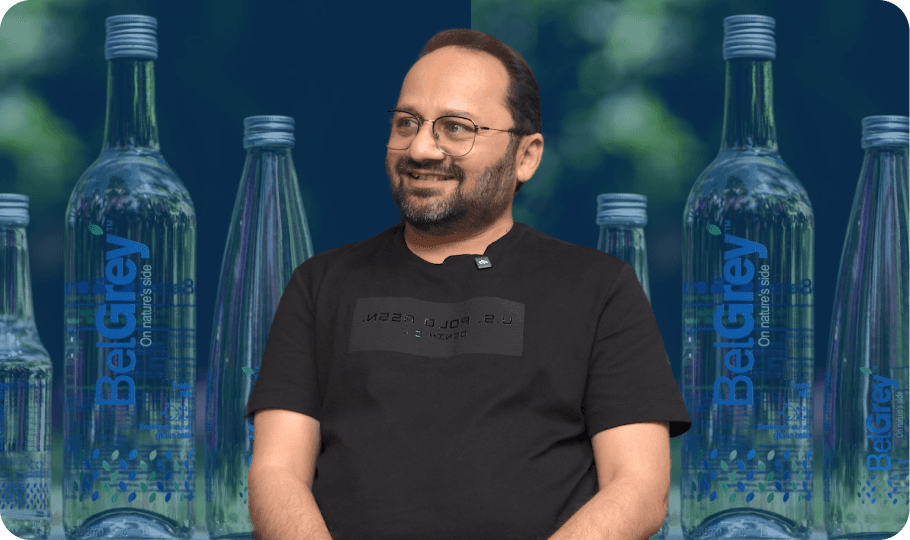
Today, Belgrey has grown to a team of ~70+ and operates multiple plants, serving premium restaurants, hotels, corporates, caterers, and institutions.
But one principle has remained unchanged since day one: they will not expand in ways that defeat the purpose of why the company exists.
They were offered opportunities to sell plastic water bottles alongside glass. Economically, it would have made sense. It would have increased margins and expanded SKU range.
They refused—because selling plastic would erase the entire point.
They also chose not to chase every revenue channel. Even when retail stores requested the product, they stayed focused on hospitality and premium consumption contexts, where the circular model was easier to implement and protect.
In sustainability businesses, clarity on what not to do is often the difference between mission and marketing.
The North Star Goal: “Saving 30 Minutes”
Belgrey’s impact goal is intentionally framed in a way that makes the scale feel real.
If one million bottles are consumed every minute globally, then saving three crore bottles a year equals saving roughly 30 minutes of daily plastic bottle consumption.
It’s not “we’ll end plastic waste.” It’s a measurable target that acknowledges the size of the problem while still committing to meaningful reduction.
And importantly, it creates a rallying point for the team: a clear metric that connects daily work to real-world impact.
What Ashit Would Tell Someone Starting Today
For anyone watching from their phone or laptop thinking, I want to do something in sustainability but I don’t know what, Ashit’s advice is surprisingly simple.
Keep your senses open.
Read widely. Observe daily behaviour. Look for waste that’s normalised. Look for convenience that creates harm. Most sustainability opportunities aren’t hidden—they’re just ignored because we’ve accepted them as “how things work.”
Ideas don’t arrive on schedule. They arrive when your mind has been trained to notice gaps.
Measured Impact at Scale
Belgrey’s circular water model is delivering measurable impact across waste reduction, emissions, and resource efficiency:
Advancing Circular Economy: Over 6 million single-use plastic bottles avoided through a reuse-driven system
Waste Mitigation: More than 500,000 kgs of single-use packaging eliminated from the waste stream
Lower Carbon Footprint: Up to 95% reduction in transport-related emissions through optimized delivery and reuse
Sustainable Development Goals: Contributing directly to 7 UN SDGs through responsible production and consumption
Sustainability Isn’t Only Big Moves — It’s Small Habits Done at Scale
Ashit also speaks about sustainability beyond business. Small behaviours compound when millions adopt them.
Turn off unnecessary data and connectivity at night. Print on reused paper by default. Reduce friction that leads to waste. These things feel small—but multiplied across people and systems, they become material.
That’s ultimately what Belgrey is building too: a model where better choices don’t require constant willpower. They’re built into the system.
What’s Next for Belgrey

Belgrey is expanding within India, with a long-term plan to build 12–15 plants across regions so the return-and-reuse model can work locally and efficiently.
International interest is emerging too, with people exploring how to replicate the model abroad. But for now, the focus is clear: India’s market is big enough, and the mission is far from complete.
Closing Thought
Belgrey’s story is a reminder that sustainability isn’t just about intention—it’s about design.
If you’re serious about impact, don’t only ask, “How do we reduce harm?”
Ask, “How do we redesign the system so harm isn’t the default outcome?”
That’s the kind of thinking that scales. And that’s what makes this story worth paying attention to.

Other articles

We work with individuals, startups, and NGOs dedicated to forging a sustainable future. Tell us about your mission.

