

- All articles
Openwater: A Story of Water, Electricity, and Belief
By Ketul
Updated 21 Feb, 2026
10 min read

Contents
Main Menu
Water is one of those issues everyone understands in theory—until a city runs dry, a lake turns toxic, or daily life becomes shaped by tanker schedules and uncertainty.
In this conversation, the story of Openwater unfolds not as a technology pitch, but as a much deeper exploration of how used water—often ignored, avoided, or treated as waste—may be one of our most underused climate solutions.
This is a story about rethinking wastewater. About why adoption matters more than elegance. And about how sustainability solutions only succeed when they align with real incentives, real constraints, and real human behaviour.
When a Career Pivot Meets an Environmental Reality
The journey into water did not begin with environmental engineering. It began in molecular biology.
With a PhD focused on DNA repair and cancer diagnostics, the early years were spent working at microscopic scales—in labs across the US, UK, and India. But returning to India during COVID created the pause that many professionals rarely get: the chance to ask what comes next.
Two things stood out immediately.
One was traffic.
The other was the environment.
Traffic was frustrating. The environment felt existential—especially through the lens of motherhood. The air was worse. The cities were denser. And water, once something people drank directly from rivers, had become something people hesitated to even touch.
That contrast sparked a deeper question: What kind of world are we building for the next generation?
Water became the answer—not only because it is fundamental to life, but because water scarcity, pollution, and reliability are already shaping daily decisions across cities, industries, and communities.
Openwater’s Origins: A Lab Solution Looking for a World

Before it became a company, Openwater was an academic startup.
The technology was developed at IISc by Professor Sanjeev Sambandhan, an electrical engineer driven by a belief that technology should serve society. His focus areas were food, health, and water—and water felt urgent.
The original idea was radical in its simplicity: water should be accessible to everyone. The technology was designed to be open, decentralized, and usable at very small scales—almost like a personal water purification device.
But this is where one of the most important lessons of deep-tech entrepreneurship emerged.
Having a powerful solution is not the same as creating impact.
Open sourcing technology does not guarantee adoption. Scale requires understanding who will use it, why they will pay for it, and what constraints shape their decisions. When Openwater looked closely, the technology was still largely in the lab. The proof of concept existed—but the customer did not.
That gap became the real starting point.
Why Used Water Became the Focus
Most people think of water systems in one direction: fresh water comes in, gets used, and goes out.
Openwater chose to work on the part most systems ignore—the water going out.
Used water is both:
- a pollution risk, if discharged untreated
- a resource opportunity, if treated and reused
By working in the wastewater space, Openwater was addressing two problems at once: environmental damage and water scarcity.
But existing wastewater treatment systems posed a challenge. Many decentralized systems were simply scaled-down versions of large, centralized plants—requiring skilled operators, constant monitoring, and stable conditions that don’t exist in real-world settings.
The result?
A staggering number of decentralized treatment plants simply don’t work.
Treating Water With Electricity, Not Biology

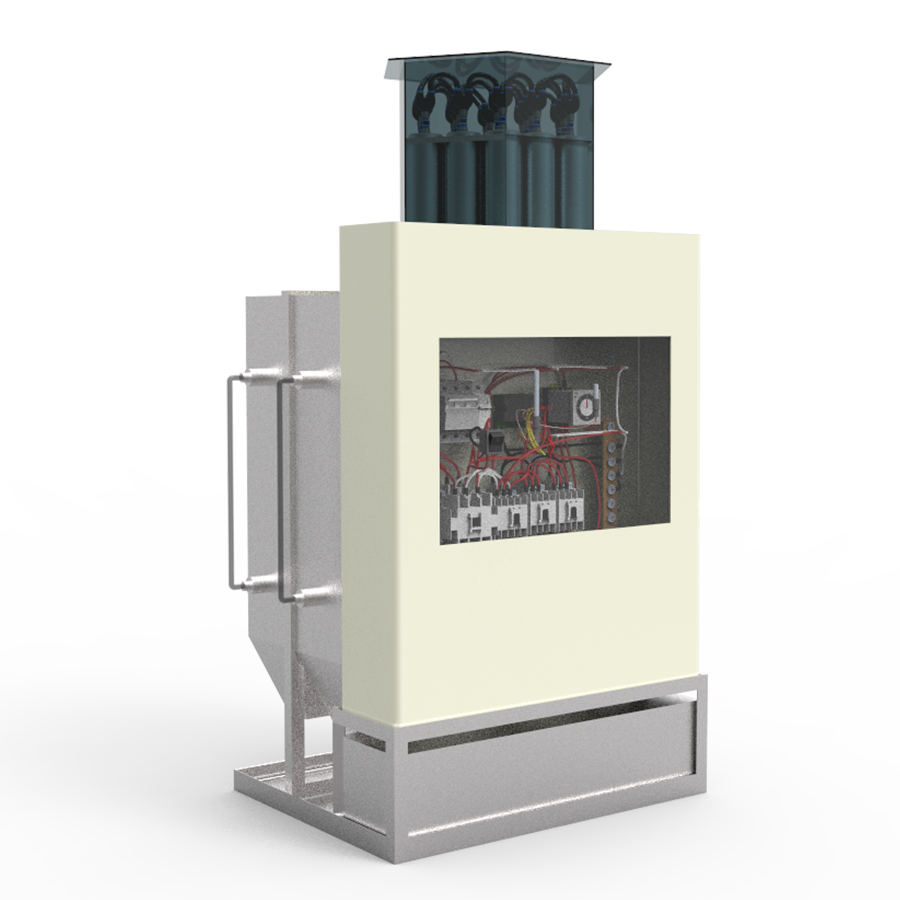
Openwater’s core innovation is deceptively simple: use electricity instead of biology or chemicals to treat water.
At the heart of the system is an electrochemical reactor. Used water passes through a metal chamber where electrical current is applied. This releases metal hydroxides that bind with pollutants—forming flocs that separate contaminants from water.
There are no microbes to keep alive.
No chemicals to dose continuously.
No long retention times.
Water goes in and comes out treated within minutes.
This approach makes the system:
- fast
- robust
- quiet
- far easier to operate
And crucially, resilient across different water qualities.
The Hospital Discovery That Changed Everything

Early on, Openwater believed hospitals would have wastewater loaded with pathogens. The assumption was logical—and completely wrong.
Hospitals, it turned out, use so many disinfectants and chemicals that their wastewater is actually hostile to microbes. Pathogen levels were lower than expected. But this created a different problem: biological treatment systems struggled to function at all.
That’s where Openwater fit naturally.
Because the technology does not rely on bacteria, it worked precisely where conventional systems failed. Hospitals became an early niche—not because the hypothesis was right, but because the learning was honest.
This pattern repeated across industries.
When Industry Comes Knocking
While Openwater was exploring sewage treatment, industries began reaching out.
Pharmaceuticals. Chemicals. Textiles. Food processing.
Each had different wastewater profiles—but shared one thing: complexity and risk.
Openwater responded by segmenting its approach:
- High-pollution industries
Openwater systems break down complex pollutants, improving the efficiency of downstream treatment. - Low-pollution industries
In food processing, water is relatively clean but trust and consistency matter. Here, Openwater integrates directly into the process—capturing, treating, and reusing water before it ever touches the drain.
This “don’t let water touch the drain” approach turned wastewater from a liability into a controlled, reusable asset.
The Economics Problem No One Likes Talking About
One truth runs through the entire conversation: water is subsidized, wastewater treatment is not.
Freshwater is often cheap, even though its true cost—pumping, transporting, treating—is enormous. Wastewater treatment, on the other hand, has real operational costs and no built-in incentives.
This mismatch slows adoption.
Where does reuse make sense today?
- where freshwater is expensive or unreliable
- where regulations cap extraction or discharge
- where water shortages disrupt production
- where ESG reporting and compliance matter
In some cases, the payback period is under a year. In others, the economics still don’t work—yet.
Policy, incentives, and pricing will determine how fast that changes.
From Projects to Products
One of Openwater’s biggest internal challenges has been focus.
As a technology-driven team, the temptation to build custom solutions everywhere is strong. But real scale requires products—not projects.
The vision is clear:
- standardized systems
- modular sizes
- plug-and-play installation
- minimal training
- automated operation
In one recent installation, setup took a single day: one piping connection, one electrical connection, and the system was live.
Quietly recycling water. Constantly. Reliably.
The long-term ambition resembles something familiar: an IKEA-like model for water circularity—where customers choose a system, install it, and let it run.
What Needs to Change for Water Circularity to Scale
Three forces will determine the future:
- Incentives and policy alignment
Solar adoption accelerated through subsidies. Water may need similar mechanisms. - Cultural shifts
Water must be seen as a resource, not a cheap utility. - Trust infrastructure
Monitoring, data, and quality assurance will be critical—especially if recycled water enters trading markets.
Bengaluru is already experimenting with water trading concepts. If quality and trust can be guaranteed, circular water markets could reshape how cities think about supply.
Sustainability, at Its Core, Is Emotional
The closing insight is not technical.
Sustainability cannot be taught like a checklist. It has to be felt—through empathy for the planet, for other people, and for the future.
And for anyone building in water or deep-tech sustainability, the advice is clear:
This is a long game.
Survival matters. Patience matters. Capital needs to be patient. And progress will be incremental—but cumulative.
The Real Takeaway
Water solutions don’t fail because the science is weak.
They fail when adoption, incentives, and systems are misaligned.
Openwater’s journey shows that impact is not about what you build—it’s about what keeps working quietly, every day, at scale.
And in a world facing climate uncertainty, that kind of reliability may be the most powerful innovation of all.
Related articles
What Is Green Energy? Meaning, Types, Examples, and Why It Matters
Rittika Rana
November 13, 2025
Compostable plastics: Truth or Myth?
missionsustainability
May 8, 2022
Ready to talk?
We work with individual initiatives, startups, and NGOs dedicated to forging a sustainable future with better design, marketing, technology & operations.