

- All articles
Permaculture Farming Explained: Principles, Benefits, and How It Works in India
By Ketul
Updated 31 March, 2026
10 min read
Contents
Main Menu
Modern agriculture has learned how to produce more food than ever before.
But in doing so, it has also learned how to exhaust the very systems it depends on — soil, water, and biodiversity.
Across India, this tension is becoming increasingly visible. Farms are producing more, yet soils are degrading, groundwater levels are declining, and ecosystems are weakening. According to the Food and Agriculture Organization, nearly one-third of the world’s soils are already degraded, raising serious concerns about the long-term viability of current agricultural practices.
What was once seen as progress is now forcing a deeper question:
Can farming systems be redesigned to regenerate the very ecosystems they depend on?
This is where permaculture farming begins to shift the conversation.
Rather than treating agriculture as a linear system of inputs and outputs, permaculture approaches it as a process of ecological design — one that works with natural systems instead of against them. It is not just a technique, but a framework for creating farms that are resilient, self-sustaining, and deeply interconnected with their surrounding environment.
What Is Permaculture Farming?

Permaculture farming is a design-based approach to agriculture that seeks to create sustainable and regenerative ecosystems. The term was first developed by Bill Mollison and David Holmgren, who envisioned agricultural systems that mimic the diversity, stability, and resilience of natural ecosystems.
As outlined by the Permaculture Research Institute, permaculture is not defined by a fixed set of techniques, but by a philosophy of design that integrates land, resources, people, and environment into a unified system.
At its core, permaculture asks a simple but powerful question:
How can we design farms that function like ecosystems?
Instead of relying on chemical fertilizers, pesticides, and monocultures, permaculture systems focus on:
- biodiversity and polycultures
- soil regeneration
- natural water cycles
- closed-loop resource use
This shift from extraction to regeneration is what makes permaculture fundamentally different from conventional agriculture.
The Core Principles of Permaculture
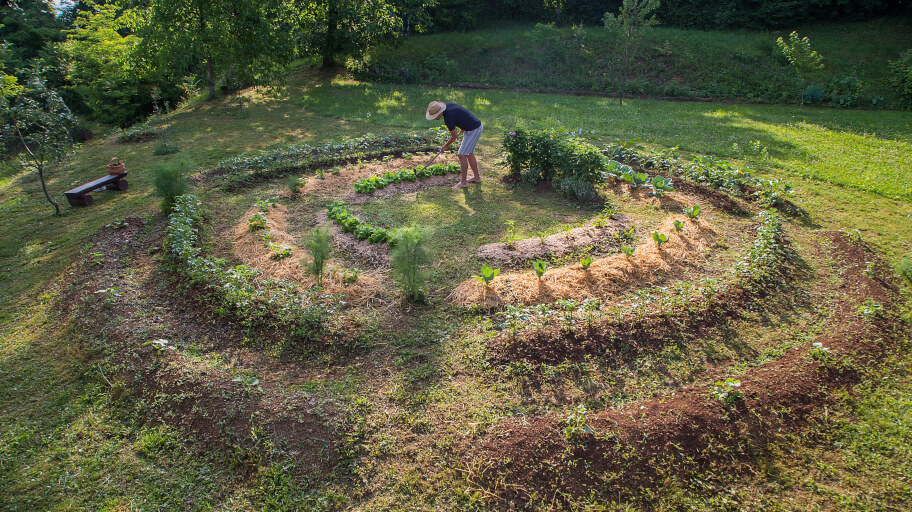
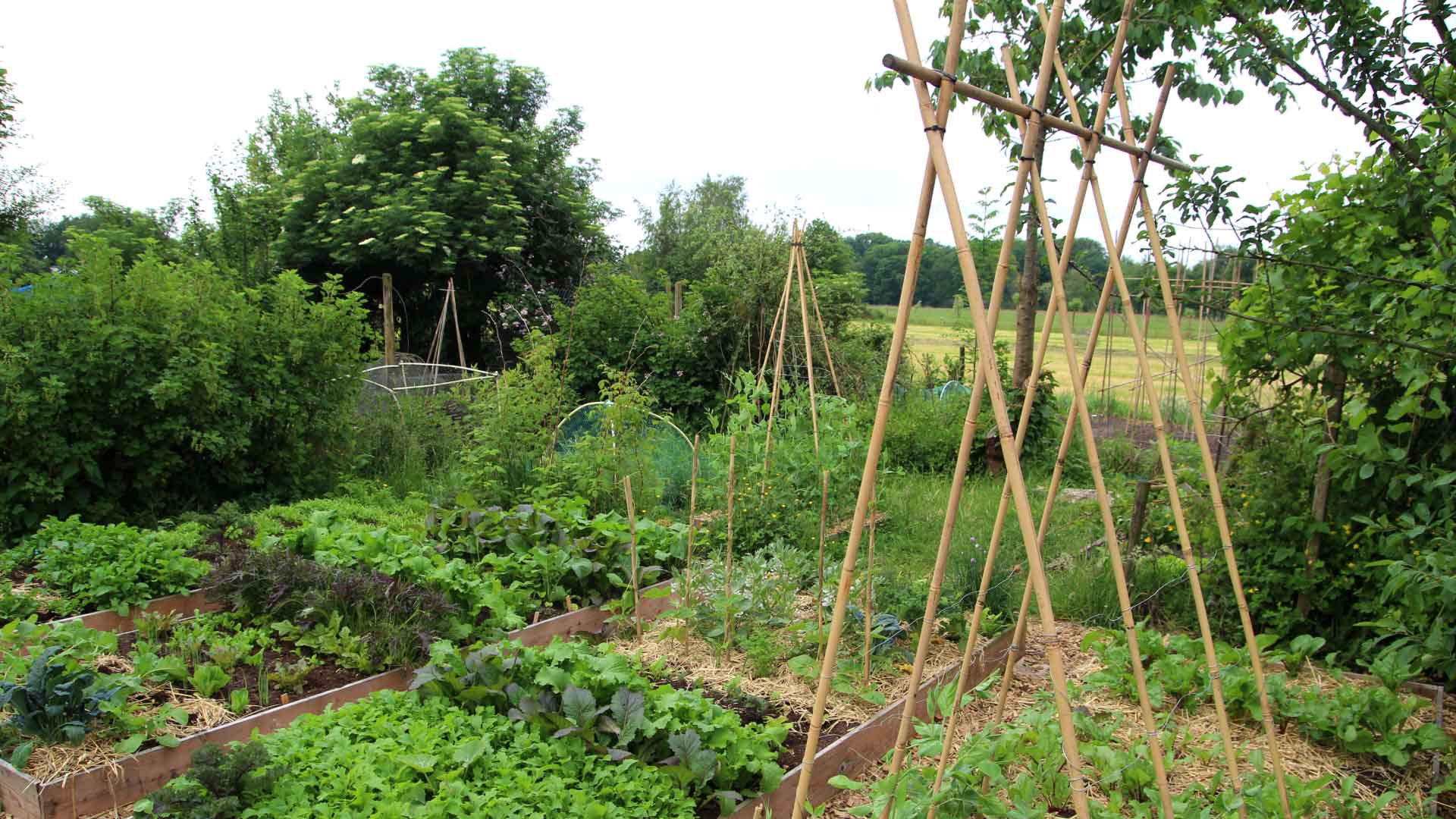
Permaculture is guided by three foundational ethics that shape every decision within the system.
1. Earth Care
This principle emphasises the protection and regeneration of natural systems — soil, water, forests, and biodiversity. Healthy ecosystems are seen not as external resources, but as the foundation of agricultural productivity.
Practices such as composting, mulching, agroforestry, and natural pest control are used to rebuild ecological balance rather than degrade it.
2. People Care
Sustainability is not only ecological but also social. Permaculture systems are designed to meet human needs — food, shelter, and livelihoods — in a way that is equitable and long-term.
This includes strengthening local food systems, reducing dependency on external inputs, and improving community resilience.
3. Fair Share
Also referred to as “returning surplus,” this principle encourages responsible consumption and redistribution of excess resources.
It challenges the idea of unlimited extraction and instead promotes balance within both ecological and social systems — a concept further explored in Permaculture: Principles and Pathways Beyond Sustainability.
How Permaculture Farming Works in Practice

What distinguishes permaculture is not a single method, but the way multiple elements are designed to function together as an integrated system.
1. Soil Degradation and Land Stress
Land degradation is accelerating globally. The United Nations Convention to Combat Desertification estimates that vast areas of productive land are being lost due to unsustainable practices.
Permaculture offers a pathway to restore soil health while maintaining productivity.
2. Water Scarcity
India is one of the most water-stressed countries in the world. Conventional irrigation-heavy agriculture is placing immense pressure on groundwater resources.
By designing farms that retain and recycle water, permaculture reduces this pressure significantly.
3. Climate Change and Extreme Weather
Agriculture is increasingly vulnerable to climate variability — droughts, floods, and temperature extremes.
Diverse and regenerative systems are inherently more resilient, aligning with broader approaches such as regenerative agriculture, which focuses on rebuilding ecosystem function.
4. Rising Input Costs for Farmers
Chemical fertilizers, pesticides, and hybrid seeds have increased the cost of farming.
Permaculture reduces dependency on these inputs, improving long-term economic sustainability for farmers — especially smallholders.
Permaculture Farming in the Indian Context
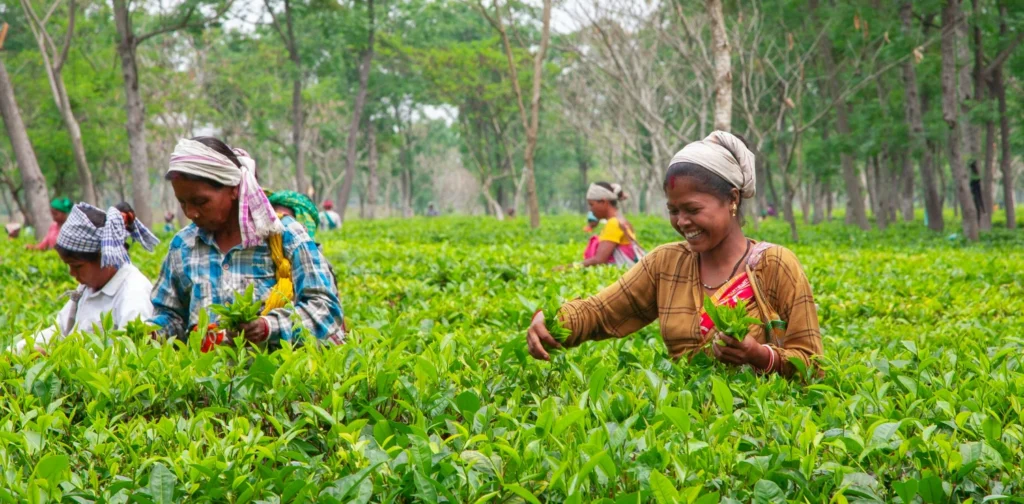
India has a long history of traditional farming systems that align closely with permaculture principles — mixed cropping, agroforestry, and community-based water management.
In recent years, there has been a growing movement toward natural and regenerative farming approaches.
Initiatives such as Aranya Agricultural Alternatives have been actively promoting permaculture design education and implementation across India, helping farmers transition toward more resilient systems.
At the same time, state-led natural farming movements and grassroots initiatives are demonstrating that regenerative approaches can be both ecologically viable and economically practical.
Challenges and Limitations

Despite its potential, permaculture farming is not without challenges.
1. Knowledge and Design Complexity
Permaculture requires a deep understanding of ecosystems and design thinking, which can be a barrier for adoption.
2. Time for System Maturity
Unlike conventional farming, permaculture systems take time to stabilize and become fully productive.
3. Scaling Constraints
While highly effective at small and medium scales, scaling permaculture to industrial agriculture remains a complex challenge.
Rethinking Agriculture Through Design

Permaculture farming represents more than just an alternative method — it represents a shift in how we think about agriculture itself.
It challenges the assumption that productivity must come at the cost of ecology. Instead, it demonstrates that long-term productivity is only possible when ecological systems are restored and strengthened.
In a world facing soil degradation, water scarcity, and climate uncertainty, the future of farming may not lie in doing more of the same — but in redesigning systems from the ground up.
FAQs
1. What is permaculture farming and how does it work?
Permaculture farming is a design-based approach that creates self-sustaining agricultural systems by mimicking natural ecosystems. It works by integrating plants, soil, water, and biodiversity into a regenerative and low-input system.
2. What are the three principles of permaculture farming?
The three core principles are Earth Care (protecting natural systems), People Care (supporting human well-being), and Fair Share (limiting consumption and redistributing surplus).
3. How is permaculture different from organic farming?
While organic farming avoids synthetic chemicals, permaculture goes further by designing entire ecosystems that are self-sustaining, regenerative, and interconnected.
4. Is permaculture farming profitable for farmers?
Permaculture can be profitable in the long term by reducing input costs, improving soil health, and increasing resilience, although initial setup may require time and planning.
5. What crops can be grown using permaculture farming?
Permaculture supports diverse cropping systems including fruits, vegetables, grains, herbs, and trees, often grown together in polycultures.
6. What are the main benefits of permaculture farming?
Key benefits include improved soil fertility, water conservation, biodiversity enhancement, reduced chemical use, and long-term sustainability.
7. Is permaculture farming suitable for India?
Yes, permaculture aligns well with traditional Indian farming practices and is particularly effective in addressing soil degradation, water scarcity, and climate variability.
8. Does permaculture farming require less water?
Yes, permaculture systems are designed to conserve and reuse water through techniques like mulching, rainwater harvesting, and soil moisture retention.
9. What are the challenges of permaculture farming?
Challenges include the need for ecological knowledge, longer time for system establishment, and difficulty in scaling for large industrial agriculture.
10. How can beginners start permaculture farming?
Beginners can start by observing their land, improving soil health, introducing diverse crops, conserving water, and gradually designing systems based on permaculture principles.
Related articles

From Concept to Reality: NeeRain’s Simple Solution to Water Scarcity
Himanshu Jangid
September 13, 2024

What is Business Design? A complete guide
Himanshu Jangid
January 30, 2025
Ready to talk?
We work with individual initiatives, startups, and NGOs dedicated to forging a sustainable future with better design, marketing, technology & operations.