
- All articles
Waste Warriors in the Himalayas: How One Movement Is Building a Real Waste System in Remote Mountains
By Ketul
Updated 20 Feb, 2026
10 min read
Contents
Main Menu
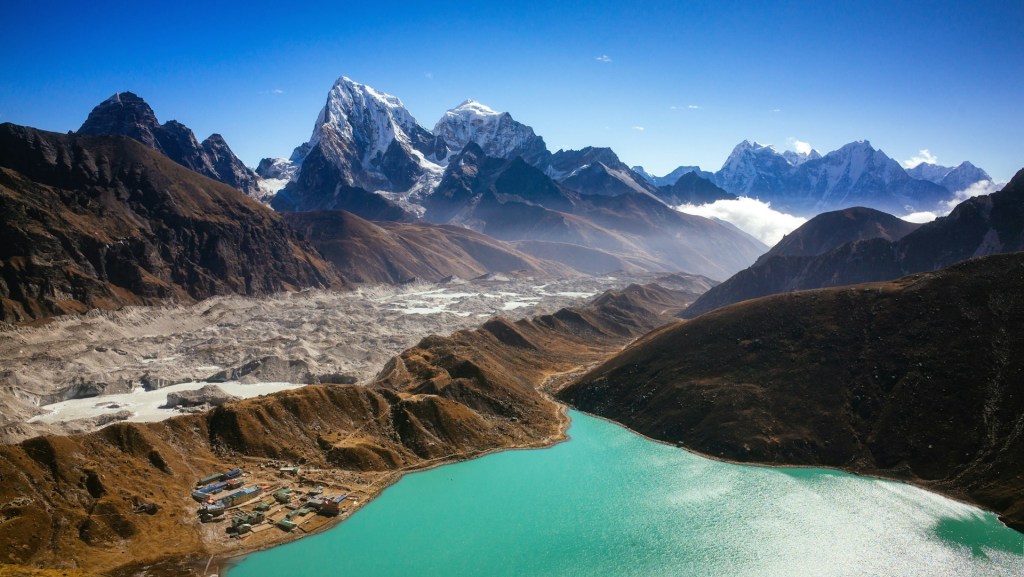
The Himalayas are often sold to us as “pristine.” Snowlines, pine forests, quiet trails, pure air.
But if you’ve trekked even once, you’ve likely seen the other side: snack wrappers at 15,000 feet, bottles near base camps, mixed garbage piled near streams, and waste that simply doesn’t belong in a fragile mountain ecosystem.
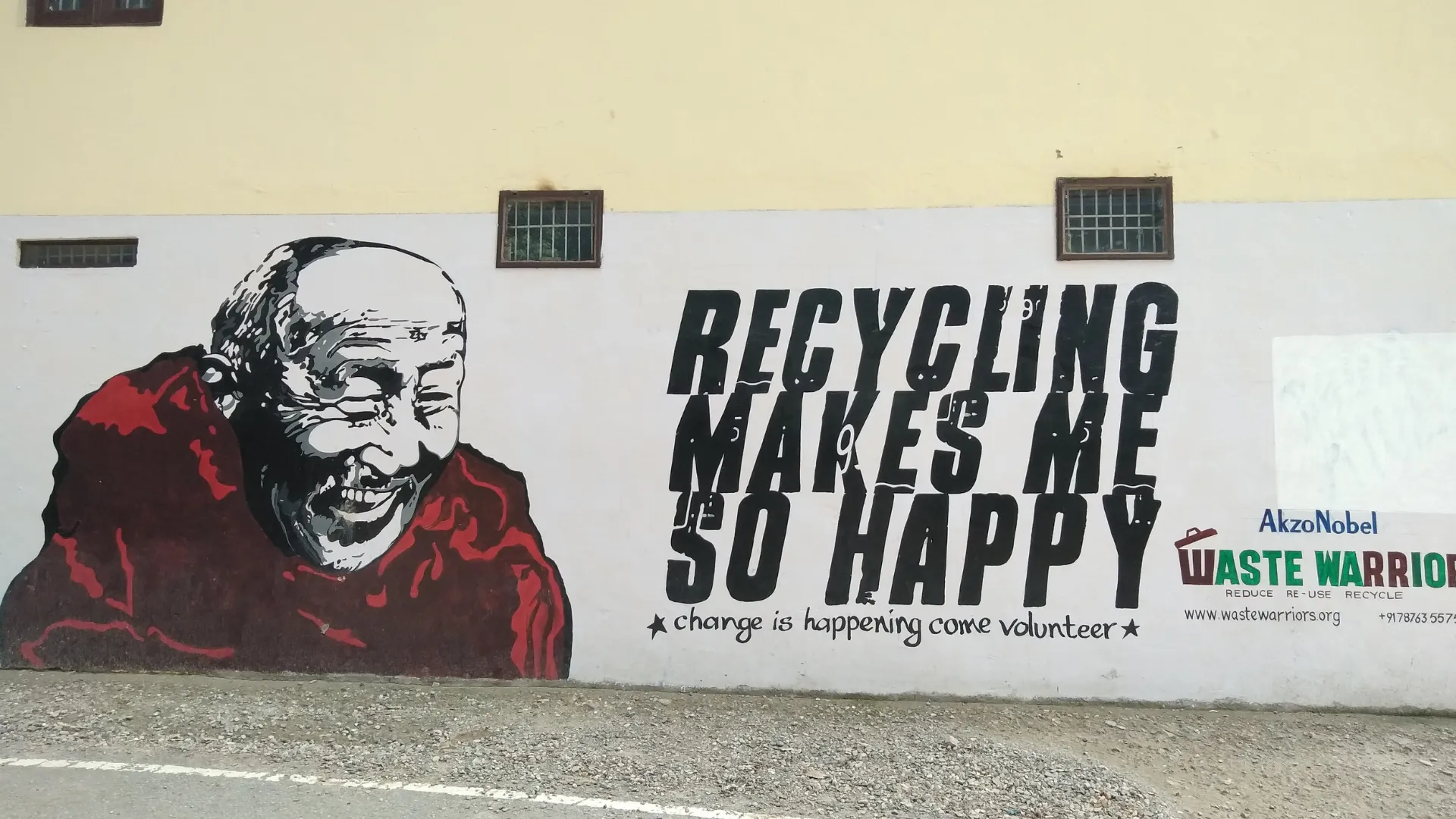
This is where Waste Warriors enters the story — not as a “cleanup group,” but as an on-ground organization building what most mountain towns don’t have yet: a functioning waste system.
This blog is based on a conversation with Waste Warriors , who shared the real operational reality of waste management in the Indian Himalayan region — including what works, what fails, and why the toughest challenge isn’t infrastructure.
Why waste in the mountains is a different problem altogether

Waste is a challenge everywhere. But in the mountains, it becomes harder for one simple reason:
The terrain punishes every step of the supply chain.
In the plains, a truck can pick up waste daily. In remote Himalayan settlements and trekking corridors:
- There may be no road access
- Waste must be carried on people’s backs to a roadhead
- Weather blocks collection (snow, landslides, monsoon damage)
- Storage has to be wildlife-safe (to avoid conflict)
- Processing centres may be hours — sometimes states — away
And yet, the waste keeps coming.
Tourism accelerates it massively. Dharamshala (as shared in the conversation) has a resident population of around 1 lakh, but a floating tourist population of 3 lakh+ annually — which multiplies consumption, packaging waste, and pressure on local systems.
So the challenge isn’t “why is there waste?”
It’s: how do you build a working system where the ecosystem itself resists logistics?
From corporate life to mountain work: Rupesha’s journey

Rupesha grew up in Kolkata, studied engineering, and did what many families expect: a stable corporate job.
She worked in Infosys for six years, but felt a gap: the work didn’t feel meaningful enough to wake up for every day.
Her relationship with the mountains began long before Waste Warriors. As soon as she started earning, she stopped going “home” on holidays — she went to the Himalayas.
Then she took the leap: left corporate life, went to Ladakh, and spent three seasons as a trekking guide.
That’s when the trigger became unavoidable: Even in places you can only reach by walking for days, the base camps were dirty.
She had even participated in a 120-km cleanup drive in Ladakh back in 2011 — and realized something important:
Cleaning trails is not scalable.
If the system doesn’t change, the waste returns.
In 2019, she found Waste Warriors through a friend, asked for only one thing — a roof over her head — and landed in Dharamshala.
She never went back.
What Waste Warriors actually does (it’s not “just picking waste”)

If you think Waste Warriors is a cleanup group, you’re only seeing the first 10%.
Waste Warriors works across the entire chain:
1) Collection
Not just from streets — but from:
- households
- hotels and restaurants
- schools and institutions
- tourist corridors and trails
In many areas, vehicles can’t enter — so waste collectors carry waste by hand to roadheads.
2) Waste banks (storage at roadheads)
In remote locations (like Govind Wildlife Sanctuary/Kedarkantha region), Waste Warriors sets up waste banks — essentially storage spaces near road access points.
These can be:
- an abandoned school room
- a panchayat structure
- a simple enclosed shed
The key purpose is not aesthetics — it’s survival:
- keep waste dry
- keep it safe from wildlife
- avoid wildlife-human conflict
3) Transport to processing hubs
Because mountain processing infrastructure is limited or unreliable, collected waste is transported periodically (monthly / bi-monthly) to hubs where Waste Warriors can ensure it won’t be dumped or burned.
This is expensive — but it protects the integrity of the system.
4) Segregation in Material Recovery Facilities (MRFs)
At MRFs, waste is sorted into categories:
- paper / cardboard
- glass
- metals
- plastics (multiple types)
- low-value and non-recyclable fraction
Plastic alone has many types — and the recycling outcome depends on correct segregation.
5) Recycling + aggregation
Recyclables like:
- PET bottles
- hard plastics
- cardboard
- metals
- glass
can be sold to aggregators/recyclers — but only if they are clean enough.
And this is where India’s biggest waste problem shows up.
The invisible killer: “soiled waste” destroys recycling value

A key point in the conversation was brutally simple:
Even valuable waste becomes worthless if mixed with wet waste.
Cardboard is recyclable — until it’s soaked in food waste, oil, or moisture.
When mixed waste enters the system:
- recyclability drops
- value collapses
- more goes to dumping/landfill
- handling becomes unsafe and miserable for workers
Waste Warriors shared that in many MRFs, 30–40% can become “rejected waste” because it is too soiled to process.
That means: even with a good MRF, the system fails if households and businesses don’t segregate.
Which brings us to the hardest part.
The hardest part isn’t collection or segregation. It’s behaviour change.

When asked what’s hardest — collecting or segregating — Rupesha’s answer was immediate:
Behaviour change.
Not building systems. Not adding machines.
Getting people to adapt to systems.
She described early days where:
- doors were shut in their face
- communities accused NGOs of “taking money and leaving”
- vehicles were damaged
- people resisted MRFs being built
And yet, Waste Warriors kept doing the work. The approach wasn’t “win debates.”
It was:
- show up consistently
- build trust slowly
- celebrate small wins
- create a culture where staff can vent and recover after tough days
Over time, the resistance softened — and in many places, communities began inviting them in.
The “low-value waste” crisis: MLPs + textile waste
A big chunk of mountain waste is low value — meaning:
- no buyer
- no recycling market
- no easy end-of-life
This includes:
- MLPs (chips packets, biscuit wrappers, multilayer packaging)
- certain plastics and composites
- textile waste (a massive emerging problem)
In their experience, 20–25% of waste can be non-recyclable/low value.
Textile waste is especially alarming: it’s rising fast due to fast fashion, and it’s showing up even in remote rural areas.
Upcycling helps for awareness (kids making planters, craft items, SHGs creating bags), but the organization is clear:
Upcycling is not scalable at the scale of waste generation.
So where does low-value waste go?
Waste Warriors uses a route common in India’s current waste reality:
Co-processing in cement factories
Non-recyclable plastics and certain waste fractions can be sent to cement plants, where they are used as fuel because of high calorific value.
But:
- cement plants may refuse loads
- transport costs are high
- operations are inconsistent
- policies are evolving but not fully reliable yet
This is why Waste Warriors emphasizes policy + system design, not just cleanup.
The mountain cost multiplier: why policies don’t fit the Himalayas
A powerful point from the conversation:
If something costs ₹50 in the plains, it can cost ₹250 in the mountains.
Current waste policies are often designed with “standard India” assumptions — road access, predictable transport, nearby processing.
But Himalayan operations require:
- more labour intensity
- more storage infrastructure
- longer logistics routes
- higher per-unit processing cost
Waste Warriors often plays a bridging role:
- mapping true costs
- proving data
- engaging government stakeholders
- making the case for realistic funding and policy changes
The underrated innovation: local entrepreneurs running MRFs
One of the most scalable strategies Waste Warriors uses:
Instead of operating every MRF themselves, they onboard:
- local entrepreneurs
- SHGs
- youth leaders
- community-led operators
Waste Warriors supports the ecosystem, especially to bridge the “value gap”:
Example logic shared:
- It might cost ₹100 to manage waste properly
- Recyclables might only generate ₹30
- ₹70 is the missing gap (because low-value waste has no market)
Waste Warriors fills this gap temporarily (through CSR/philanthropy) while local systems build:
- sanitation user fees
- stronger panchayat budgets
- better EPR linkages
- improved segregation quality
This is how you move from “project work” to “system ownership.”
Scale today: what Waste Warriors handles on-ground

From the conversation:
- Organization grew from ~35 people to 230+
- Operating across 12 locations
- Handling roughly 10–15 metric tons/day of dry waste
- Processing 1500+ metric tons/year (as per last year’s calculation shared)
And that’s just dry waste — wet waste and sanitary waste remain ongoing battles.
Funding reality: how Waste Warriors sustains operations
Waste Warriors described funding with refreshing honesty:
They need funding “from everywhere” because the problem is too big.
Main sources:
- CSR
- philanthropy & donations
- select government partnerships as implementation experts (not consistent direct funding)
They also help unlock and properly use existing government funds by building workable models — because money often exists, but execution isn’t designed for mountain conditions.
The next 10 years: from doing the work to enabling the movement
The most future-facing insight from Rupesha was this:
Waste Warriors doesn’t want to just expand headcount forever.
They want to build platforms that help others lead:
- partnerships with Himalayan NGOs
- micro-grants for youth-led initiatives
- enabling communities and local governments to run systems independently
The ambition is: scale the solution, not just the organization.
What you can do today (that actually helps)
If you take one lesson from Waste Warriors, make it this:
1) Segregate waste at home — even if you think “it gets mixed anyway”
Because mixed waste is a disaster for the workers handling it, and it destroys recycling value.
2) Carry the basics
Bottle. Bag. Cutlery if you can.
3) Leave the place the same — or slightly better
Pick up one piece of plastic and put it where it belongs.
Small actions become culture when repeated.
FAQs
What does Waste Warriors do?
Waste Warriors builds waste management systems in the Indian Himalayan region—covering collection, storage (waste banks), segregation at MRFs, recycling linkages, co-processing for low-value waste, and behaviour-change programs with communities and institutions.
Why is waste management harder in the mountains?
Because many areas lack road access, waste must be carried to roadheads, storage must be wildlife-safe, weather disrupts logistics, and processing facilities are often far away—making operations significantly more expensive than in the plains.
What are “waste banks”?
Waste banks are local storage points (often at roadheads) where collected waste is kept dry and protected from wildlife until it can be transported to processing hubs.
What is an MRF in waste management?
An MRF (Material Recovery Facility) is where mixed dry waste is sorted into categories like paper, plastics, glass, and metals so recyclable fractions can be sent to aggregators and recyclers.
What is low-value waste and why is it a problem?
Low-value waste includes multilayer packaging (MLPs), some plastics, and textile waste that has little or no recycling market. It creates a funding and logistics gap because it costs money to manage but generates no sale value.
Why isn’t upcycling a complete solution?
Upcycling is great for awareness and small-scale reuse, but it isn’t scalable enough to handle the massive daily volumes of waste being generated—especially textiles and multilayer packaging.
Where does non-recyclable plastic go?
A common route is co-processing in cement factories, where certain plastics are used as fuel due to high calorific value—though this depends on policy, plant acceptance, and transport feasibility.
What is the biggest challenge Waste Warriors faces?
Behaviour change. Systems and infrastructure can be built, but unless households, businesses, and tourists segregate and dispose responsibly, recycling value collapses and more waste ends up as rejected waste.
Related articles
From Concept to Reality: NeeRain’s Simple Solution to Water Scarcity
Himanshu Jangid
September 13, 2024
What is Business Design? A complete guide
Himanshu Jangid
January 30, 2025
Ready to talk?
We work with individual initiatives, startups, and NGOs dedicated to forging a sustainable future with better design, marketing, technology & operations.