
- All articles
Beyond Organic: How Anaad Foods Is Rethinking Farming, Soil, and Human Health
By Ketul
Updated 25 Sep, 2026
10 min read

Contents
Main Menu
There are some journeys that begin with ambition and some that begin with discomfort. The story of Anaad Foods begins with both.
For Prateek, the path was not originally farming. He studied political science and economics at Delhi University and then spent years preparing for the Union Public Service Commission examination. By conventional standards, those years may have looked like a detour. But in reality, they became the foundation of everything that followed.
Preparing for civil services forced him to do something many people spend their whole lives avoiding: look directly at the deepest problems of society. Not the surface symptoms, but the structural fractures underneath.
What he found were three crises that appeared separate at first, but were deeply connected in practice.
The first was the rise of modern lifestyle diseases. Conditions that are now common across urban and semi urban India were far less prevalent a few generations ago. The second was the continuing decline of the environment, despite endless conferences, declarations, and climate language. The third was the worsening economic plight of farmers, the very people whose labour created the surplus that made human civilization possible in the first place.
For Prateek, these were not isolated policy problems. They were signs that something far more basic had gone wrong in the relationship between food, land, health, and economy.
And that is where anaad Foods began.
A single doorway into three problems
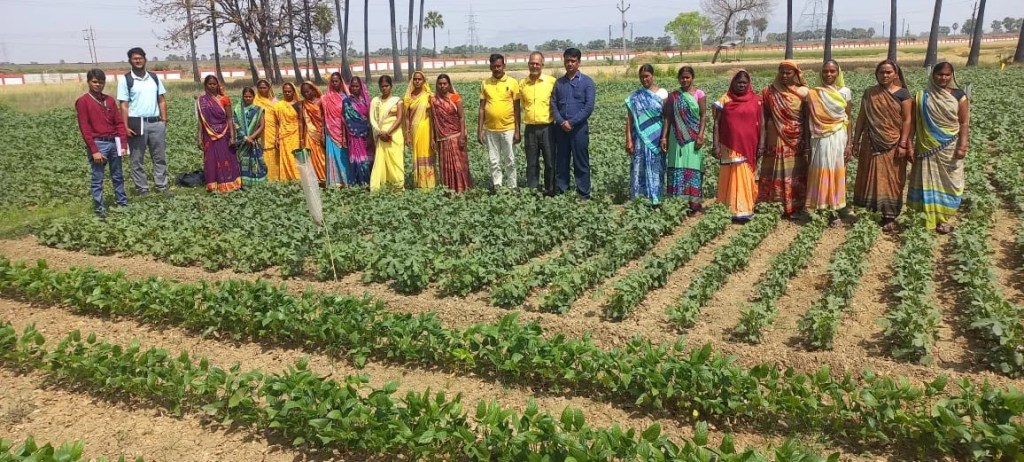
At the center of Anaad foods is a deceptively simple belief: if human health is declining, the environment is degrading, and farmers are trapped in debt, then the place to begin is not in separate solutions for each issue. It is in rebuilding the system that connects them.
That system is agriculture.
More specifically, Prateek believes the answer lies in indigenous cow based natural farming, built around three pillars he returns to again and again: desi seed, desi processing, and desi cow.
This is not nostalgia packaged as sustainability. It is an attempt to rebuild an agricultural model where nutrition, ecology, and farmer viability are not treated as competing goals.
At anaad, farming is not just about growing food. It is about producing food in a way that restores the soil, reduces dependence on external inputs, protects biodiversity, and gives the farmer a chance to survive with dignity.
Why the current system is failing
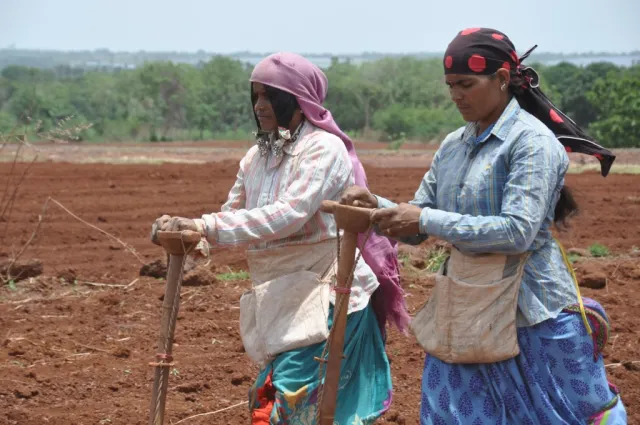
Modern agriculture has become heavily dependent on markets for nearly everything. Seeds come from the market. Fertilizers come from the market. Pest control comes from the market. Farmers are expected to buy inputs every season, often on borrowed money, and hope that the final crop price will somehow cover the risk.
This, according to Prateek, is one of the deepest contradictions in modern food systems.
Farming came before markets. Human civilization began when there was enough surplus grain to sustain settled life. Yet today, the very profession that made civilization possible is dependent on commercial systems at every stage of production.
That dependence creates fragility.
The same logic, he argues, applies to food processing and nutrition. Agriculture today is often optimized not for nourishment, but for scale, shelf life, and appearance. What looks polished, bright, soft, and convenient is assumed to be superior. But those same qualities often come at the cost of nutrition.
Take rice. Over-polishing makes it look whiter and more appealing, but removes the bran that supports digestion and slows glucose release. The grain becomes aesthetically attractive while becoming nutritionally weaker. This is not a minor trade-off. It reflects the way modern food systems increasingly value visual standardization and marketability over bodily health.
The result is a society eating more food, but often receiving less nourishment from it.
The soil is alive — or it should be
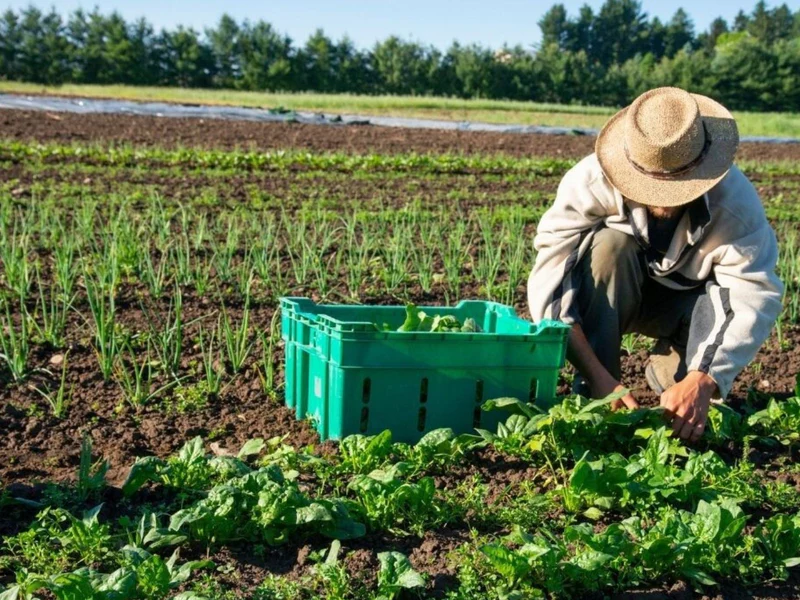
One of the most striking parts of Prateek’s thinking is how he describes soil. For him, soil is not a neutral medium in which crops grow. It is a living entity.
The difference between soil and sand, he explains, is life. What makes soil alive is the presence of microorganisms that break down and synthesize nutrients into forms plants can actually absorb. These microorganisms act like cooks in a kitchen. The raw ingredients may already be present in the soil, but unless someone prepares them into usable food, the plant cannot truly benefit.
This is where indigenous cows enter the picture.
According to the natural farming model anaad follows, the dung and urine of indigenous cows contain dense populations of microorganisms that help reactivate soil biology. Instead of purchasing external microbial cultures or chemical fertilizers, the farmer works with living inputs already adapted to the local ecosystem.
This has major implications.
If the health of the soil improves, the crop grows with better nutrition. If the crop is healthier, the food made from it carries more value. If the farmer is less dependent on expensive external inputs, debt pressure drops. And if the field is managed as a biological system rather than a chemical one, ecological damage is reduced.
It is a very different way of seeing farming. Not as a chemical correction, but as a biological relationship.
The problem with imported fixes

Prateek is especially critical of the way “organic” farming is often practiced. Not because he rejects the intention, but because he believes many organic methods still rely too heavily on external products.
A farmer may buy microbial cultures, packaged soil boosters, or lab-made biological inputs under the assumption that these are more sustainable than chemicals. But if those microorganisms are not adapted to the local ecology, they can lose effectiveness over time. Worse, they can create another dependency cycle where the farmer is once again forced to buy inputs season after season.
For anaad, this is not true sustainability.
The goal is not simply to replace synthetic products with commercial organic ones. The goal is to reduce dependence altogether by working with the local biological intelligence already available through indigenous seeds, local soil systems, and indigenous cow based preparations.
It is a harder path, but in the long run, a more resilient one.
Food should be processed for nutrition, not just profit

anaad Foods is not only concerned with how food is grown. It is equally concerned with how food is processed.
This matters because a lot of damage happens after harvest.
Traditional processing methods were built around preserving nutrition. Food was milled, fermented, dried, churned, or cooked in ways that made it digestible and sustaining. Modern industrial processing, by contrast, often prioritizes shelf life, consistency, and market scale. Those goals are not neutral. They shape what kind of food reaches people’s kitchens.
At anaad, the attempt is to retain as much of the nutritional integrity of food as possible while still making it practical for modern consumption. The company does not reject mechanization altogether. It uses machines where they help. But it does not force industrial logic into every stage if that would damage the nutritional quality of the final product.
This is an important distinction. The point is not to romanticize the past. The point is to ask what the past understood correctly and how that wisdom can be adapted intelligently in the present.
The real cost of “cheap” food
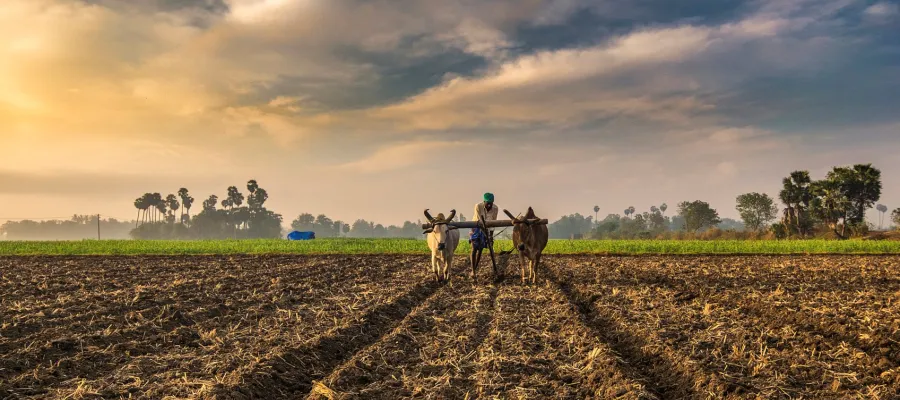
One of the most important ideas in Prateek’s worldview is that food cannot be treated like any other product.
When consumers buy phone subscriptions or streaming subscriptions, they understand that continuity requires commitment. But with food, society has normalized a system in which farmers bear almost all the risk while consumers remain disconnected from the conditions of production.
anaad is trying to change that through a subscription-based model.
The logic is simple. If people truly want chemical-free, nutrient-dense food grown in a way that respects soil and farmers alike, they cannot wait passively at the end of the chain. They need to participate in making that production possible.
That means giving the farmer some degree of economic certainty before the crop is harvested, not after. It also means accepting that food grown ethically cannot be treated as an anonymous commodity. It is the result of a relationship, not just a transaction.
In this model, accountability also increases. The farmer knows who the food is for. The consumer knows how it was grown. And the distance between production and consumption narrows in a meaningful way.
Farming, but also much more
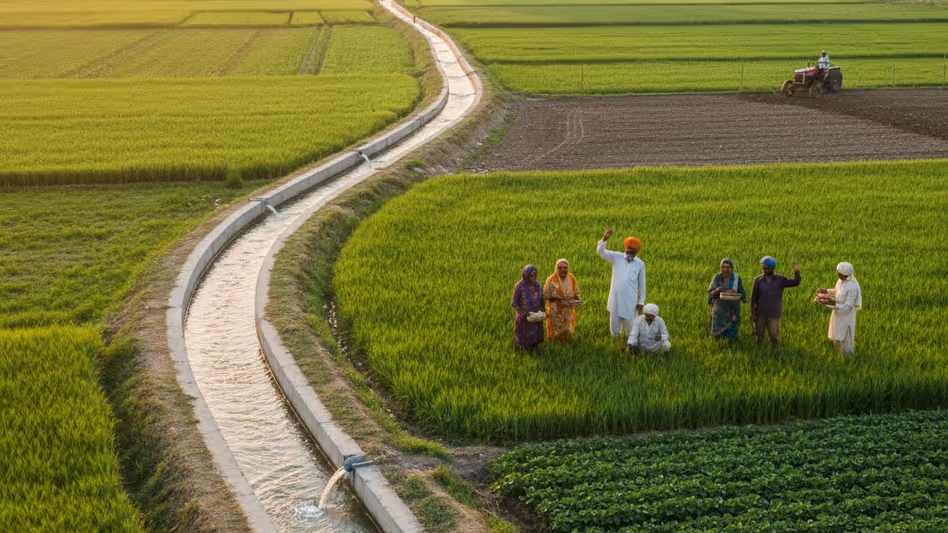
It would be a mistake to see anaad Foods as only a farm or only a food brand.
In Prateek’s vision, this work eventually extends into logistics, processing systems, digital infrastructure, blockchain-based traceability, and even robotic tools where necessary. Not because technology is the solution by itself, but because food systems today operate in a technologically mediated world. If ethical farming is to survive, it cannot remain cut off from the systems shaping commerce and distribution.
The ambition, then, is not small. It is to build a model where the farmer is no longer trapped between market volatility and ecological degradation, and where consumers are no longer alienated from the food that sustains them.
What Anaad Foods really represents
At one level, anaad Foods is about natural farming. At another, it is about reclaiming a different way of thinking.
It asks difficult questions.
Can food still be judged only by how polished it looks
Can farmer survival be left to chance and goodwill
Can health be separated from agriculture
Can sustainability mean anything if it does not begin with soil
These are not easy questions, and Prateek does not pretend to have solved them all. But anaad Foods is an attempt to move beyond awareness and into practice.
Not just to speak about climate, nutrition, and farmers in separate conversations, but to build one system that addresses all three together.
And in a time when food is increasingly treated as a product of industry alone, that might be one of the most radical things a company can do.
FAQs
1. What is anaad Foods?
anaad Foods is a natural farming initiative that works with indigenous cow based natural farming, traditional seed varieties, and minimally processed food to improve human health, support farmers, and restore soil.
2. What is indigenous cow based natural farming?
It is a farming approach that uses indigenous cow dung and urine, local biological inputs, and traditional ecological knowledge to improve soil life, reduce dependence on chemical fertilizers, and grow nutrient-dense food.
3. How is indigenous cow based natural farming different from chemical farming?
Chemical farming depends on synthetic fertilizers and pesticides, while indigenous cow based natural farming focuses on living soil, local microorganisms, and natural inputs that support long-term soil fertility and ecological balance.
4. Why does anaad Foods focus on indigenous seeds?
Indigenous or heirloom seeds are better adapted to local climate and soil conditions. They often retain stronger nutritional qualities, allow seed saving, and reduce dependence on commercial seed systems.
5. Why does food processing matter in natural farming?
Even nutrient-rich crops can lose value if they are over-processed. anaad Foods focuses on processing methods that protect nutrition rather than just improve shelf life, polish, or visual appeal.
6. How does natural farming help farmers economically?
Natural farming can reduce input costs by lowering dependence on purchased fertilizers, pesticides, and microbial products. It can also help farmers build more stable and direct relationships with consumers.
7. Why does anaad Foods use a subscription model?
The subscription model gives farmers greater certainty before harvest. Instead of growing food with no guaranteed buyer, they can produce for committed consumers who value chemical-free, nutrient-dense food.
8. Is natural farming the same as organic farming?
Not always. Natural farming and organic farming may overlap, but natural farming often goes further in reducing purchased external inputs and relies more on local biological systems and indigenous practices.
9. How does natural farming improve soil health?
It supports the microorganisms that make nutrients bioavailable to plants. Healthy soil is not just a medium for crops, but a living ecosystem that affects plant growth, nutrition, and water retention.
10. Why is anaad Foods relevant to sustainability?
anaad Foods connects three major concerns: human health, environmental decline, and farmer distress. Its model shows how food systems can be redesigned to support all three together.
Related articles

Converting Cow dung into eco-friendly papers – the story of Gaukriti
missionsustainability
December 6, 2021

Life-cycle of a plastic Toothbrush
missionsustainability
April 24, 2022
Ready to talk?
We work with individual initiatives, startups, and NGOs dedicated to forging a sustainable future with better design, marketing, technology & operations.