
For years, biodiversity loss was treated mainly as a conservation issue. Businesses discussed forests, wildlife, wetlands, and restoration through corporate social responsibility, while financial planning focused on costs, markets, and conventional operational risks.
That separation is becoming difficult to maintain.
Businesses depend on nature for freshwater, fertile soil, pollination, raw materials, and climate regulation. When these systems deteriorate, the effects can include shortages, higher costs, lower productivity, damaged assets, and regulatory pressure.
The World Economic Forum’s Nature Risk Rising report estimated that $44 trillion of economic value generation, more than half of global GDP at the time, was moderately or highly dependent on nature. The World Bank has also estimated that the collapse of selected ecosystem services could reduce global GDP by $2.7 trillion annually by 2030.
Biodiversity risk is therefore becoming part of operational resilience, supply-chain management, corporate reporting, investment analysis, and long-term financial planning.
What Is Biodiversity Risk?
Biodiversity includes the variety of life across genes, species, and ecosystems. It covers wildlife, plants, insects, microorganisms, forests, rivers, wetlands, soils, oceans, and the ecological relationships connecting them.
These systems provide services that economic activity relies on. Agriculture depends on pollination, soil health, and water, while sectors such as food, construction, mining, energy, textiles, pharmaceuticals, and tourism rely on natural resources and stable ecosystems in different ways.
Biodiversity risk emerges when ecosystem decline affects a company’s ability to operate, source materials, meet legal requirements, maintain stakeholder trust, or protect financial value.
The Taskforce on Nature-related Financial Disclosures asks organisations to examine four connected areas: dependencies on nature, impacts on nature, the risks arising from those relationships, and the opportunities created by responding.
A beverage company, for example, may depend on freshwater while also affecting local water systems through extraction and wastewater. Declining availability creates operational risk, while community opposition or tighter regulation can turn the same issue into legal, reputational, or financial risk.
Why Nature Loss Creates Financial Exposure
The IPBES Global Assessment found that around one million animal and plant species face extinction, many within decades, unless the drivers of biodiversity loss are reduced.
The main drivers include land and sea-use change, direct exploitation, climate change, pollution, and invasive species. Their effects move through economies because companies are connected to nature through operations, suppliers, and financial portfolios.
A retailer may have little direct impact at its offices but source food, timber, cotton, metals, or packaging from regions facing deforestation or water stress. A bank can be exposed through the companies and projects it finances. Biodiversity risk may therefore remain hidden several layers below direct operations.
The Main Types of Biodiversity Risk
Risk type | How it arises | Possible business impact |
Physical | Ecosystems lose the ability to provide water, pollination, soil fertility, flood protection, or materials | Supply disruption, lower productivity, asset damage, and higher costs |
Supply chain | Suppliers depend on degraded ecosystems or sensitive locations | Shortages, price volatility, delays, and supplier failure |
Regulatory and legal | Rules tighten around land use, pollution, sourcing, or disclosure | Compliance costs, litigation, fines, and project delays |
Reputational | A company is linked to deforestation, habitat damage, or water depletion | Investor concern, consumer criticism, and loss of trust |
Financial | Nature exposure affects asset values, credit quality, insurance, or capital access | Higher borrowing costs, stranded assets, and portfolio losses |
Systemic | Ecosystem decline affects entire sectors or economies | Inflation, food insecurity, and market instability |
These risks can reinforce one another. A physical shortage may raise costs while regulatory and reputational pressures emerge at the same time.
Water, Soil, Pollination and Forests
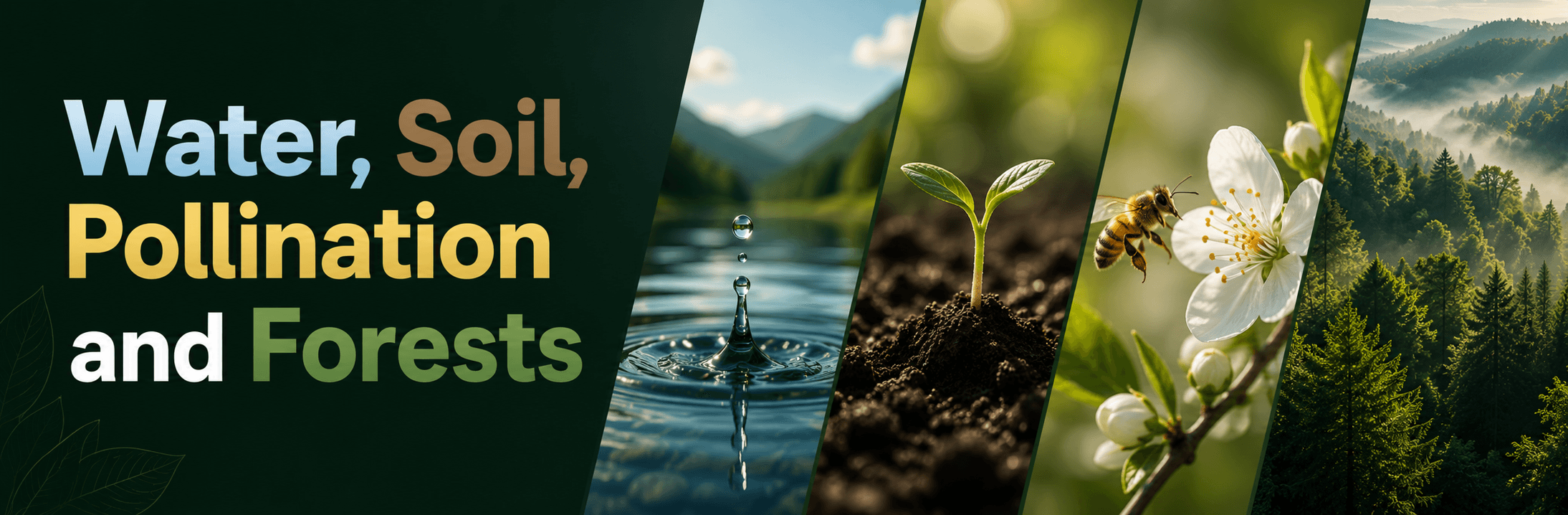
Water-dependent businesses face risks when watersheds, wetlands, forests, and groundwater systems deteriorate. Reduced availability can interrupt manufacturing, food processing, energy production, agriculture, and mining. Poor water quality can also increase treatment and compliance costs.
Soil degradation can reduce crop yields and increase dependence on fertilisers and irrigation. Pollinator decline can affect agricultural commodities across food, beverage, retail, cosmetics, and pharmaceuticals.
Forests provide materials while regulating water, stabilising soil, storing carbon, and reducing erosion. Their loss can create disruption, community conflict, and traceability risks beyond forestry.
The ENCORE initiative identifies agriculture, aquaculture and fisheries, and forest products among the sectors most materially dependent on nature. Utilities, oil and gas, and mining also show high dependence on ecosystem services.
Disclosure Expectations Are Changing
Nature-related reporting is moving closer to mainstream corporate disclosure.
The final TNFD Recommendations are organised around governance, strategy, risk and impact management, and metrics and targets. The LEAP approach helps organisations locate their interface with nature, evaluate dependencies and impacts, assess risks and opportunities, and prepare to respond and report.
The Kunming-Montreal Global Biodiversity Framework reinforces this direction. Its Target 15 calls for businesses, particularly large companies and financial institutions, to monitor, assess, and transparently disclose biodiversity-related dependencies, impacts, and risks across operations, value chains, and portfolios.
This signals that investors, regulators, major buyers, and customers are likely to ask more detailed questions about where companies interact with nature and how those risks are managed.
Why Biodiversity Risk Is Harder to Measure Than Carbon
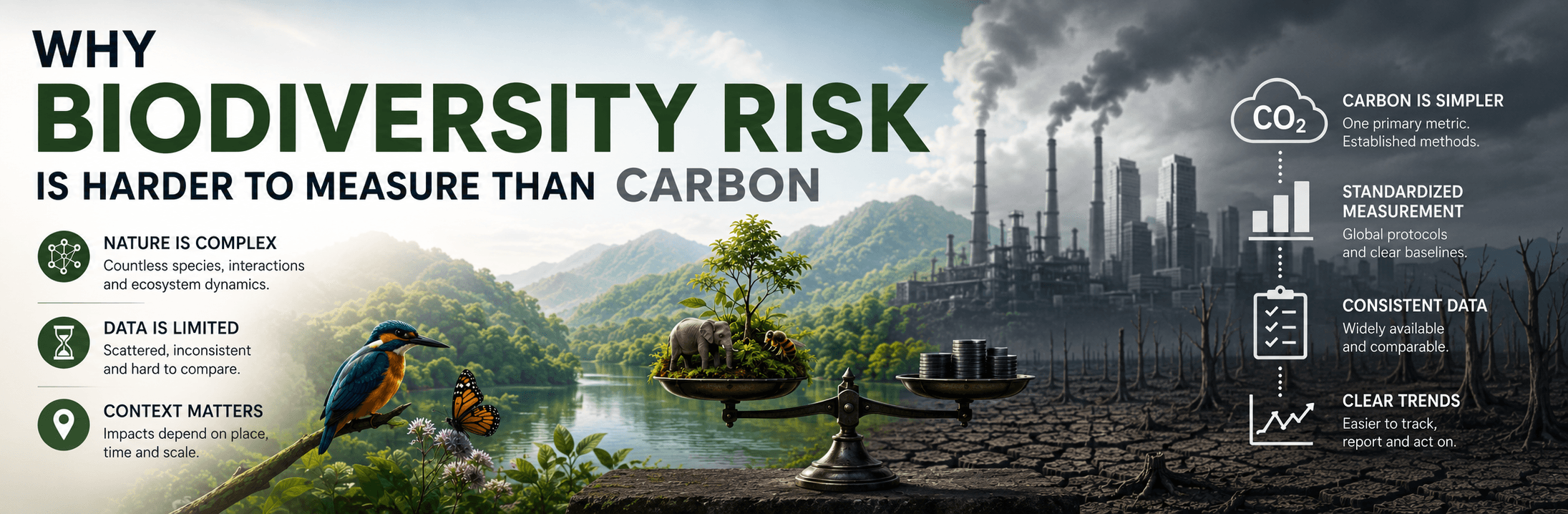
Carbon accounting uses a common unit: tonnes of carbon dioxide equivalent. Biodiversity does not have one universal metric that can represent every ecosystem and location.
Nature is place-specific. Water use in a water-rich region does not create the same risk as the same volume used in a stressed watershed. Land use near a critical habitat may be more significant than the same area within an established industrial zone.
Companies therefore need to combine operational data with location-based information such as ecosystem condition, protected areas, water stress, forest loss, land conversion, pollution, and community dependence.
Geospatial analysis can help by mapping facilities, suppliers, and sourcing regions to identify priority hotspots instead of treating every location as equally exposed.
How Businesses Can Begin

Companies do not need to count every species across the value chain before acting. A practical starting point is to identify where major dependencies, impacts, and ecological sensitivities overlap.
Businesses can begin by:
Mapping important facilities, assets, suppliers, and sourcing regions
Identifying dependencies on water, soil, pollination, forests, and other services
Assessing impacts such as land conversion, pollution, extraction, and waste
Prioritising sensitive locations and high-risk supply chains
Integrating findings into procurement, enterprise risk, investment, and project design
Establishing baselines, targets, monitoring systems, and accountability
The Science Based Targets Network recommends avoiding and reducing pressures on nature first, followed by regeneration and restoration, while transforming the systems that drive nature loss.
Restoration should not become permission to cause avoidable damage elsewhere. Credible biodiversity management begins with prevention.
From Risk Management to Opportunity
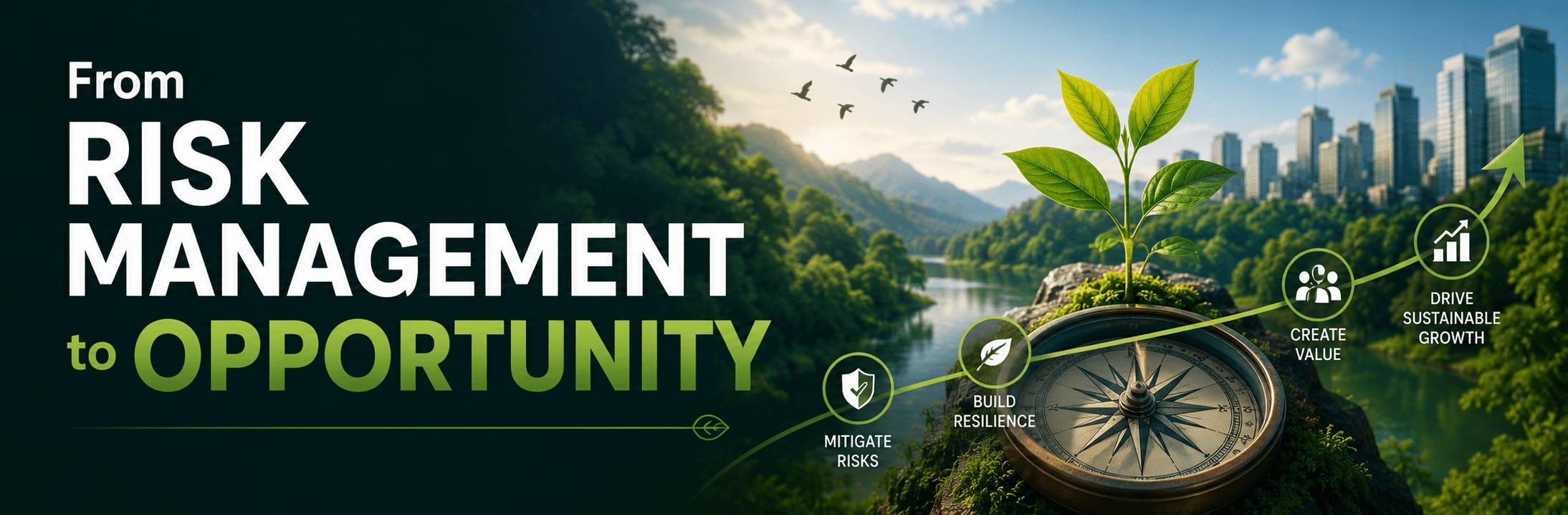
Nature-related action can improve water efficiency, supply-chain visibility, resource security, and resilience. It can also create opportunities in regenerative agriculture, restoration, biodiversity monitoring, geospatial intelligence, sustainable sourcing, and nature-related finance.
However, claims such as “nature-positive” require clear baselines, measurable outcomes, location-specific evidence, and transparency about trade-offs.
The Way Forward
Biodiversity risk is becoming financially relevant because businesses operate within nature, not outside it.
Water security, agricultural productivity, raw-material availability, infrastructure resilience, and economic stability all depend on functioning ecosystems. When these systems weaken, companies can face higher costs, disrupted supply chains, regulatory exposure, and reduced asset value.
The immediate priority is to understand where the business depends on nature, where it affects nature, and where those relationships could create material risk.
Companies that map and manage these connections early will be better prepared for disclosure expectations, supply-chain disruption, and new opportunities.
Biodiversity loss is no longer only a conservation concern. It is an operational, strategic, and financial issue businesses can no longer afford to overlook.
FAQs
1. What is biodiversity risk for businesses?
Risk created by ecosystem decline and a company’s dependencies and impacts on nature.
2. How does biodiversity loss affect businesses?
It can disrupt water, raw materials, supply chains, assets, compliance, and finance.
3. Which sectors face significant exposure?
Agriculture, food, forestry, fisheries, mining, construction, energy, textiles, tourism, and finance.
4. What is a nature dependency?
An ecosystem service, such as water or pollination, that a business relies on.
5. What is the TNFD?
A framework for assessing, managing, and disclosing nature-related issues.
6. Why is biodiversity difficult to measure?
Its significance depends heavily on ecosystem condition and location.
7. How can companies assess biodiversity risk?
By mapping operations and suppliers, identifying dependencies and impacts, and prioritising sensitive locations.
8. Is it relevant to banks and investors?
Yes. They are exposed through financed companies, assets, and projects.
9. Can biodiversity action create opportunities?
Yes, through resilient sourcing, restoration, monitoring, and nature-related finance.
10. What should businesses do first?
Locate where dependencies, impacts, and ecological sensitivity overlap.

Other articles


We work with individuals, startups, and NGOs dedicated to forging a sustainable future. Tell us about your mission.

