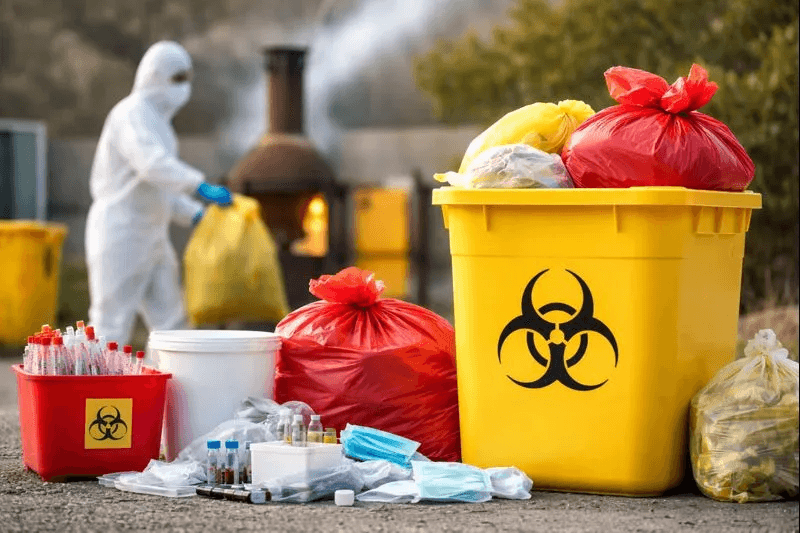
Healthcare saves lives—but it also generates waste that can harm people, ecosystems, and cities if not managed correctly. Biomedical waste management in India is therefore not a backend operational task; it is a public health safeguard, an environmental protection system, and a legal obligation.
India generates hundreds of tonnes of biomedical waste every day, from hospitals, clinics, diagnostic laboratories, vaccination camps, veterinary centres, and research institutions. This waste is different from regular municipal waste because it carries pathogens, toxic chemicals, sharp objects, and pharmaceutical residues. Without a structured system, biomedical waste can lead to disease transmission, groundwater contamination, illegal recycling of medical plastics, and long-term ecological damage.
This blog explains how biomedical waste management works in India from start to finish, based strictly on official guidelines issued by the Central Pollution Control Board (CPCB) and implemented at the state level by bodies such as the Gujarat Pollution Control Board (GPCB).
Understanding Biomedical Waste in the Indian Context
Biomedical waste refers to any waste generated during the diagnosis, treatment, immunisation of humans or animals, or during related research activities. This includes waste that may appear harmless at first glance—such as cotton swabs or plastic tubing—but becomes hazardous once contaminated with blood, body fluids, chemicals, or microorganisms.
In India, biomedical waste is legally classified as hazardous waste, regardless of quantity. Even a small clinic or diagnostic lab producing minimal waste must follow the same regulatory framework as a large hospital. This approach recognises that risk is not proportional to volume, but to the nature of the waste itself.
Common examples include blood-soaked dressings, used syringes and needles, IV tubing, expired medicines, laboratory cultures, human or animal anatomical waste, and broken glassware from medical use. When such waste is mixed with municipal waste or handled without safeguards, it becomes a direct vector for infections such as Hepatitis B, Hepatitis C, and HIV, and a long-term pollutant of soil and water.
Why Biomedical Waste Management Is a Critical Issue in India
India’s healthcare system is vast and rapidly expanding. With increasing hospital capacity, diagnostics, vaccination programmes, and home healthcare services, biomedical waste generation has grown steadily. During the COVID-19 period alone, biomedical waste volumes surged dramatically, exposing weaknesses in segregation, collection, and treatment systems.
According to CPCB assessments, poor segregation at the source is the single biggest failure point. When biomedical waste is not separated correctly, recyclable materials become contaminated, treatment costs increase significantly, and incineration loads rise—leading to higher emissions of pollutants such as dioxins and furans.
Biomedical waste management is therefore not only about disposal. It is about preventing infections, protecting sanitation workers, safeguarding urban environments, and ensuring regulatory compliance for healthcare institutions.
India has:
Over 2 lakh healthcare facilities
Rapid growth in diagnostics, vaccination, and home healthcare
High population density near hospitals
According to CPCB data:
India generated ~774 tonnes/day of biomedical waste post-COVID peak
Improper segregation increases treatment cost by 3–4×
Needle-stick injuries are among the top occupational hazards for sanitation workers
Biomedical waste mismanagement can lead to:
Spread of Hepatitis B, C, HIV
Contamination of groundwater
Illegal reuse of syringes and plastics
Toxic emissions from uncontrolled burning
How Biomedical Waste Management Operates in India
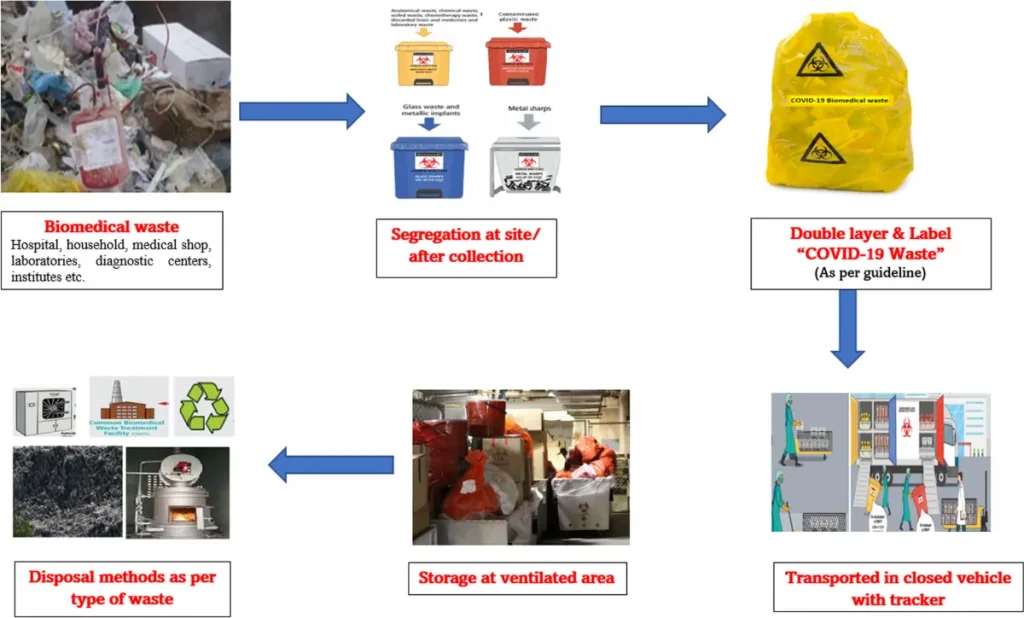
India follows a centralised biomedical waste management model, designed to reduce risk and standardise treatment. The system is structured around a clear flow: generation, segregation, collection, transportation, treatment, and final disposal.
Every healthcare facility, regardless of size, is legally defined as a “waste generator” or “occupier.” This occupier is fully responsible for the waste until its safe treatment and disposal, even if third-party agencies are involved.
Segregation at Source: The Foundation of the System
The most critical stage in biomedical waste management is segregation at the point of generation. Indian regulations make it explicit that waste must be separated where it is generated, not later by housekeeping staff or waste handlers.
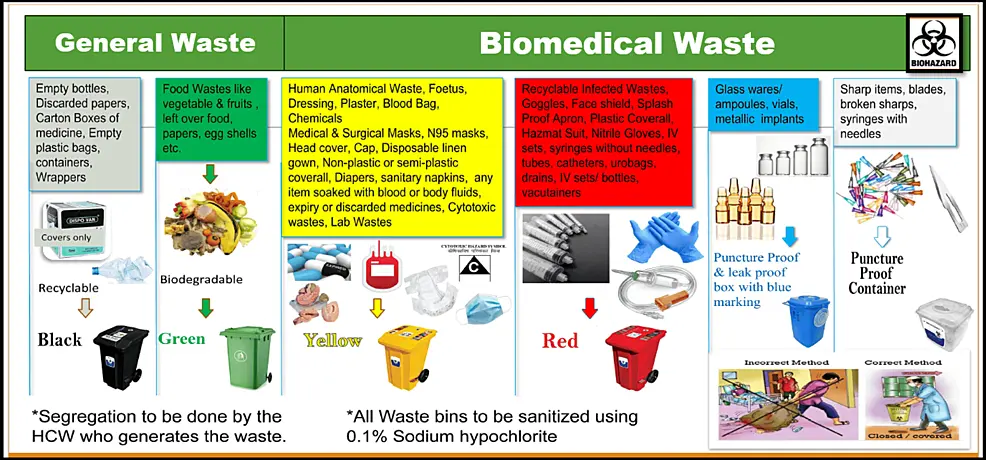
India uses a four-colour coding system, introduced to simplify earlier complex classifications. Yellow bags are meant for infectious and incinerable waste such as anatomical waste, soiled dressings, and expired medicines. Red bags are used for contaminated but recyclable plastics like IV tubes, gloves, and catheters. White containers are reserved strictly for sharps such as needles and blades, while blue containers are meant for glassware and metallic implants.
This segregation is not symbolic—it determines the entire downstream treatment pathway. For example, a syringe without a needle goes into a red bag for disinfection and recycling, while the needle itself must go into a white puncture-proof container for sterilisation and encapsulation. If these are mixed, the entire batch may be incinerated unnecessarily, increasing environmental impact.
Collection, Barcoding, and Storage
Once segregated, biomedical waste must be labelled, barcoded, and stored safely. Since 2018, India has made barcoding mandatory to enable digital tracking of biomedical waste from its point of origin to final disposal. Each bag or container is linked to the healthcare facility, waste category, date, and weight.
Storage rules are strict. Biomedical waste cannot be stored for more than 48 hours within a healthcare facility. Storage areas must be secure, ventilated, clearly marked, and inaccessible to the public. Mixing biomedical waste with municipal waste is a serious violation and attracts penalties.
Colour | Waste Type | Examples |
|---|---|---|
Yellow | Infectious & incinerable | Anatomical waste, soiled waste, expired medicines |
Red | Contaminated recyclables | IV tubes, gloves, catheters, syringes (without needles) |
White | Sharps | Needles, blades, scalpels |
Blue | Glass & metals | Vials, ampoules, implants |
Transportation and the Role of CBWTFs
Biomedical waste is transported using authorised, dedicated vehicles to Common Biomedical Waste Treatment Facilities (CBWTFs). These facilities are licensed, monitored, and audited by State Pollution Control Boards.
The rationale behind CBWTFs is simple: it is safer, more economical, and more environmentally controlled to treat biomedical waste in specialised facilities rather than at thousands of individual hospitals. In states like Gujarat, almost all healthcare facilities are mapped to approved CBWTFs, ensuring standardised treatment.
Treatment Technologies and End-of-Life Outcomes
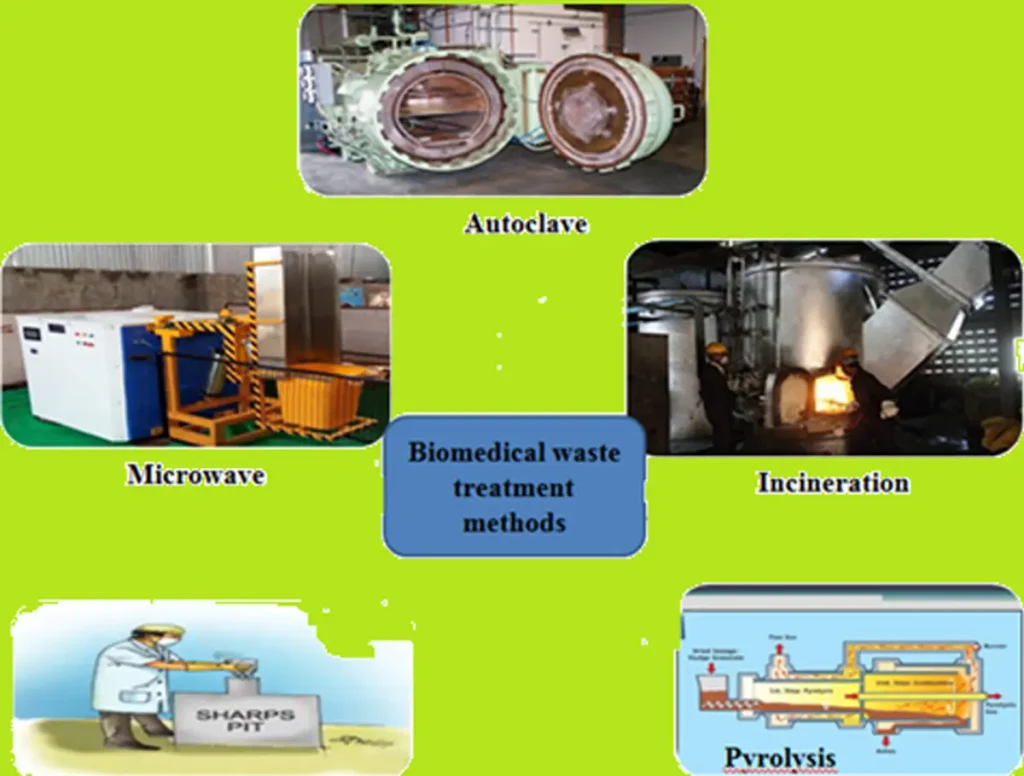
At CBWTFs, biomedical waste is treated based on its category. Infectious waste in yellow bags is typically incinerated or treated through advanced thermal processes. Red-category plastics are autoclaved, shredded, and sent for recycling into non-medical products. Sharps are sterilised and encapsulated before being disposed of in secured landfills. Glassware is disinfected and recycled.
Waste category | Treatment Method |
|---|---|
Yellow | Incineration / Plasma pyrolysis |
Red | Autoclaving → Shredding → Recycling |
White | Sterilisation → Encapsulation |
Blue | Disinfection → Recycling |
Incineration ash | Secured hazardous landfill |
Liquid waste | Effluent Treatment Plant (ETP) |
Importantly, treatment does not mean elimination. Incineration produces ash that must be disposed of in hazardous waste landfills, and treated wastewater must meet strict effluent standards before discharge. This highlights that biomedical waste management is a chain of controlled risks, not a single action.
Waste | Final End-of-Life |
|---|---|
Incinerated waste | Ash → secured hazardous landfill |
Autoclaved plastics | Recycled into non-medical products |
Sharps | Encapsulated → landfill |
Glass | Recycled |
Effluent | Released only after meeting norms |
Legal Framework Governing Biomedical Waste in India
Biomedical waste management in India is governed primarily by the Biomedical Waste Management Rules, 2016, with amendments in subsequent years to strengthen compliance, reporting, and digital tracking.
These rules place clear responsibility on the occupier of a healthcare facility. Contractors may handle waste, but legal accountability always rests with the healthcare provider. Facilities must submit annual reports, maintain training records, report accidents, and ensure worker safety measures such as vaccinations and protective equipment.
Regulatory oversight is carried out by CPCB at the national level and by State Pollution Control Boards at the state level. Non-compliance can result in fines, suspension of operations, or even prosecution in severe cases.
Worker Safety and Public Health Protection
Sanitation workers, nurses, and waste handlers are among the most vulnerable groups in the biomedical waste chain. CPCB guidelines emphasise mandatory use of personal protective equipment, vaccination against Hepatitis-B and Tetanus, needle-stick injury protocols, and regular health check-ups.
A well-managed biomedical waste system protects not just patients, but also the invisible workforce that keeps healthcare systems running.
Biomedical Waste Management and Sustainability
From a sustainability perspective, biomedical waste presents complex trade-offs. Incineration ensures pathogen destruction but contributes to air pollution and greenhouse gas emissions. Recycling is possible, but only after thorough disinfection. As a result, waste reduction, better segregation, and non-incineration technologies are increasingly being encouraged.
For hospitals and pharmaceutical companies, biomedical waste management is now closely linked to ESG compliance, regulatory audits, and public trust.
Biomedical waste management in India is a system, not a service. It involves people, processes, technology, and law working together to prevent harm. When done well, it protects health workers, communities, and ecosystems. When done poorly, it creates invisible but serious risks.
As India’s healthcare infrastructure continues to grow, strengthening biomedical waste management is not optional—it is foundational to sustainable and responsible healthcare.
FAQs
What is biomedical waste management?
Biomedical waste management is the systematic process of segregating, collecting, treating, transporting, and safely disposing of waste generated during diagnosis, treatment, immunisation, or research involving humans or animals. Its primary objective is to protect public health and prevent environmental contamination.
What types of waste are considered biomedical waste in India?
Biomedical waste includes infectious waste, human and animal anatomical waste, soiled dressings, used syringes and needles, laboratory waste, expired medicines, chemical waste, contaminated plastics, sharps, and broken medical glassware generated from healthcare activities.
Why is biomedical waste management important in India?
Biomedical waste management is critical in India because improper handling can lead to disease transmission, needle-stick injuries, groundwater contamination, air pollution from burning waste, and illegal reuse of medical disposables. With a large and growing healthcare sector, weak waste management directly threatens public health.
What is a Common Biomedical Waste Treatment Facility (CBWTF)?
A Common Biomedical Waste Treatment Facility is an authorised, centralised facility that treats biomedical waste collected from multiple healthcare institutions. CBWTFs use controlled technologies such as incineration, autoclaving, shredding, and secured landfilling to ensure safe disposal.
Who is legally responsible for biomedical waste management?
The legal responsibility for biomedical waste management lies with the occupier of the healthcare facility, such as a hospital or clinic. Even if waste handling is outsourced, the healthcare provider remains accountable for compliance under the Biomedical Waste Management Rules.

Other articles

We work with individuals, startups, and NGOs dedicated to forging a sustainable future. Tell us about your mission.

