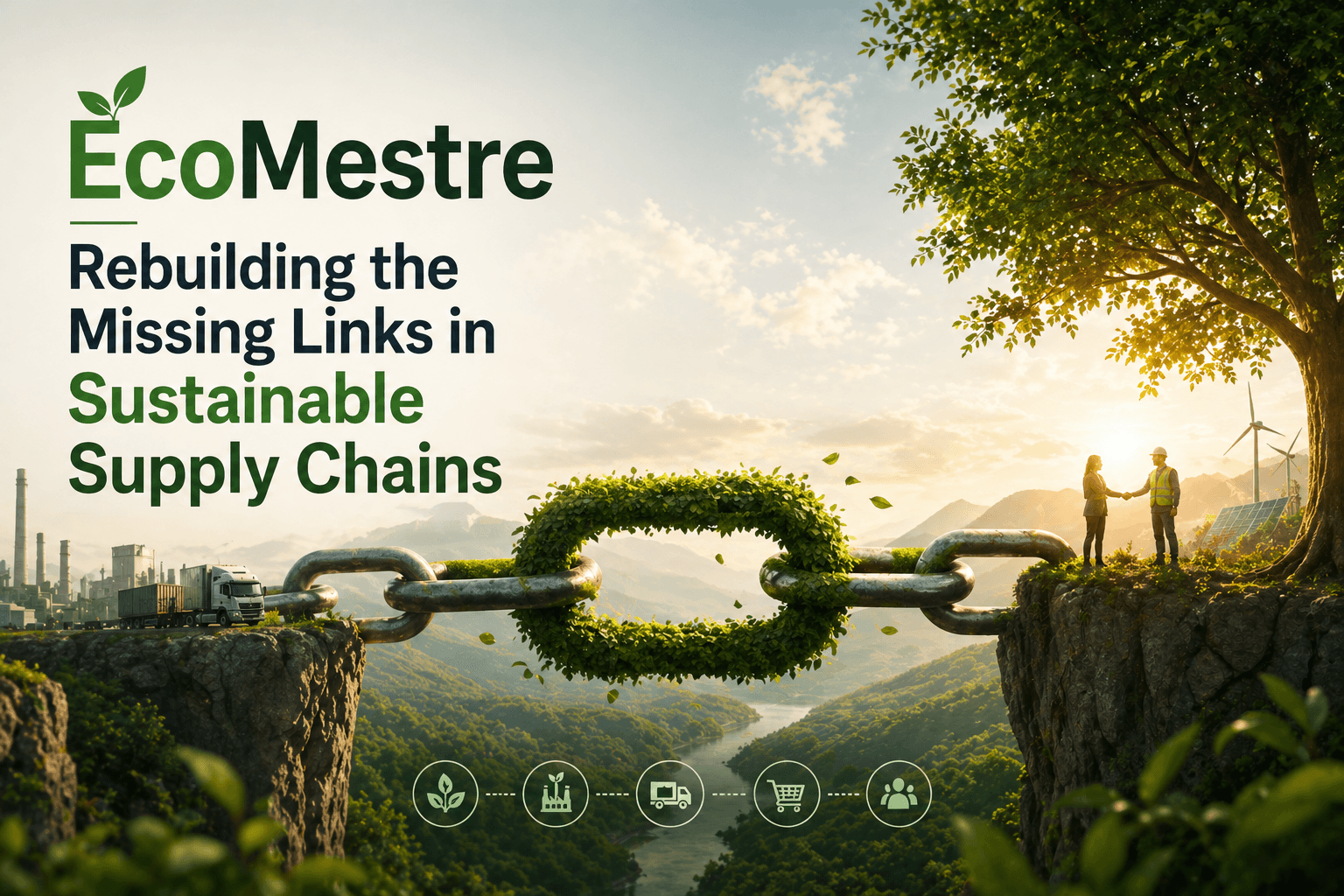
Sustainability often looks simple on the surface.
Buy better materials. Choose handmade. Support local artisans. Avoid plastic. Reduce waste.
But when you step a little deeper into how products are actually made and delivered, the picture becomes far more complex. The problem is rarely about intent. It is about how disconnected the system has become.
Artisans create exceptional products but struggle to reach markets. Manufacturers have the ability to scale but operate within rigid systems. Consumers want to make better choices but are often far removed from the origin of what they buy.
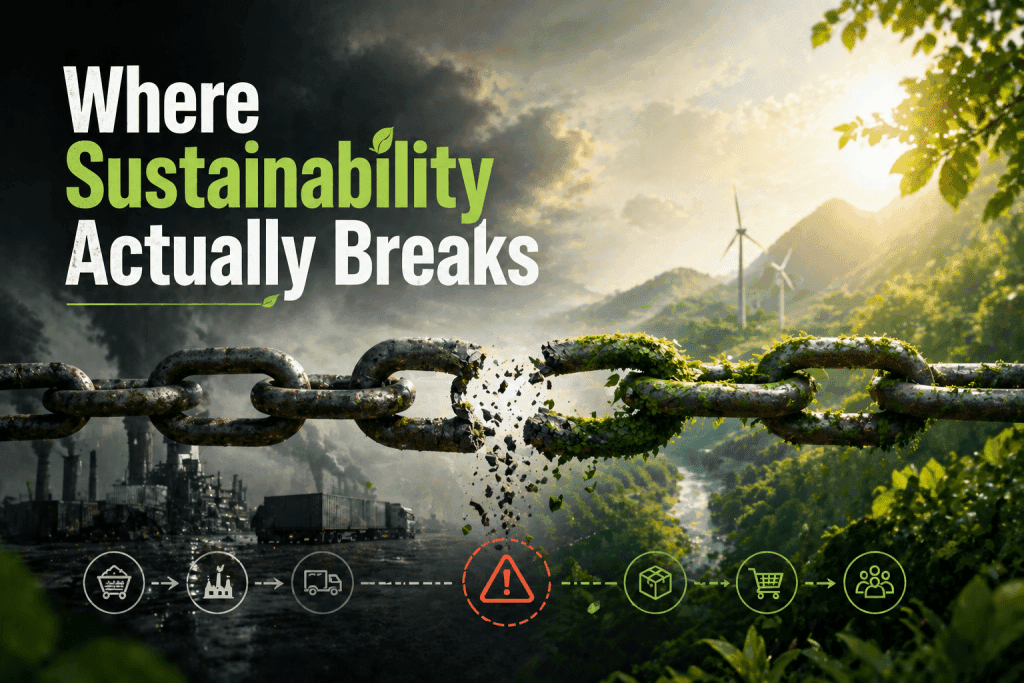
Somewhere between these three, something breaks.
EcoMestre is working in that broken space—not by creating just another “sustainable product,” but by rethinking how the entire chain connects.
Where Sustainability Actually Breaks
Most conversations around sustainability today focus on materials.
We talk about organic cotton, recycled plastic, biodegradable packaging, or low-impact production. These are important, but they only address one part of the problem. What often goes unnoticed is the structure behind these products—the system that connects production to consumption.
In reality, the challenge is not a lack of sustainable materials or skilled people. It is the absence of alignment.
An artisan in a rural cluster may have the skill to produce world-class work, but lacks consistent demand. A manufacturer may want to create sustainable products, but struggles to integrate handcrafted processes into scalable systems. A consumer may be willing to pay for better products, but has no visibility into how or where they are made.
These are not isolated issues. They are symptoms of a fragmented ecosystem.
EcoMestre starts by addressing this fragmentation.
Building Bridges Instead of Products
What makes EcoMestre different is where it chooses to intervene.
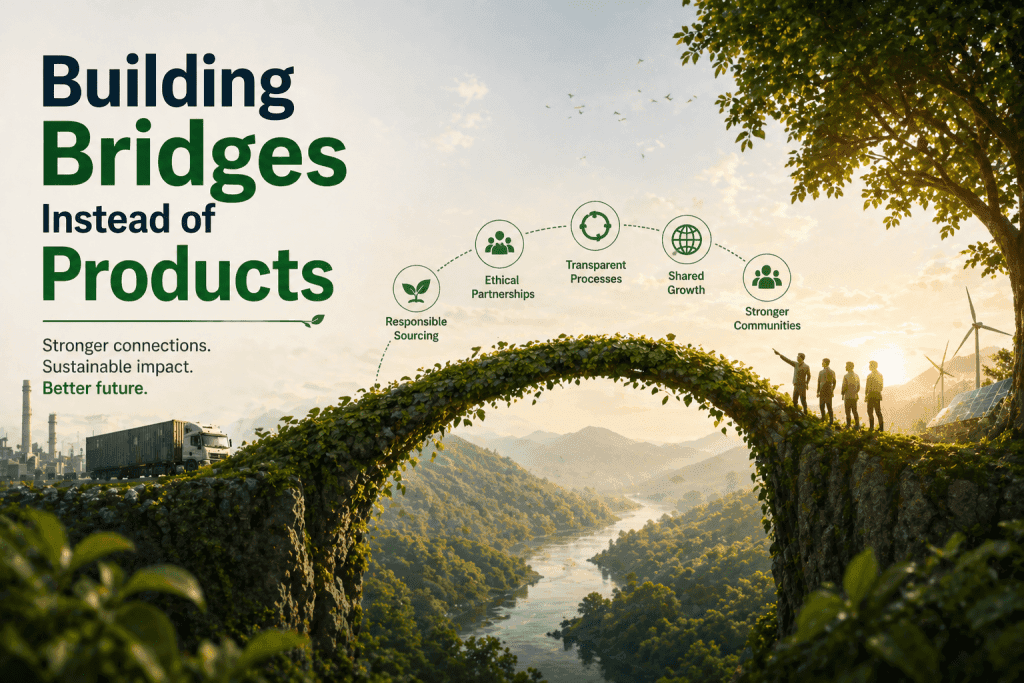
Instead of focusing only on the end product, it works across the entire chain—bringing artisans, manufacturers, and buyers into one coordinated system. This may sound straightforward, but in practice, these groups rarely operate in sync.
Artisans are often treated as independent units, working on small, irregular orders. Manufacturers operate on timelines, consistency, and volume. Buyers expect quality, reliability, and access.
When these expectations do not align, inefficiencies emerge.
EcoMestre acts as the bridge that aligns these expectations. It enables artisans to participate in structured production rather than sporadic demand. It helps manufacturers incorporate craftsmanship without compromising scalability. And it gives buyers access to products that carry both authenticity and consistency.
The result is not just a better product, but a more functional system.
Beyond the Idea of “Supporting Artisans”
There is a widely accepted belief that the way to sustain crafts is to “support artisans.” While this idea has value, it often remains superficial.
Support, in most cases, translates to one-time purchases, limited exposure, or short-term collaborations. It rarely addresses the underlying issue of stability.
For artisans, the real challenge is not visibility—it is predictability.
Without consistent demand, planning becomes difficult. Without planning, production becomes risky. And when income remains uncertain, younger generations begin to move away from traditional crafts.
Over time, this leads to something far more concerning than economic loss—the erosion of knowledge.
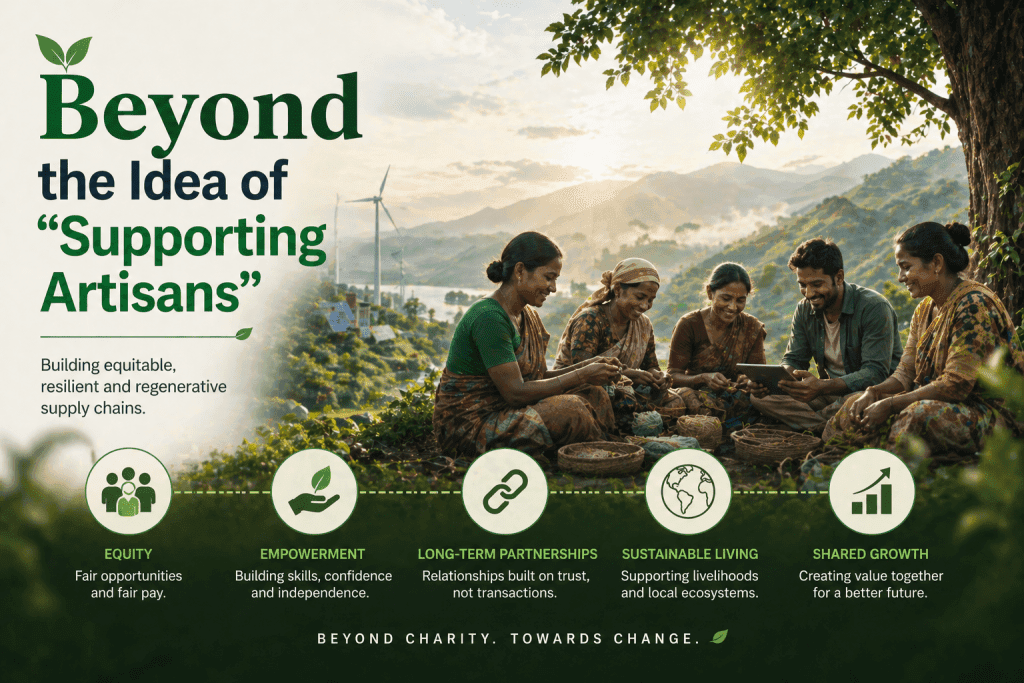
EcoMestre’s approach shifts the conversation from support to integration. Instead of positioning artisans on the margins, it places them at the center of a functioning supply chain. This creates continuity, not just opportunity.
When artisans become part of a system rather than an exception to it, sustainability becomes viable.
Rethinking the Role of Manufacturing

Manufacturing often carries a negative perception in sustainability discussions. It is associated with scale, uniformity, and environmental impact.
But removing manufacturing from the equation is neither practical nor necessary.
The real question is how manufacturing can evolve.
EcoMestre works with manufacturers to rethink production—not by replacing traditional methods, but by integrating them. This creates a hybrid model where handcrafted elements coexist with structured processes.
Instead of viewing craft and scale as opposing forces, it treats them as complementary.
This shift is critical. Without manufacturing, sustainable products remain niche. Without craftsmanship, they lose depth and meaning.
By bringing the two together, EcoMestre enables products that are both scalable and rooted in tradition.
Changing How We Look at Consumption

For consumers, sustainability often begins with labels.
We look for indicators—eco-friendly, organic, handmade, recycled. These markers help simplify decisions, but they do not always tell the full story.
A product may use sustainable materials but still be part of an exploitative system. At the same time, a well-structured supply chain can create a positive impact even if the material itself is not perfect.
EcoMestre encourages a shift in perspective.
Instead of asking only what a product is made of, it invites consumers to ask what system it supports. Who made it? How was it produced? How is value distributed?
This shift does not complicate consumption. It makes it more meaningful.
When consumers begin to understand the journey behind a product, their choices become more intentional. The transaction becomes a connection.
The Invisible Work of System Design
One of the most important aspects of EcoMestre’s work is also the least visible.
Products are tangible. Systems are not.
But systems define how value flows—who benefits, who bears risk, and how sustainability is sustained over time.
EcoMestre focuses on designing these invisible structures. It works on how supply chains are organized, how stakeholders interact, and how processes can be aligned to reduce inefficiencies.
This kind of work does not produce instant results. It is slower, more complex, and often harder to communicate.
But it is also what determines whether sustainability can scale.
Without strong systems, even the best products remain isolated successes. With the right systems, small interventions can create a large impact.
Why This Matters Now

Sustainability is no longer a fringe idea. It is entering mainstream business, influencing policy, and shaping consumer expectations.
At the same time, there is a growing realization that incremental changes are not enough.
Switching materials or redesigning packaging can only go so far. The deeper challenge lies in how we structure production and distribution.
EcoMestre’s approach speaks directly to this challenge.
By reconnecting the different parts of the ecosystem, it creates a model where sustainability is embedded, not added. It shows that traditional knowledge systems and modern supply chains can work together, rather than compete.
In doing so, it moves the conversation forward—from isolated solutions to integrated thinking.
The Invisible Work of System Design
At its core, what EcoMestre is rebuilding is not just a supply chain.
It is a relationship.
A relationship between the maker and the user. Between tradition and modernity. Between intention and execution.
For a long time, these relationships have been replaced by transactions—fast, efficient, and often impersonal. While this has enabled scale, it has also created distance.
EcoMestre attempts to reduce that distance.
It does so not by rejecting modern systems, but by making them more inclusive. By ensuring that the people behind the product remain visible. By creating structures where value flows more equitably.
This does not mean the system becomes perfect.
But it becomes more balanced.
The Way Forward
If sustainability is to move beyond good intentions, it must move beyond individual products.
It must address the systems that define how those products are created and consumed.
EcoMestre offers one way of thinking about that future. A future where artisans are not isolated, manufacturers are not disconnected, and consumers are not unaware.
A future where sustainability is not a feature, but a foundation.
And perhaps most importantly, a future where the system works—not just for efficiency, but for people and the planet alike.
FAQs
1. What is EcoMestre?
EcoMestre is a platform that connects artisans, manufacturers, and buyers to build sustainable supply chains. It focuses on integrating craftsmanship with scalable production to create products that are both ethical and commercially viable.
2. How does EcoMestre support artisans?
EcoMestre integrates artisans into structured supply chains instead of relying on one-time sales. This creates consistent demand, stable income, and long-term sustainability for traditional crafts.
3. What problem is EcoMestre solving?
EcoMestre addresses the disconnect between artisans, manufacturers, and consumers. It solves supply chain fragmentation by aligning production, scale, and demand within a single ecosystem.
4. How is EcoMestre different from other sustainable brands?
Unlike typical sustainable brands that focus only on materials, EcoMestre focuses on the entire system. It ensures sustainability in sourcing, production, and value distribution—not just the final product.
5. Why is connecting artisans with manufacturers important?
Artisans bring skill and authenticity, while manufacturers bring scale and consistency. Connecting both enables sustainable products to reach larger markets without losing craftsmanship.
6. Does EcoMestre only focus on handmade products?
EcoMestre focuses on blending handmade craftsmanship with modern manufacturing. The goal is not just handmade products, but scalable, sustainable production systems.
7. How does EcoMestre impact sustainable consumption?
EcoMestre enables consumers to buy products that are ethically made and systemically sustainable. It promotes transparency so buyers understand who made the product and how.
8. What industries can EcoMestre impact?
EcoMestre’s model can apply across industries like textiles, home decor, lifestyle products, and sustainable packaging—anywhere artisans and manufacturing intersect.
9. Why is supply chain design important in sustainability?
A product is only truly sustainable if the entire supply chain is responsible. Poor systems can undermine even eco-friendly materials, making system design critical.
10. How can consumers support platforms like EcoMestre?
Consumers can support EcoMestre by choosing products that are ethically sourced and systemically sustainable. Making informed purchases helps strengthen responsible supply chains.

Other articles


We work with individuals, startups, and NGOs dedicated to forging a sustainable future. Tell us about your mission.

