

- All articles
Environmental Ethics: Rethinking Humanity’s Moral Relationship With the Natural World
By Ketul
Updated 24 Jan, 2026
10 min read
Contents
Main Menu
Modern environmental crises are often discussed in scientific, economic, or political terms. Climate models, emission targets, biodiversity metrics, and sustainability strategies dominate public discourse. Yet beneath all these frameworks lies a more fundamental question: what moral responsibilities do humans have toward the natural world? This question defines environmental ethics.
Environmental ethics is not concerned only with protecting nature as a resource. It asks deeper questions about value, responsibility, justice, and coexistence. As human activity increasingly shapes planetary systems, environmental ethics offers a way to examine not just how we interact with nature, but how we ought to.
What Environmental Ethics Really Means
EIA in India began in the 1970s amid growing environmental concerns. The Bhopal gas tragedy in 1984 highlighted the need for stricter environmental regulations, leading to the Environment (Protection) Act in 1986.
The first official EIA Notification came in 1994, requiring certain projects to undergo EIA before approval. In 2006, the notification was revised, introducing categories for projects and improving the assessment process.
In 2020, proposed amendments sparked public controversy over concerns of weakened environmental safeguards. Despite challenges, EIA remains a vital tool for balancing development with environmental protection in India.
Why Environmental Ethics Became Necessary
Environmental ethics emerged in response to the visible ecological damage caused by industrialisation and technological expansion. Air and water pollution, deforestation, nuclear disasters, and species extinction revealed that economic progress carried serious moral consequences.
Philosophers, scientists, and environmental advocates began questioning the worldview that treated nature as an inexhaustible resource. Ethical reflection became necessary to address the growing gap between technological capability and moral restraint. These concerns shaped early discussions about human responsibility toward the environment.
Core Ideas That Shape Environmental Ethics
Intrinsic Value of Nature

A foundational idea in environmental ethics is that nature may possess intrinsic value. This means that ecosystems, species, and natural processes are valuable simply because they exist, not only because they benefit humans. Ethical arguments rooted in intrinsic value challenge purely economic approaches to environmental decision-making.
Intergenerational Justice
Environmental ethics emphasises responsibility toward future generations. Environmental degradation today restricts the choices and well-being of people who cannot yet speak for themselves. Ethical reasoning around intergenerational justice highlights the moral unfairness of consuming resources or causing damage that future generations must endure.
Limits to Human Dominance
Environmental ethics questions the assumption that humans have unlimited rights over nature. It suggests that moral limits should guide how much we extract, modify, or destroy ecosystems, even when technology makes exploitation possible.
Major Ethical Perspectives in Environmental Ethics
Anthropocentrism
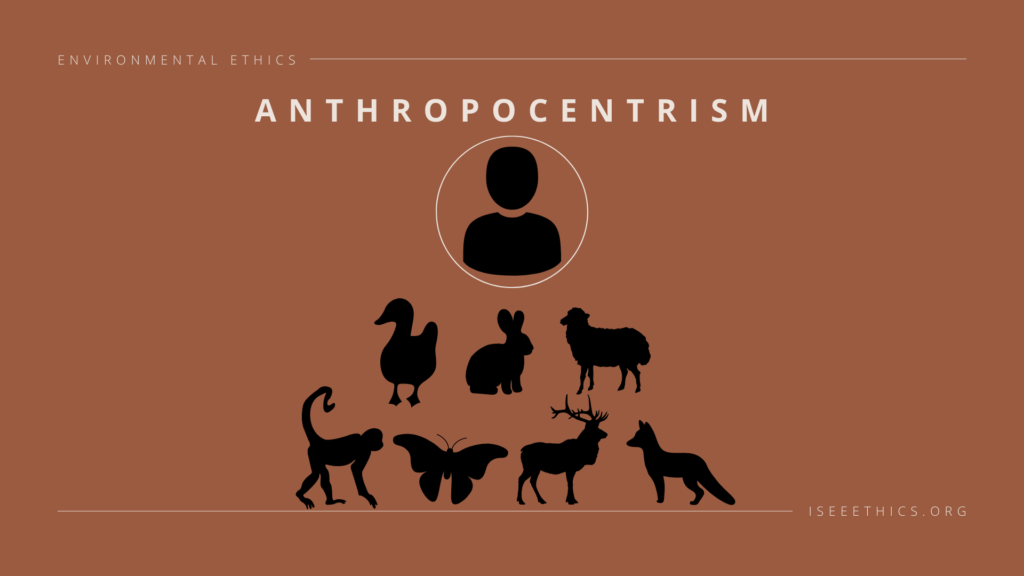
Anthropocentrism places humans at the centre of moral concern. Nature is protected primarily when it serves human health, safety, or economic interests. While this approach supports conservation in some cases, critics argue that it fails to prevent long-term ecological harm.
Biocentrism
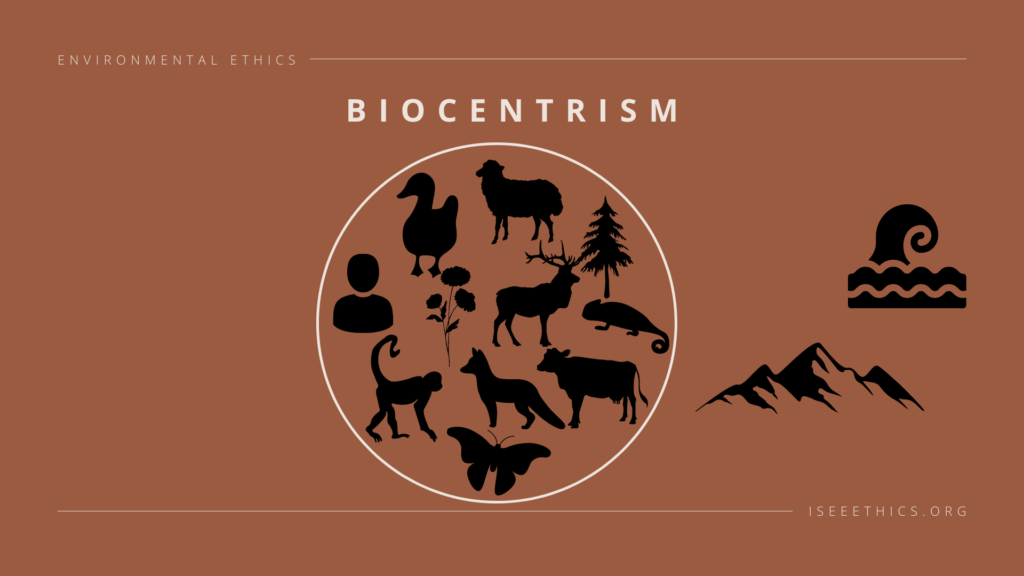
Biocentrism expands moral consideration to all living beings. Plants and animals are seen as having inherent worth, regardless of their usefulness to humans. Ethical arguments informed by biocentrism influence debates about wildlife protection, habitat preservation, and animal welfare.
Ecocentrism
Ecocentrism focuses on ecosystems as integrated wholes. It values ecological balance, biodiversity, and system resilience, sometimes prioritising ecosystem health over individual human interests.
Deep Ecology
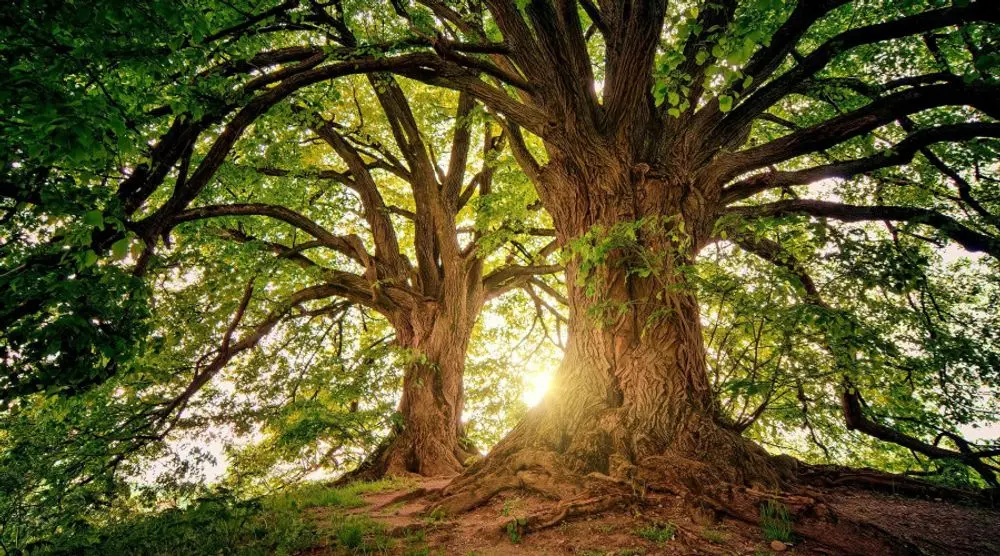
Deep ecology goes further by challenging cultural assumptions about human superiority. It calls for fundamental changes in values, lifestyles, and economic systems, arguing that environmental crises are symptoms of deeper philosophical problems.
Environmental Ethics and Contemporary Environmental Issues
Climate Change and Moral Responsibility
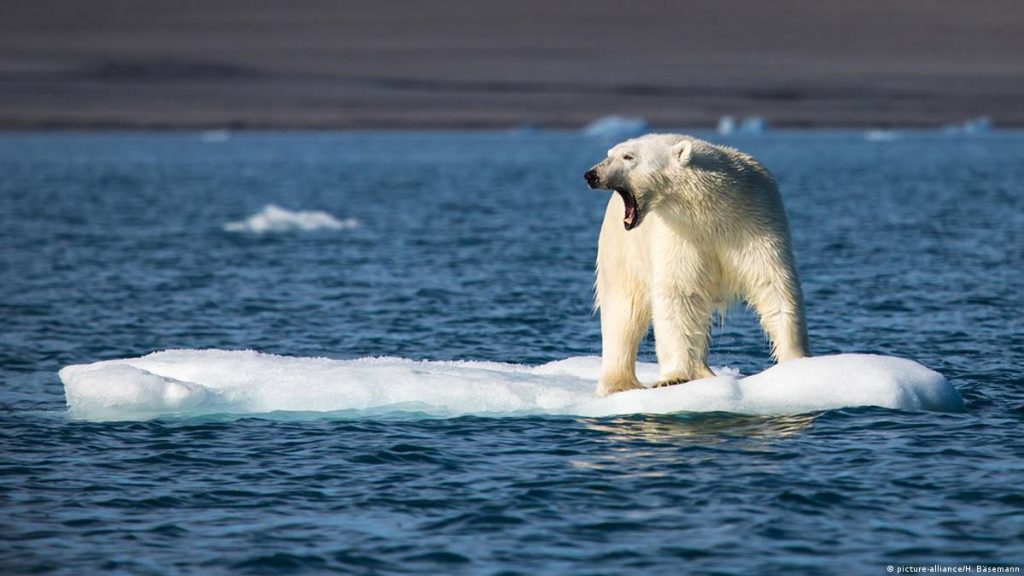
Climate change raises ethical questions about responsibility, fairness, and harm. Populations that contribute least to greenhouse gas emissions often face the greatest impacts. Ethical discussions of climate justice focus on global inequality and accountability.
Pollution and Environmental Inequality
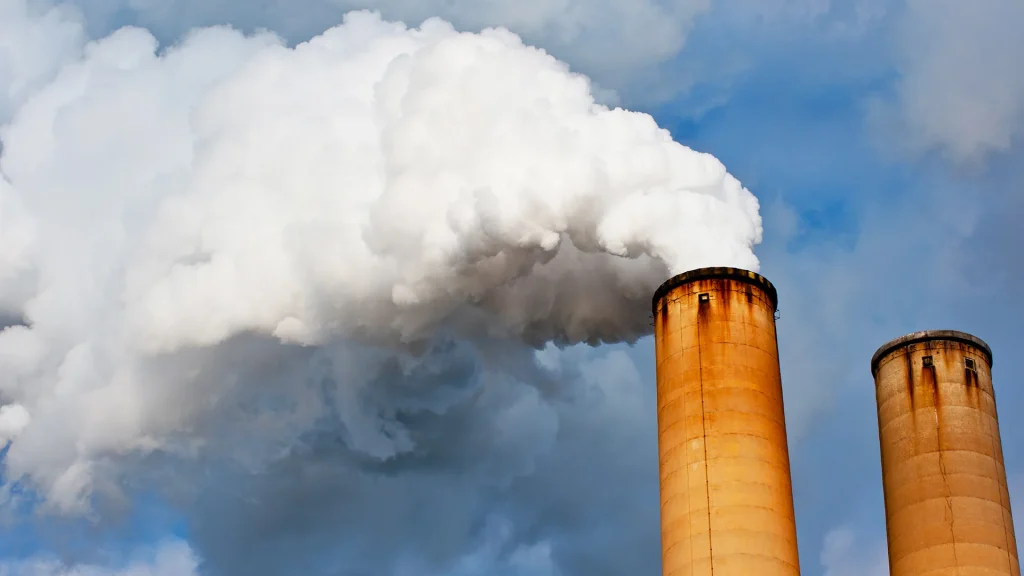
Environmental harm often affects vulnerable communities disproportionately. Ethical analysis examines who causes pollution, who suffers its consequences, and who has the right to a clean and healthy environment.
Environmental Ethics in Law, Policy, and Governance
Environmental ethics increasingly shapes policy and governance. Concepts such as sustainable development, the precautionary principle, and environmental justice reflect ethical reasoning embedded in law.
Some legal systems have even recognised natural entities as legal persons, reflecting ethical arguments inspired by rights of nature frameworks.
Corporate Responsibility Through an Ethical Lens
Environmental ethics challenges corporations to move beyond regulatory compliance. Ethical business practice requires considering long-term environmental impact, transparency, and responsibility for harm caused by operations.
Environmental, social, and governance frameworks reflect growing expectations that corporations act as moral agents rather than purely economic ones.
Environmental Ethics in Everyday Life
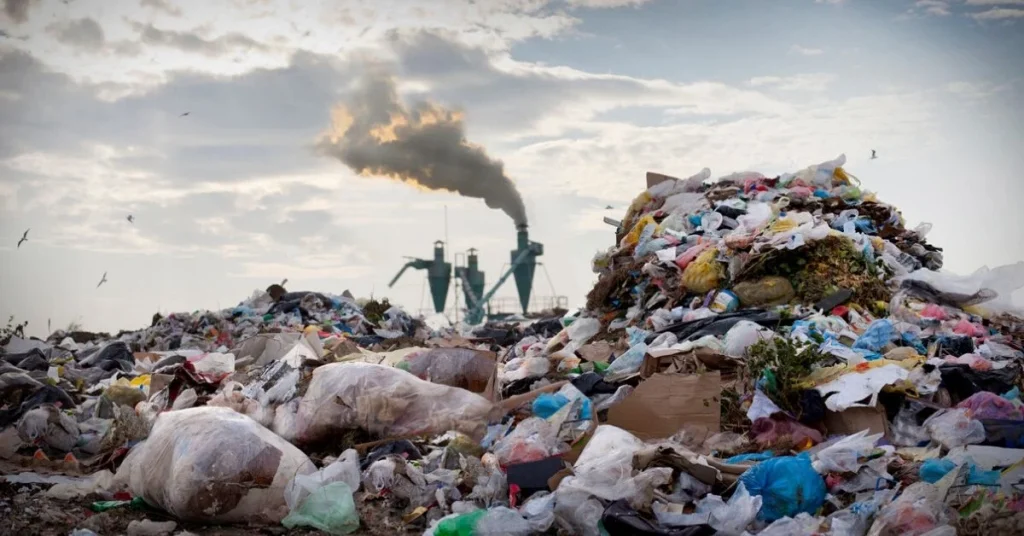
Environmental ethics is not limited to institutions. Individual choices around consumption, energy use, food systems, and waste reflect ethical positions about humanity’s relationship with nature.
While individual action alone cannot solve global environmental problems, ethical awareness shapes cultural norms and political priorities over time.
Why Environmental Ethics Matters More Than Ever
Scientific knowledge tells us what is happening to the planet. Environmental ethics guides how we respond. Without ethical reflection, solutions risk being short-sighted or unjust.
Environmental ethics provides a moral framework for balancing development, equity, and ecological protection in a rapidly changing world.
Conclusion
Environmental ethics invites humanity to reconsider its place within the natural world. It challenges assumptions about ownership, progress, and dominance, offering alternative ways of thinking about responsibility and coexistence.
As environmental pressures intensify, ethical reflection becomes as important as scientific innovation or policy reform. Without addressing underlying values, environmental solutions risk repeating the very patterns that caused ecological harm in the first place.
Frequently Asked Questions (FAQs)
1. What is environmental ethics in simple terms?
Environmental ethics is the study of moral principles that guide how humans should interact with nature. It asks whether the environment has value beyond human use and what responsibilities we have toward it.
2. Why is environmental ethics important today?
Environmental ethics is important because modern environmental problems like climate change, pollution, and biodiversity loss are rooted in human values and decisions, not just technology or science.
3. How is environmental ethics different from environmental science?
Environmental science explains what is happening to the environment, while environmental ethics examines what humans ought to do in response, focusing on responsibility, justice, and moral values.
4. Does environmental ethics give rights to nature?
Some approaches to environmental ethics argue that nature or ecosystems deserve moral or even legal rights. This idea has influenced laws that recognise rivers or forests as legal entities in certain countries.
5. What are the main approaches in environmental ethics?
Key approaches include anthropocentrism, which prioritises humans, biocentrism, which values all living beings, and ecocentrism, which focuses on ecosystems as a whole.
6. How does environmental ethics relate to climate change?
Environmental ethics highlights issues of responsibility and fairness in climate change, especially the fact that those who contribute least to emissions often suffer the greatest impacts.
7. Can environmental ethics influence government policy?
Yes. Concepts such as sustainable development, environmental justice, and the precautionary principle are rooted in ethical thinking and shape environmental laws and policies.
8. What role do individuals play in environmental ethics?
Individual choices around consumption, energy use, and waste reflect ethical positions about responsibility toward nature. Collective individual behaviour can influence cultural norms and policy decisions.
9. Is environmental ethics only a philosophical concept?
No. While it originated in philosophy, environmental ethics now influences law, corporate responsibility, education, conservation, and international environmental agreements.
10. How does environmental ethics connect to pollution and resource use?
Environmental ethics examines who causes environmental harm, who is affected by it, and whether it is morally acceptable to degrade ecosystems for economic or social gain.
Related articles

Environmental Impact Assessment (EIA): Meaning, Process, and Case Studies
missionsustainability
September 8, 2024

What is Agroforestry? Everything you need to know — and why India needs it
Rittika Rana
November 7, 2025
Ready to talk?
We work with individual initiatives, startups, and NGOs dedicated to forging a sustainable future with better design, marketing, technology & operations.