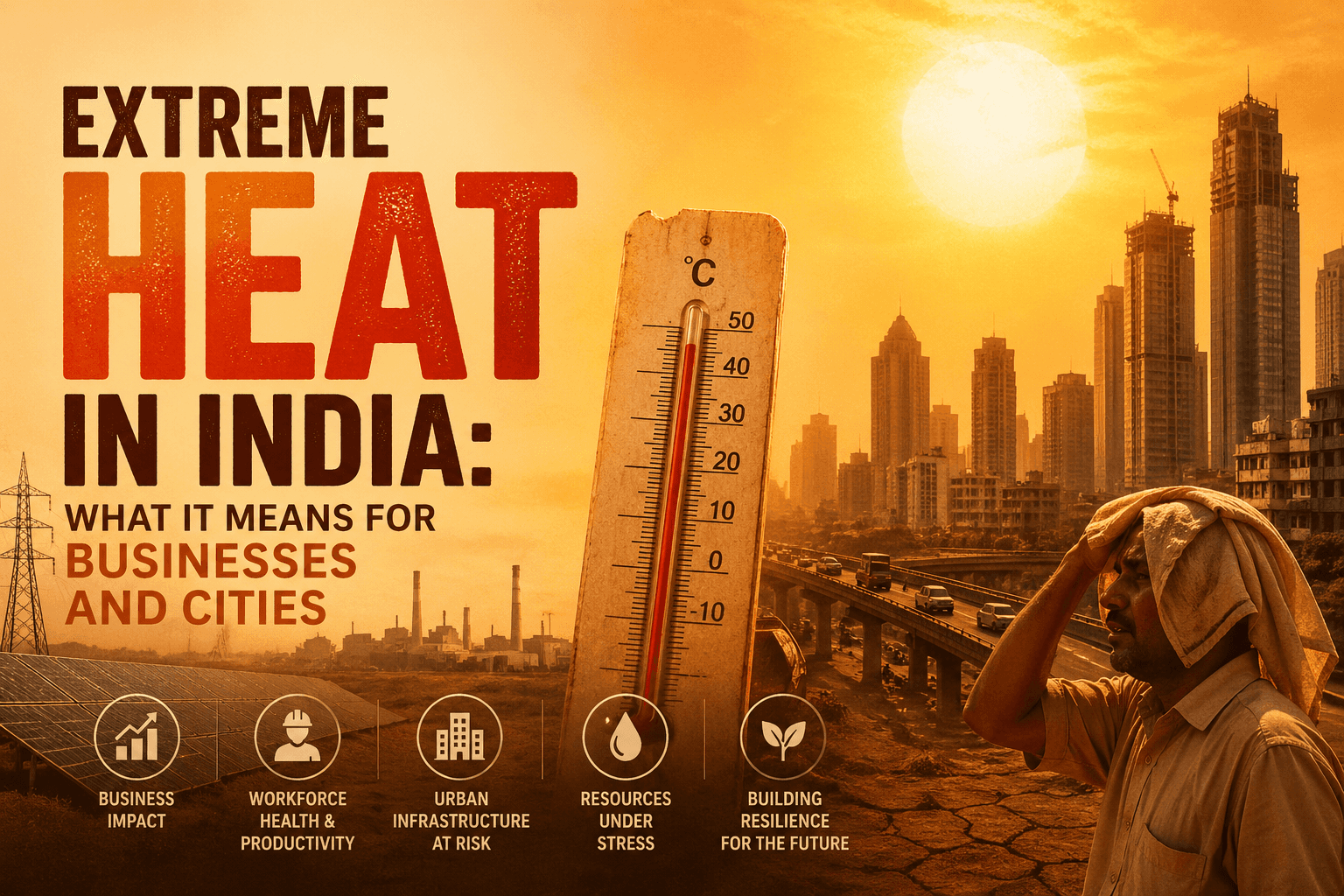
Extreme heat in India is no longer a seasonal disruption. It is becoming a structural constraint.
Over the past decade, heatwaves have grown in both frequency and intensity. Summers are arriving earlier, lasting longer, and placing sustained pressure on cities, infrastructure, and economic activity. What was once treated as an environmental concern is now emerging as a core operational risk.
For businesses and urban systems, the implications are no longer indirect. Heat is beginning to influence productivity, costs, asset performance, and long-term planning decisions. The question is no longer whether temperatures will rise, but how systems adapt to function under these conditions.
Heat as a Systemic Risk
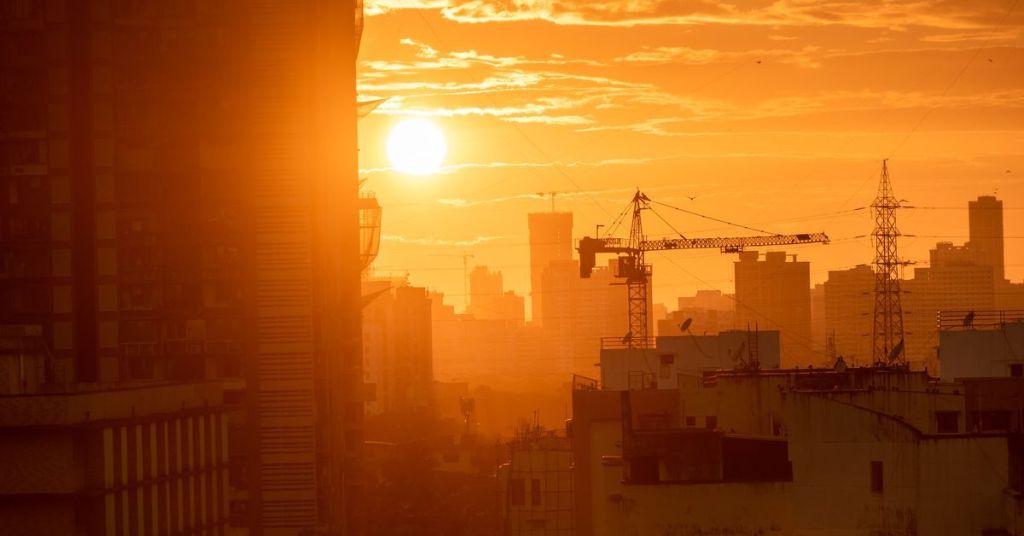
Heat does not operate in isolation. It cuts across multiple layers of the economy simultaneously.
According to the India Meteorological Department, India has seen a steady increase in heatwave frequency across several regions. At the same time, global insights from the International Energy Agency show that cooling demand is rising rapidly.
This creates a compounding effect. Heat affects human performance, increases energy demand, and stresses infrastructure — all at the same time. When these pressures overlap, the impact becomes systemic rather than situational.
Workforce Productivity and Heat Stress

One of the most immediate impacts of rising temperatures is on labour productivity.
In sectors such as construction, logistics, manufacturing, and field operations, a significant portion of work takes place in non-climate-controlled environments. As temperatures rise, physical output declines, fatigue sets in earlier, and working hours become less effective.
The International Labour Organization has highlighted that heat stress can reduce total working hours and overall productivity, particularly in tropical and subtropical regions.
For businesses, this translates into measurable impacts:
Delays in project timelines
Increased labour costs due to reduced efficiency
Higher risk of workplace health incidents
What was once considered a seasonal inconvenience is now directly affecting operational performance.
Energy Demand and Cost Pressures
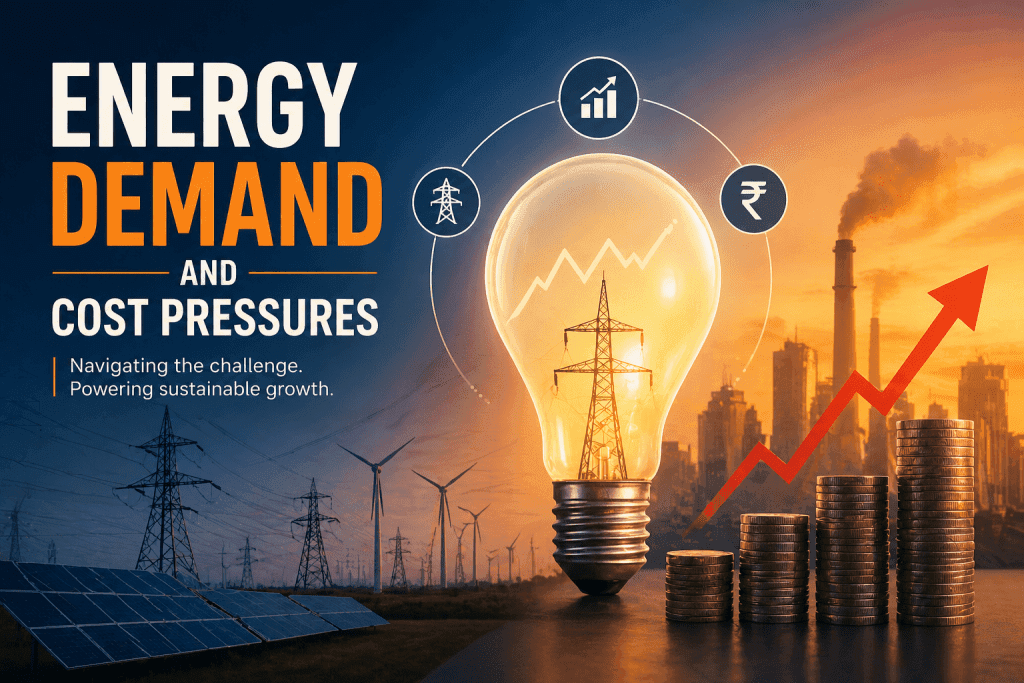
Cooling demand is emerging as one of the fastest-growing components of energy consumption in India.
As temperatures rise, reliance on air conditioning increases across commercial, industrial, and residential sectors. This creates peak load pressures, particularly during summer months when energy systems are already stretched.
According to the Bureau of Energy Efficiency, cooling-related electricity consumption is expected to grow significantly in the coming years.
For businesses, this introduces multiple layers of cost pressure:
Rising electricity expenditure
Increased reliance on backup power systems
Exposure to energy price volatility
In energy-intensive sectors, cooling is not optional. Without efficiency measures, it becomes a growing cost centre.
Urban Heat and Infrastructure Stress
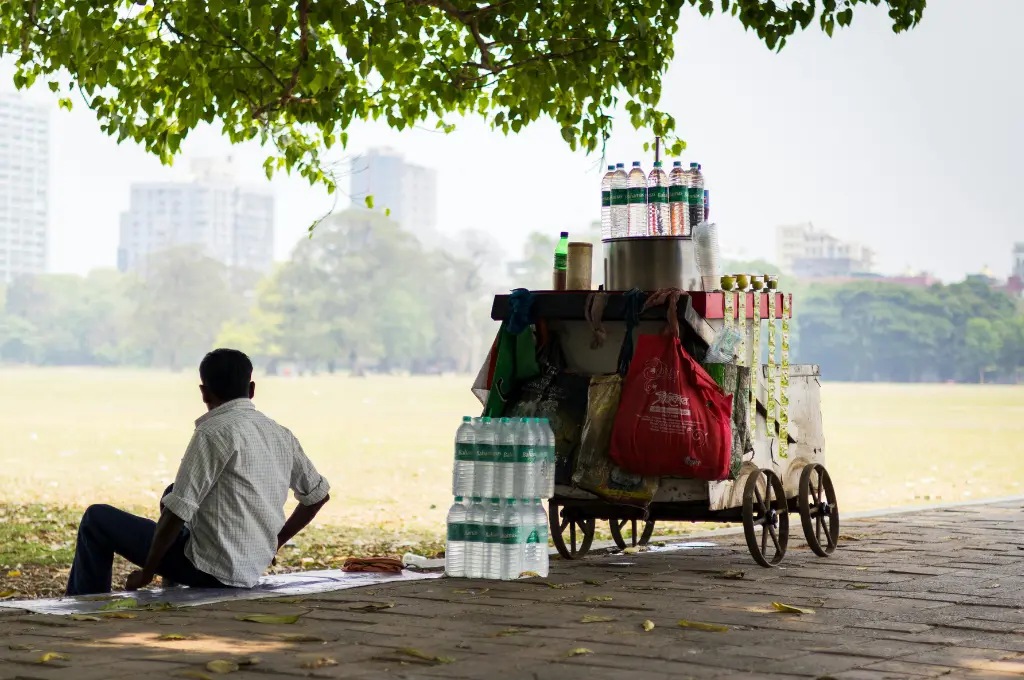
Cities amplify heat.
The concentration of built surfaces — concrete, asphalt, and glass — absorbs and retains heat during the day and releases it slowly over time. This leads to consistently higher temperatures in urban areas compared to surrounding regions.
Research referenced by the National Aeronautics and Space Administration shows that urban areas can be several degrees warmer than nearby rural zones.
This has cascading implications for cities:
Higher cooling demand across buildings and infrastructure
Increased stress on electricity grids
Reduced usability of public spaces during peak hours
Urban heat is not just an environmental condition. It is a design outcome.
Asset Performance and Operational Risk
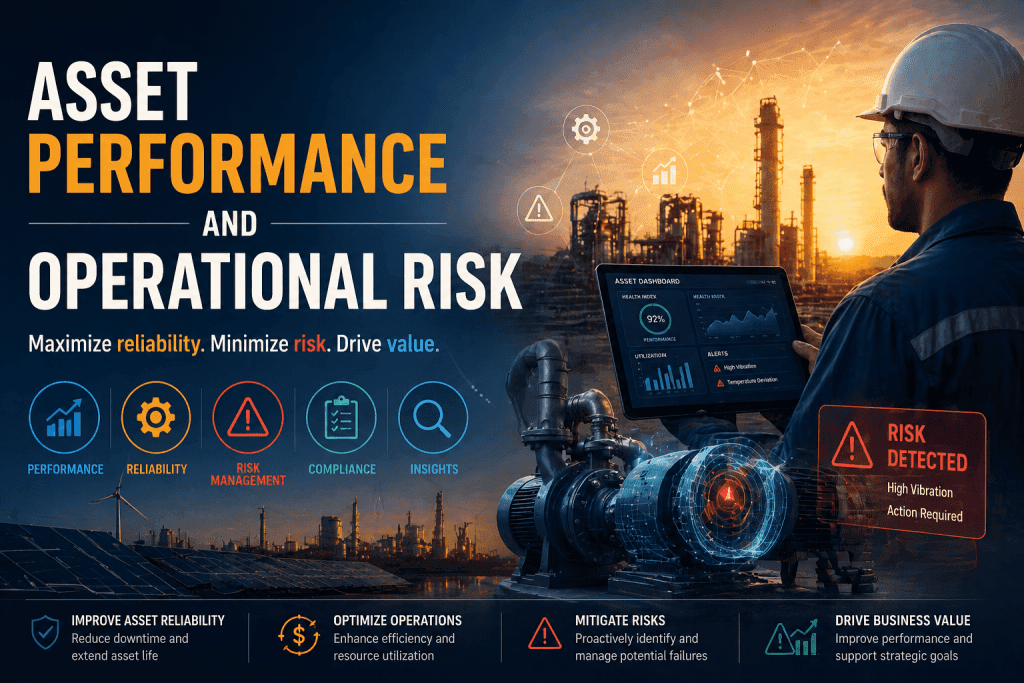
Extreme heat also affects the performance of physical assets.
Equipment efficiency declines at higher temperatures. Cooling systems operate under greater load, increasing wear and reducing lifespan. Materials expand, degrade faster, and require more frequent maintenance.
In sectors such as manufacturing, logistics, and energy, this results in:
Increased maintenance cycles
Reduced equipment efficiency
Higher probability of system failure
These are not one-time disruptions. They are cumulative impacts that gradually increase operational costs.
The Limits of Conventional Cooling
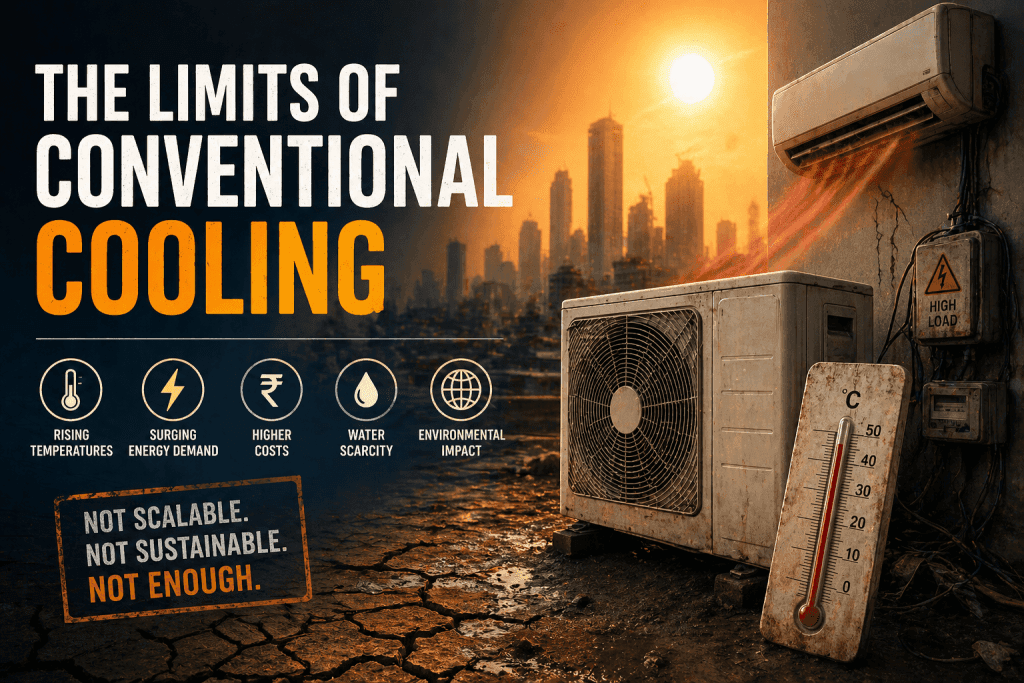
The dominant response to rising temperatures has been to increase cooling capacity.
More air conditioners. More energy consumption. More infrastructure.
While this provides immediate relief, it does not address the underlying problem.
Cooling systems remove heat from indoor environments, but much of that heat is released back into the surroundings. This contributes to rising ambient temperatures, particularly in dense urban areas.
This creates a feedback loop:
Higher temperatures → increased cooling demand
Increased cooling → higher energy use and heat discharge
Higher energy use → rising emissions and costs
Breaking this loop requires moving beyond single-solution approaches.
What Actually Works: A System Approach
Managing extreme heat requires coordinated interventions across multiple levels.
At a strategic level, effective responses typically combine:
Urban-level interventions
Increasing green cover, creating shaded corridors, and integrating water bodies to reduce surface temperaturesBuilding-level design
Using reflective materials, improving ventilation, and reducing heat gain through designOperational adjustments
Shifting work hours, implementing heat safety protocols, and reducing exposure during peak heatEnergy efficiency measures
Optimising cooling systems rather than simply expanding capacity
Individually, these interventions have limited impact. Together, they create measurable resilience.
The Role of Nature-Based Solutions
Among the most effective approaches to heat reduction are nature-based solutions.
Trees, for example, provide both shade and cooling through evapotranspiration. Urban forests can create microclimates that significantly reduce local temperatures. Water bodies contribute to cooling through evaporation and heat absorption.
These solutions offer multiple advantages:
Lower energy requirements compared to mechanical cooling
Long-term impact on microclimate
Co-benefits such as improved air quality and biodiversity
However, effectiveness depends on execution. Plantation without planning — including species selection, density, and maintenance — rarely delivers sustained impact.
Heat as a Strategic Business Variable
Extreme heat is no longer an external environmental factor. It is becoming a core business variable.
It influences:
Workforce productivity
Energy consumption patterns
Infrastructure performance
Cost structures
Which means it needs to be integrated into decision-making frameworks.
Forward-looking organisations are beginning to incorporate:
Climate risk assessments at the asset level
Site-specific heat exposure analysis
Long-term adaptation strategies
Heat is not a future risk scenario. It is already affecting current operations.
From Response to Preparedness
The gap today is not awareness. It is preparedness.
Most responses to heat are reactive — increasing cooling capacity or adjusting operations after disruption occurs. What is needed is a shift toward proactive planning.
This includes:
Designing systems with heat resilience in mind
Aligning infrastructure with climate realities
Integrating environmental data into operational decisions
Without this shift, responses will remain short-term and increasingly costly.
The Way Forward
Extreme heat in India is not an isolated phenomenon. It is part of a broader shift in climate patterns that will continue to shape how cities and businesses operate.
The response must move beyond isolated interventions and toward integrated systems that combine:
Efficient cooling
Better design and materials
Nature-based solutions
Operational adaptability
Together, these form the foundation of heat resilience.
A Defining Constraint
Every system operates within constraints.
For a long time, heat was not one of them. It is now becoming one.
How businesses and cities respond to this constraint will define not just how they function during summer, but how they plan for the future.
Because in a warming environment, the ability to manage heat is no longer an advantage.
It is a necessity.
FAQs
1. How does extreme heat impact businesses in India?
Extreme heat reduces workforce productivity, increases energy costs, affects asset performance, and creates operational risks across sectors like construction, manufacturing, and logistics.
2. Why is extreme heat becoming a major risk for cities in India?
Rising temperatures, dense infrastructure, and limited green cover are making cities more vulnerable to heat stress, increasing pressure on energy systems and urban infrastructure.
3. What is the urban heat island effect in Indian cities?
It is a phenomenon where cities become significantly hotter than surrounding rural areas due to concrete surfaces, buildings, and reduced vegetation.
4. How does heat affect worker productivity?
High temperatures reduce physical capacity, increase fatigue, and lead to shorter effective working hours, especially in outdoor and non-air-conditioned environments.
5. Why is cooling demand increasing rapidly in India?
Rising temperatures, urbanisation, and higher living standards are driving increased use of air conditioning and cooling systems across sectors.
6. What are nature-based solutions for reducing urban heat?
Nature-based solutions include tree plantation, urban forests, green corridors, and water bodies that help reduce temperatures naturally.
7. How does extreme heat affect infrastructure and assets?
Heat reduces equipment efficiency, increases wear and tear, and can lead to higher maintenance costs and system failures over time.
8. What role can businesses play in managing heat risk?
Businesses can implement energy-efficient cooling, redesign work schedules, invest in green infrastructure, and integrate climate risk into planning.
9. Why is extreme heat considered a climate risk for businesses?
Because it directly impacts operations, costs, workforce health, and long-term resilience, making it a critical factor in business continuity planning.
10. What strategies can cities adopt to reduce heat impact?
Cities can increase green cover, improve urban design, use heat-reflective materials, and integrate climate-responsive planning into infrastructure development.

Other articles




We work with individuals, startups, and NGOs dedicated to forging a sustainable future. Tell us about your mission.

