A Career Built in Uncertainty

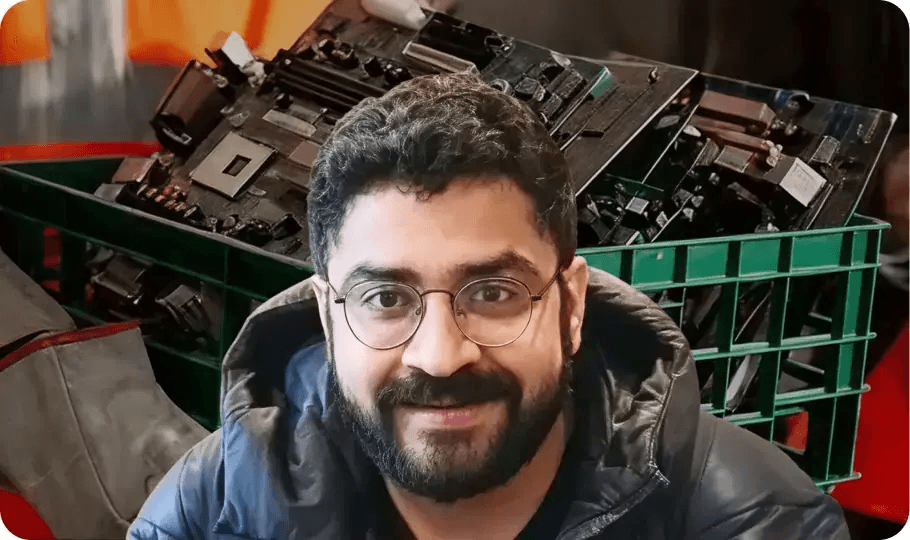
Aishwarya did not begin his journey wanting to fix India’s recycling problem. There was no moment of environmental awakening, no childhood memory of polluted rivers, and no grand ambition to build a sustainability company. His early career was shaped by a far more pragmatic instinct—the desire to understand complex systems and earn well while doing so.
Graduating as an oil and gas engineer in 2013, he spent the next several years working across Africa, the Middle East, and Southeast Asia. These environments were defined by uncertainty. Projects operated under pressure, decisions carried financial consequences, and systems had to function even when conditions were unstable. Over time, this exposure trained him to be comfortable with ambiguity and to rely on process rather than idealism.
That comfort with complexity would later become his biggest strength.
Returning to India, Seeing the Gaps

When Aishwarya returned to India around 2020, the country felt like it was at an inflection point. Startups were emerging rapidly, capital was flowing freely, and conversations around electric vehicles, renewable energy, and digital infrastructure were becoming mainstream.
Yet beneath this optimism, something felt incomplete. While India was talking about electrification and clean energy, there was very little discussion around what happens when these systems reach the end of their life. Batteries, devices, and electronics were everywhere—but their afterlife remained invisible.
It was not the absence of innovation that stood out to him. It was the absence of systems.
“I never wanted to start a sustainability company. My focus was always on building businesses that are strategically important for the country. The impact on the environment comes naturally when you work in the right industries.”
The Scale of the Problem No One Sees
India’s scale makes the issue impossible to ignore once you look closely. With a population exceeding 1.4 billion, even conservative assumptions reveal staggering numbers.
“Assuming even 100 crore people in India use mobile phones, and a phone lasts three to four years, we are retiring at least 25 to 33 crore phones every single year. That is the scale of the waste problem we are talking about.”
Each of these devices contains lithium, cobalt, nickel, copper, and aluminium—critical materials that power electric vehicles, renewable energy storage, data centres, and modern manufacturing. India imports most of these minerals, often after they have been mined and processed abroad.
Once a device stops working, it quietly exits formal systems. It moves from homes to scrap dealers to informal dismantling yards, losing traceability at every step. The materials inside are rarely recovered efficiently, safely, or at scale.
What looks like waste is actually lost infrastructure.
Why Shoonya Was Never Just About Sustainability
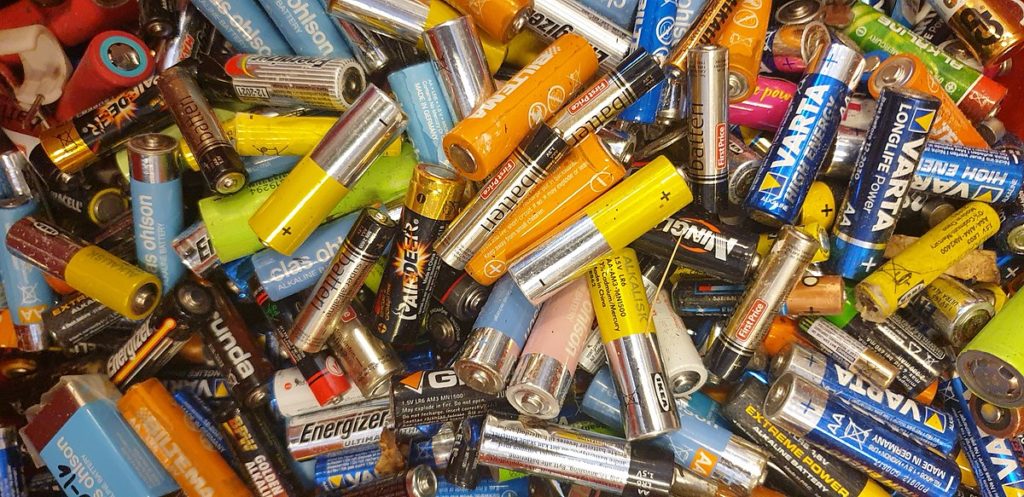
Shoonya did not begin as a sustainability-first organisation. It began as a strategic response to a structural weakness in India’s economy. As electric vehicles and energy storage systems scale, India’s dependency on imported critical minerals will only increase. Mining alone cannot solve this problem, especially in a world shaped by geopolitical uncertainty.
Recycling—particularly battery recycling—offered a rare convergence. It was economically relevant, strategically important, and structurally inevitable. The environmental benefits, while significant, emerged as a natural consequence of building a resilient system.
This framing shaped every decision Shoonya made.
The Hardest Part of Recycling Happens First
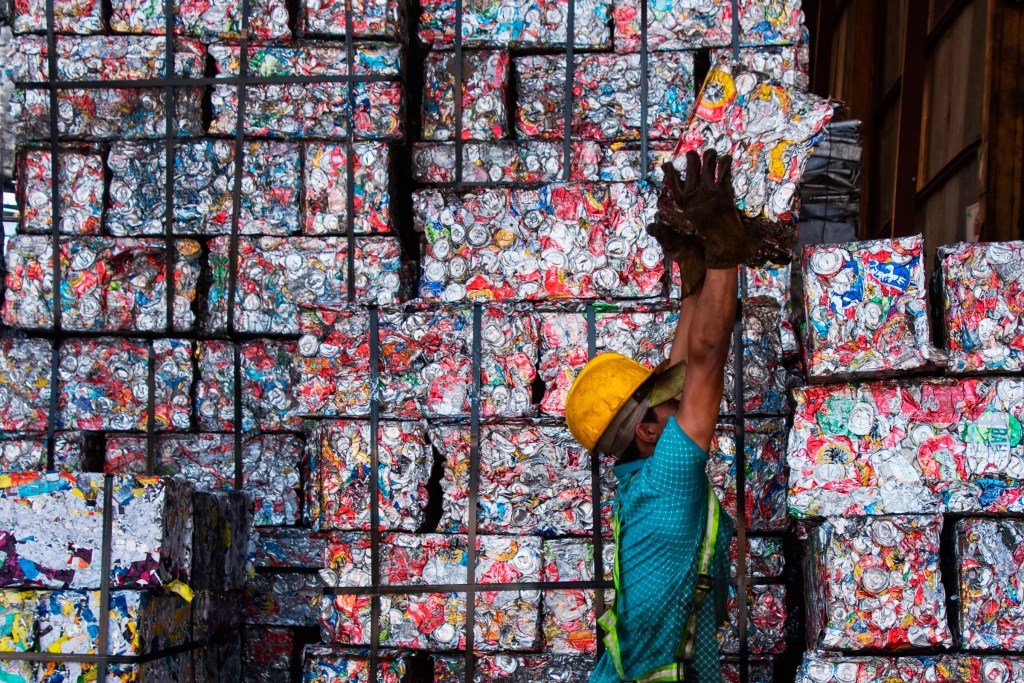
Most people imagine recycling as a mechanical process—put waste in, get material out. In reality, recycling begins long before machines are involved.
Batteries must be collected safely, discharged to prevent fires, dismantled manually, and segregated by chemistry before they are even fit for industrial processing. This pre-processing stage is slow, labour-intensive, and hazardous. It is also where most recycling efforts break down.
Shoonya chose to specialise in this neglected layer. Over time, the company also built capabilities in chemical extraction, recovering lithium, cobalt, and nickel from black mass—the fine powder left after mechanical shredding.
This work is not glamorous, but without it, recycling remains an idea rather than an industry.
Learning the Market the Hard Way
Shoonya did not start with a factory or a funding round. It started with ₹10,000.
Aishwarya entered the scrap market, bought material from one trader, and sold it to another. He lost money, but the loss taught him what no spreadsheet could. He learned how quality is negotiated, how trust is built, how credit cycles operate, and how different players interpret the same commodity in different ways.
He returned with ₹50,000 and repeated the process. Each iteration sharpened his understanding of the ecosystem—who could be relied upon, where margins actually existed, and how supply truly moved.
This was not experimentation in theory. It was learning through friction.
Why Supply Matters More Than Demand
One insight emerged early and clearly. In recycling, demand is rarely the problem. Supply is.
Without reliable access to waste—clean, consistent, and scalable—no recycling plant can survive. Shoonya adopted a supplier-first mindset, working closely with kabaddiwalas, aggregators, and informal traders who form the backbone of India’s waste ecosystem.
“In recycling, supply is king. If you control the supply and quality, demand will come to you automatically. Most people underestimate how difficult sourcing really is.”
Instead of forcing corporate structures onto them, Shoonya designed systems around how these suppliers already functioned. This decision quietly became the company’s strongest advantage.
Scaling What Most People Don’t Want to See
Within a year, Shoonya processed more than 500 metric tonnes of battery waste and crossed ₹4–4.5 crore in revenue. The team grew to 18 people, and a 3,500-square-foot Material Recovery Facility was established in Ghaziabad. Customers came from six different states, each representing long-term industrial demand rather than short-term transactions.
The next phase involves scaling to ₹20–25 crore in revenue, expanding to 10–12 facilities across India, and building a centralised chemical extraction plant. The goal is not just growth, but reliability—creating infrastructure that manufacturers can depend on.
Why India Is Behind—and Why That’s an Opportunity
India lacks end-of-life thinking. Products are designed for consumption, not recovery. Regulations exist, but their on-ground interpretation is often left to entrepreneurs to figure out. Consumer awareness around safe disposal remains limited.
Compared to Europe or China, India is decades behind in building circular systems. Yet this delay is not just a weakness. It is also an opportunity to leapfrog—if the right infrastructure is built with intent.
Shoonya exists in that gap.
What “Shoonya” Really Means
Shoonya does not mean zero. It represents the void before creation and after dissolution. Everything emerges from it, and everything returns to it.
In recycling, materials are stripped down to their essence before being reborn into new supply chains. The philosophy mirrors the process.
A Quiet Personal Philosophy
Despite building an industrial recycling business, Aishwarya’s personal sustainability practice is deliberately simple. He consumes very little, avoids unnecessary purchases, and eats once a day. His belief is straightforward—when consumption reduces, waste reduces naturally.
In a world that equates growth with constant consumption, this is an uncomfortable stance. But it is also an honest one.
“If you consume less, you automatically waste less. Sustainability does not start with technology—it starts with how much we think we need.”
Why This Story Matters
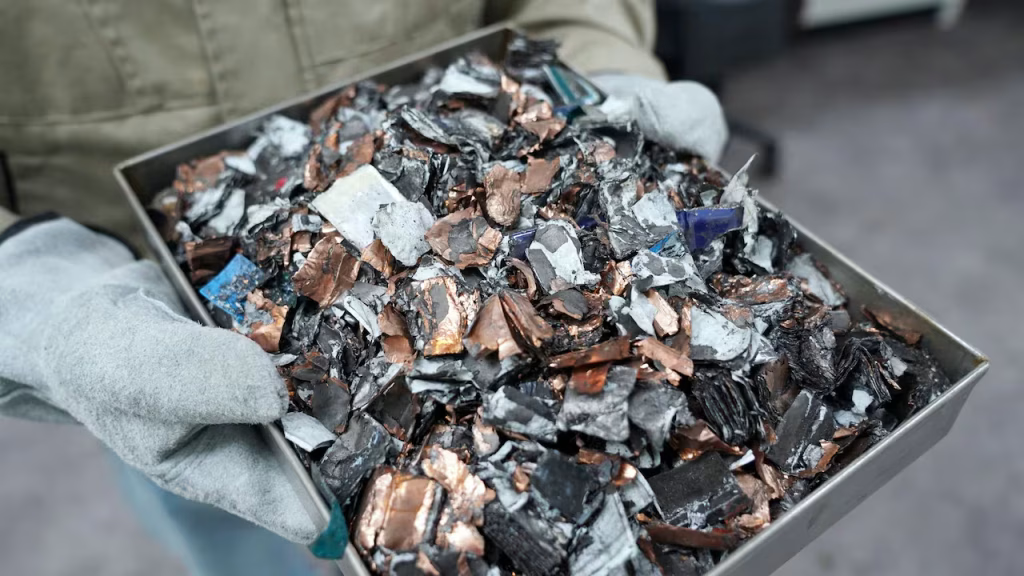
Battery recycling is not glamorous. It does not lend itself easily to headlines or social media. Yet it will determine how resilient India’s energy transition truly is.
Shoonya’s story is not about idealism. It is about building the invisible infrastructure that allows sustainability to exist beyond narratives.
Sometimes, the most meaningful change does not come from bold declarations—but from quietly fixing the systems that hold the future together.

Other articles

We work with individuals, startups, and NGOs dedicated to forging a sustainable future. Tell us about your mission.

