
If you are a founder in India, funding does not start and end with angel investors or venture capital. The Government of India has built one of the world’s largest public startup–funding ecosystems, covering grants, seed funding, venture backing, and collateral-free debt.
Yet, most founders either:
don’t know these schemes exist, or
apply at the wrong stage, or
lose out due to poor preparation
This long-form guide is written from a founder’s perspective. It explains every major government funding scheme for startups in India, who it is for, how much funding you can get, exact eligibility, and where & how to apply.
At the centre of this ecosystem is Startup India, but many schemes extend beyond it.
How to Read This Guide (Important)
Before jumping into schemes, identify your stage:
Idea / Pre-prototype → Grants & PoC funding
Prototype / Early pilots → Seed fund schemes
Early revenue / traction → Debt & VC-linked support
Government funding is stage-mapped. Applying to the wrong scheme almost always leads to rejection.
The 3 Master Portals Every Founder Must Bookmark
Before we dive into individual schemes, these portals act as your navigation system:
Startup India Portal

https://www.startupindia.gov.in
The official gateway for recognition, schemes, incubators, and ecosystem support.Startup India – Government Schemes Page
https://www.startupindia.gov.in/content/sih/en/government-schemes.html
Central directory of all flagship startup schemes.myScheme Portal (Eligibility Finder)
https://www.myscheme.gov.in
Helps founders discover schemes based on sector, stage, and founder profile.
You will repeatedly come back to these.
Step 0 (Non-Negotiable): DPIIT Startup Recognition
Most government funding schemes require DPIIT recognition.
What is DPIIT Recognition?
It is official recognition of your company as a “startup” by the Government of India.
Why it matters
Without DPIIT recognition:
You cannot apply for Startup India Seed Fund
You cannot access Credit Guarantee Scheme
Many incubators will not shortlist you
Apply here:
https://www.startupindia.gov.in/content/sih/en/startup-recognition-page.html
Founder tip:
Apply for DPIIT recognition as soon as you incorporate. It is free and usually approved within days if documents are correct.
1. Startup India Seed Fund Scheme (SISFS)
What it is?
The Startup India Seed Fund Scheme (SISFS) supports startups at the idea, prototype, and early market-entry stage through government-backed incubators.
Who it is for?
DPIIT-recognised startups
Early-stage founders with innovative & scalable ideas
Startups that are too early for angels or VCs
How much funding can you get?
Up to ₹20 lakh as grant (PoC, prototype, validation)
Up to ₹50 lakh as convertible debentures or debt for market entry
Important reality
You do not apply to the Government directly.
You apply through an approved incubator.
Apply here:
https://seedfund.startupindia.gov.in
https://www.myscheme.gov.in/schemes/sisfs-fs
What founders must prepare
Clear problem statement and solution
Why your idea is innovative
Prototype or validation roadmap
12–18 month execution plan
Use of funds & milestones
Founder insight:
Incubators select founders, not just ideas. Spend time engaging with the incubator before applying.
2. Fund of Funds for Startups (FFS)

What it is?
The Fund of Funds for Startups (FFS) is a ₹10,000+ crore corpus where the Government invests in SEBI-registered venture capital funds, not directly in startups.
Who it is for?
Startups raising VC or institutional capital
Growth-stage startups (Seed+, Series A)
How founders access it?
You cannot apply directly.
Instead, you raise funding from VC funds that are backed by FFS.
Why this matters
FFS reduces risk for VCs, which:
Increases capital availability
Encourages investment in new sectors and regions
Learn more:
https://www.startupindia.gov.in/content/sih/en/fund-of-funds.html
Founder insight:
When pitching VCs, ask if they are SIDBI/FFS-backed. It often improves funding odds.
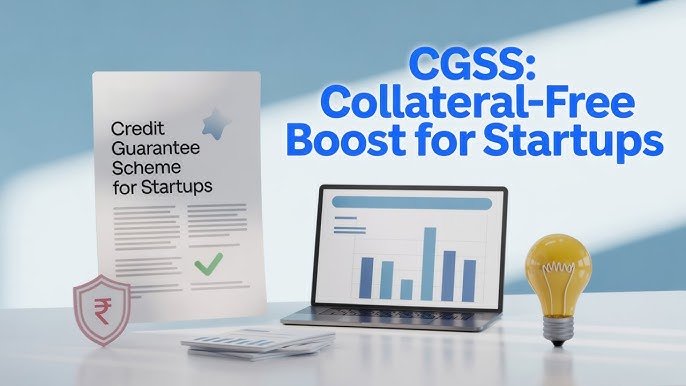
3. Credit Guarantee Scheme for Startups (CGSS)
What it is?
The Credit Guarantee Scheme for Startups (CGSS) enables collateral-free loans by providing a government guarantee to banks and lenders.
Who it is for?
DPIIT-recognised startups
Startups with early revenue or contracts
Founders looking for debt instead of equity
What you can access?
Working capital loans
Term loans
Venture debt
How it works
You approach a bank or NBFC.
The government guarantees a portion of the loan, reducing lender risk.
Apply & learn more:
https://www.startupindia.gov.in/content/sih/en/credit-guarantee-scheme-for-startups.html
https://www.ncgtc.in/en/product-details/CGSS
Founder insight:
This scheme is underused. For startups with cash flows, debt + CGSS can be smarter than dilution.
4. MeitY TIDE 2.0 (Technology & Electronics)
What it is?
TIDE 2.0 supports startups in electronics, IT, AI, IoT, fintech, and emerging tech via MeitY-supported incubators.
Who it is for?
Tech-product startups
Founders building core technology, not just apps
Support includes
Grant funding
Incubation & mentoring
Market and ecosystem access
Apply via:
https://msh.meity.gov.in/schemes/tide
Founder insight:
Applications usually open via specific incubators. Track incubator announcements closely.
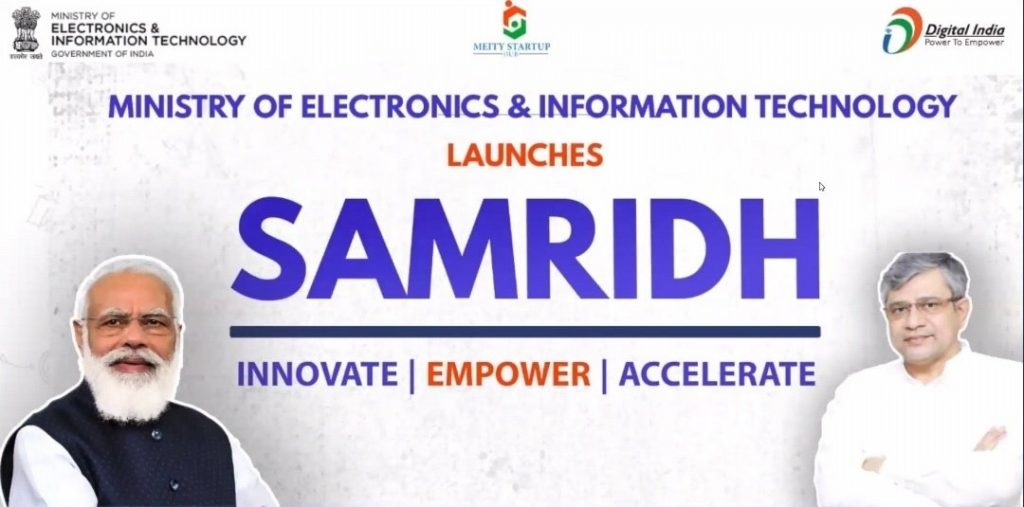
5. MeitY SAMRIDH Scheme
What it is?
SAMRIDH supports startups through accelerator-led programs, combining funding with scale-up support.
Who it is for?
Product startups ready to scale
Startups entering growth phase
Funding nature
Funding support routed via accelerators
Focus on market access & commercialization
Apply via:
https://msh.meity.gov.in/schemes/samridh
6. DST NIDHI-PRAYAS (Hardware & Deep-Tech)
What it is?
NIDHI-PRAYAS supports physical product and hardware startups to build prototypes.
Who it is for?
Hardware
Clean-tech
Manufacturing
Robotics, agri-hardware, medical devices
What it offers?
Grant support for prototype development
Access to labs & testing infrastructure
Apply via:
https://nidhi.dst.gov.in/schemes-programmes/nidhiprayas/
Founder insight:
Pure software startups are usually not eligible.
7. BIRAC Biotechnology Ignition Grant (BIG)
What it offers?
The BIG scheme supports biotech startups from idea to proof-of-concept.
Who it is for?
Biotechnology
Healthcare
Life sciences
Med-tech
Funding size:
Grant-in-aid up to ₹50 lakh
Apply here:
Founder insight:
BIRAC expects strong scientific backing. Academic partnerships help significantly.
How Founders Should Strategically Apply (Real-World Advice)
Most rejections happen because founders:
Apply too early or too late
Don’t match scheme objectives
Submit generic pitch decks
Smart application flow
Get DPIIT recognition
Identify your exact stage
Shortlist 2–3 relevant schemes
Tailor your proposal for each scheme
Engage incubators before submission
Final Thoughts: Government Funding Is Not “Easy Money”

Government schemes are not shortcuts. They are:
Slower than angels
More documentation-heavy
Outcome-focused
But if used well, they can:
Extend runway
Reduce dilution
Enable deep innovation
Build long-term credibility
For founders building real, scalable solutions, government funding in India is one of the strongest early-stage advantages available today.

Other articles



We work with individuals, startups, and NGOs dedicated to forging a sustainable future. Tell us about your mission.