Commerce today is designed for speed.
Order. Deliver. Unbox. Discard. Repeat.
But every transaction leaves behind something invisible in the invoice and visible in the landfill: waste.
Packaging is used once. Products have short lifespans. Materials extracted from forests, mines, and oil wells are converted into trash within days or months. The system works commercially — but environmentally, it leaks value at every step.
Recycle.Green was built to challenge that leakage.
Not as a recycling campaign.
Not as a sustainability awareness program.
But as a redesign of commerce itself.
Its premise is simple — and radical:
Waste should not be the end of commerce.
Waste should be part of the transaction.
The Root Problem: Linear Commerce Creates Linear Waste
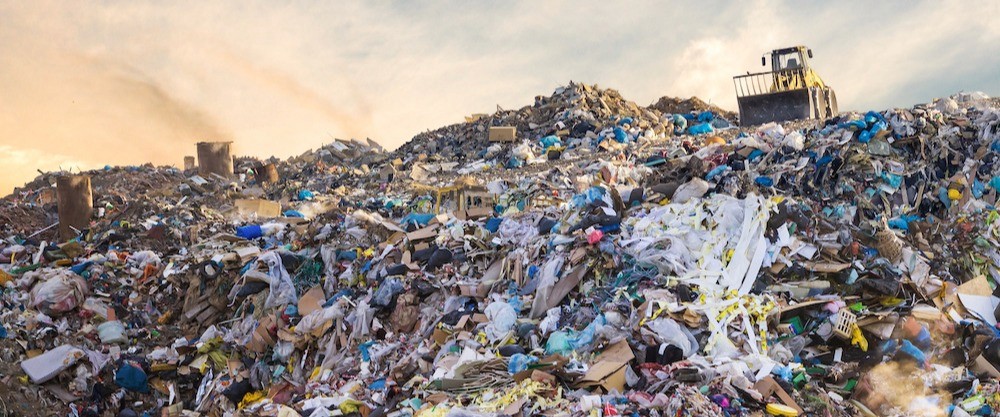
To understand zero-waste commerce, we must first understand what we currently operate in — the linear economy.
In a linear system:
Raw materials are extracted.
Products are manufactured.
Consumers buy and use them.
Packaging and products are discarded.
Waste accumulates; resources decline.
For example:
You order a mobile phone online. It arrives in layers of packaging — cardboard, plastic wraps, inserts. You open it, keep the device and accessories, and throw the rest away. Over time, even the phone, charger, and cable become waste.
Multiply that by millions of transactions per day.
Commerce grows. Waste grows with it.
The more efficient commerce becomes, the faster waste accumulates.
This is not a waste management problem.
It is a commerce design problem.
Zero-Waste Commerce: A Circular System That Behaves Like an Economy
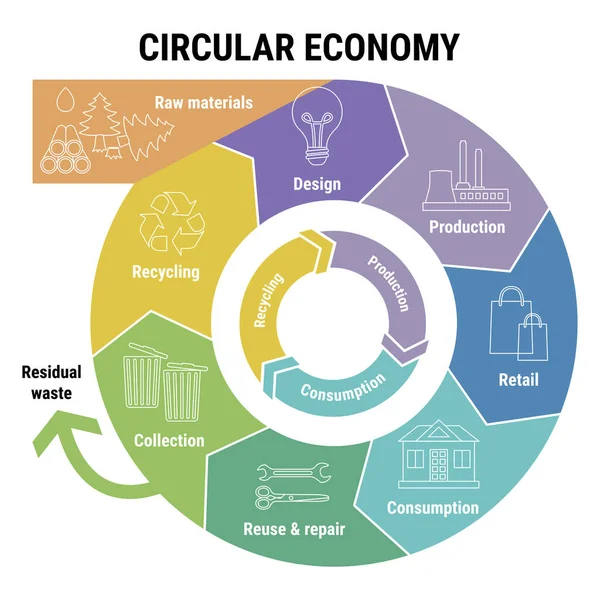
The circular economy is not a new concept. But Recycle.Green’s approach goes beyond simply “encouraging recycling.”
It introduces an operational model where:
Products are made from recycled inputs.
Waste can be used as payment.
Products are digitally tracked.
Used products are taken back.
Value flows back to the consumer or business.
In short:
Waste becomes currency.
And that single shift transforms behavior.
The Core Innovation: “Pay By Waste”
In traditional commerce, payment happens in cash or digital money.
In zero-waste commerce, payment can happen through waste credits.
Consumers and businesses can exchange sorted waste — plastic bottles, cardboard, wrappers, e-waste, metal cans — for recycled products.
Here’s what that changes:
Waste stops being a liability.
Recycling becomes economically rewarding.
Cash outflow reduces.
Logistics becomes more efficient.
In conventional delivery systems, a product arrives and the vehicle leaves empty.
In Recycle.Green’s system, a product arrives — and waste goes back in the same trip.
Logistics is optimized. Resources are circulated. Transactions are balanced.
A Simple Example: A Student Buying a Notebook
To understand how the system works in practice, consider something basic: school notebooks.
Step 1: Circular Product
Instead of buying notebooks made from virgin paper, students purchase notebooks made from recycled paper — either white recycled sheets or more sustainable unbleached variants.
Step 2: Payment Through Waste
Instead of paying ₹50 in cash, the student can provide ₹50 worth of sorted recyclable waste:
plastic bottles
cardboard packaging
e-waste (old chargers, cables)
household plastic waste
The delivery partner brings the notebook and collects the waste in the same visit.
Step 3: Product Take-Back
After a year of use, the student can return the used notebook through a Brand Product Take Back (BPTB) system.
Recycle.Green provides cashback credit (for example ₹5) toward the next notebook purchase.
The next notebook effectively becomes:
₹50 – ₹5 = ₹45 (plus additional waste credits).
This is circularity behaving like an economy:
Money saved.
Waste reduced.
Materials recirculated.
Beyond Consumers: Why B2B Is a Game Changer
While the consumer example is intuitive, the real structural impact emerges in business ecosystems.
Consider a restaurant chain generating daily waste:
cardboard cartons
PET bottles
aluminum cans
packaging materials
disposables
In many businesses, waste handling creates two hidden problems:
1. Compliance Risk
Improper disposal can lead to municipal penalties, operational disruption, and reputational damage.
2. Internal Leakage
Valuable waste often gets sold informally by staff or intermediaries without tracking. Businesses underestimate how much recyclable waste they generate — and how much value leaks out.
Recycle.Green digitizes this process:
Waste collection is logged in-app.
Photo verification ensures transparency.
Credits are issued digitally instead of cash.
No informal cash transactions are allowed.
The result?
Waste data becomes visible.
Leakage reduces.
Value stays within the system.
What Can Businesses Buy With Waste Credits?
The model works because it connects waste value to operational procurement.
Restaurants and businesses can purchase recycled versions of:
Garbage bags
Tissue papers and napkins
Stationery and billing paper
Files and folders
Takeaway paper bags
Recycled cloth napkins
Corrugated packaging supplies
These are daily consumables. They are not “green lifestyle extras.”
So businesses can reduce cash expenses while keeping procurement within a circular loop.
Rebuilding Market Psychology: Making Recycled Products Credible
One of the hidden challenges in the recycling ecosystem is perception.
Recycled products exist. Many manufacturers already produce them. But historically, markets have treated “virgin” products as superior.
As a result:
Recyclers often hesitate to market products as recycled.
Consumers rarely demand recycled goods explicitly.
Circular supply chains remain weak.
Recycle.Green addresses this by:
Creating demand specifically for recycled products.
Branding recycled procurement as a positive choice.
Enabling white-labeled circular supply chains.
Closing the loop by returning used materials to the original recycler.
The long-term vision is precise:
If 100 kg of recycled paper enters the market, 100 kg should be collected and returned for reprocessing.
Not once. Repeatedly.
Traceability: Forward and Reverse Transparency
A defining feature of Recycle.Green is its commitment to traceability.
The platform is building:
Forward traceability: Consumers can track what happens to their waste.
Reverse traceability: Users can see where recycled products originated from.
This creates a transparent chain of transformation:
Waste → Processing → Raw Material → Product → Consumer → Return → Recycling
It turns recycling from an abstract concept into a visible, measurable cycle.
The Experience Center: Making Recycling Tangible
In tourist-heavy regions like Goa, Recycle.Green envisions physical experience centers.
Here, visitors can:
Bring recyclable waste.
Understand how it is processed.
See and feel products made from recycled materials.
Purchase recycled goods using waste credits.
The ambition is to eventually create localized recycling micro-units based on real-time waste data.
Recycling becomes experiential — not invisible.
The Eight-Year Journey
Building this system did not happen overnight.
It took eight years of experimentation, product mapping, logistics design, technology building, and market education.
Why so long?
Because waste categories are vast. Plastics alone include dozens of grades. Textiles, metals, composites, packaging blends — new materials are introduced faster than recycling systems can adapt.
Hardik’s insight:
Product design and recycling innovation often operate separately.
Zero-waste commerce attempts to bridge that gap.
Funding and Validation
Over time, Recycle.Green received support through grants from:
Ministry of Housing and Urban Affairs (Government of India)
Institutional backing signals recognition that the model addresses a systemic need.
But the founder emphasizes that sustainability ventures require patience.
The market shift takes time.
Lessons for Sustainability Entrepreneurs
Hardik offers grounded advice:
1. Sustainability Is Not Automatically a Consumer Demand
Don’t assume customers will pay extra for sustainability.
Embed it within cost savings or operational value.
2. Behavior Change Is Slow
Sustainability businesses require longer timelines because they alter habits, not just products.
3. Chase Impact, Not Just Funding
Meaning fuels endurance.
Impact-driven work sustains motivation during slow growth phases.
4. Believe Before You Begin
If you don’t believe the solution is needed long-term, don’t start.
From Waste Management to Waste Economics
Most waste initiatives attempt to manage the problem.
Recycle.Green redesigns the system that creates it.
When waste becomes currency:
Consumers think differently.
Businesses track differently.
Procurement shifts.
Recycling gains dignity.
Informal leakage reduces.
Cities reduce landfill pressure.
This is not simply recycling.
It is commerce restructured for circularity.
And if commerce changes, waste follows.
FAQs
1. What is zero-waste commerce?
Zero-waste commerce is a commercial model where products are made from recycled materials, waste can be used as payment, and products are digitally tracked and taken back for recycling — creating a closed-loop economy.
2. How does “pay by waste” work?
Consumers or businesses provide sorted recyclable waste instead of cash. The waste is assigned value through digital credits, which can be used to purchase recycled products.
3. Is Recycle.Green only for individuals?
No. The platform works for both consumers and businesses, especially restaurants and commercial establishments generating high volumes of recyclable waste.
4. What types of waste are accepted?
Common categories include plastic bottles, corrugated cardboard, metal cans, paper waste, and certain e-waste items. Categories expand based on region and infrastructure.
5. What products can be purchased with waste credits?
Recycled notebooks, garbage bags, tissue papers, stationery, takeaway packaging, and other operational consumables.
6. How does the system prevent waste leakage in businesses?
All transactions are tracked digitally. Waste is logged through the app, verified, and converted to credits instead of cash, reducing informal resale or data leakage.
7. Which cities does Recycle.Green operate in?
Pilots and expansions include Ahmedabad, Gandhinagar, Bangalore, Rajkot, Vadodara, Goa, and Mumbai/Navi Mumbai.
8. How is this different from regular recycling programs?
Unlike collection drives, zero-waste commerce integrates payment, procurement, take-back, and traceability into a single commercial platform.

Other articles

We work with individuals, startups, and NGOs dedicated to forging a sustainable future. Tell us about your mission.