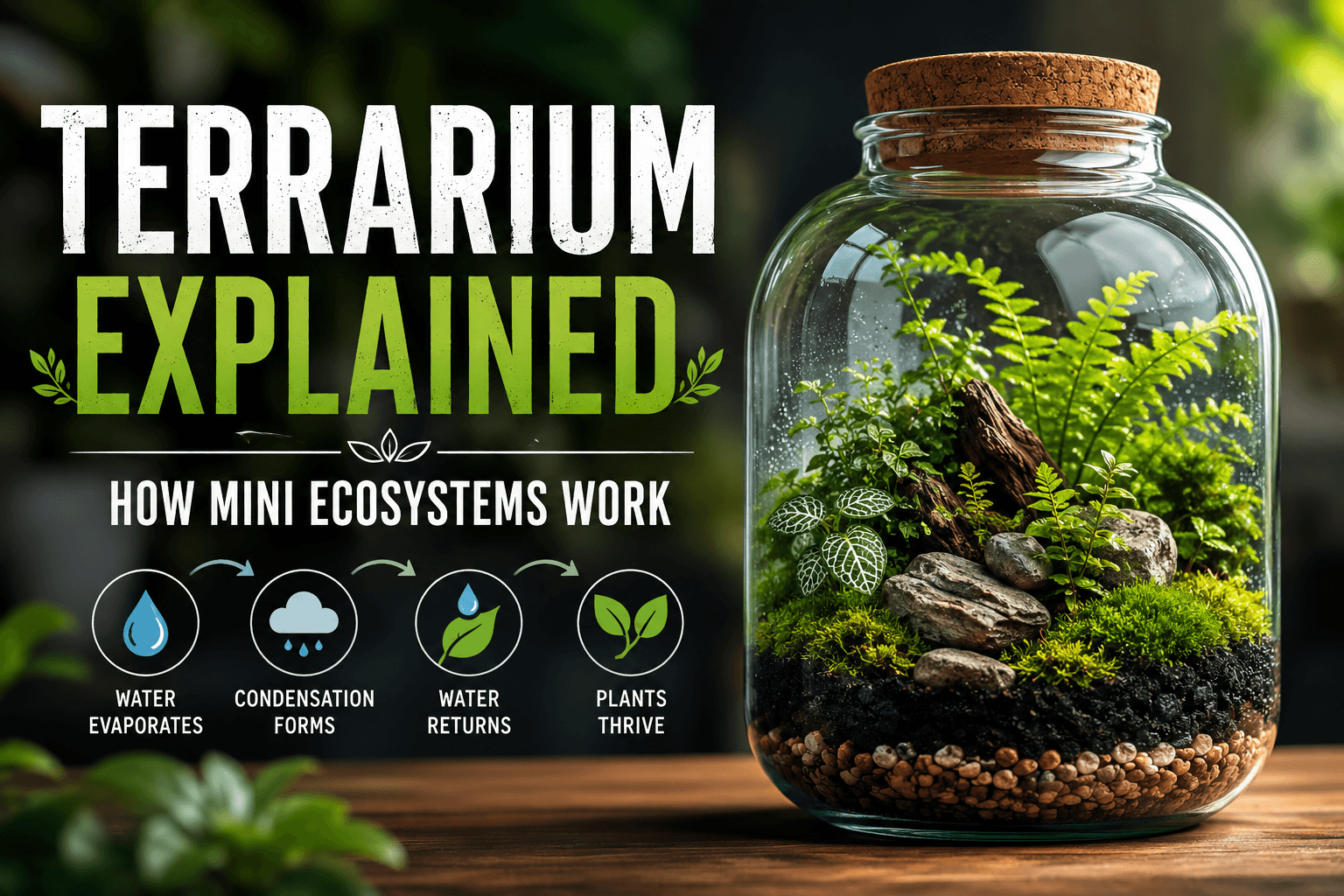
A terrarium may look like a small decorative plant arrangement, but it is much more than that. Inside a glass container, a terrarium brings together soil, plants, moisture, air, and light to create a miniature ecosystem.
What makes terrariums interesting from a sustainability perspective is how clearly they show the balance of natural systems. A well-designed terrarium demonstrates how water circulates, how plants adapt to their environment, and how small changes in light, moisture, or airflow can affect the entire system.
In a world where sustainability often feels large and complex, terrariums offer a simple way to understand ecological balance at a small scale. They show that living systems depend on relationships. Plants need soil, soil needs moisture, moisture depends on light and temperature, and every element plays a role.
The Royal Horticultural Society describes terrariums and bottle gardens as miniature gardens or ecosystems contained within glass or plastic containers. When designed well, especially in closed containers, they can require very little maintenance because water and moisture continue to cycle inside the system.
This is what makes a terrarium more than an indoor plant trend. It is a small living model of how ecosystems function.
What Is a Terrarium?
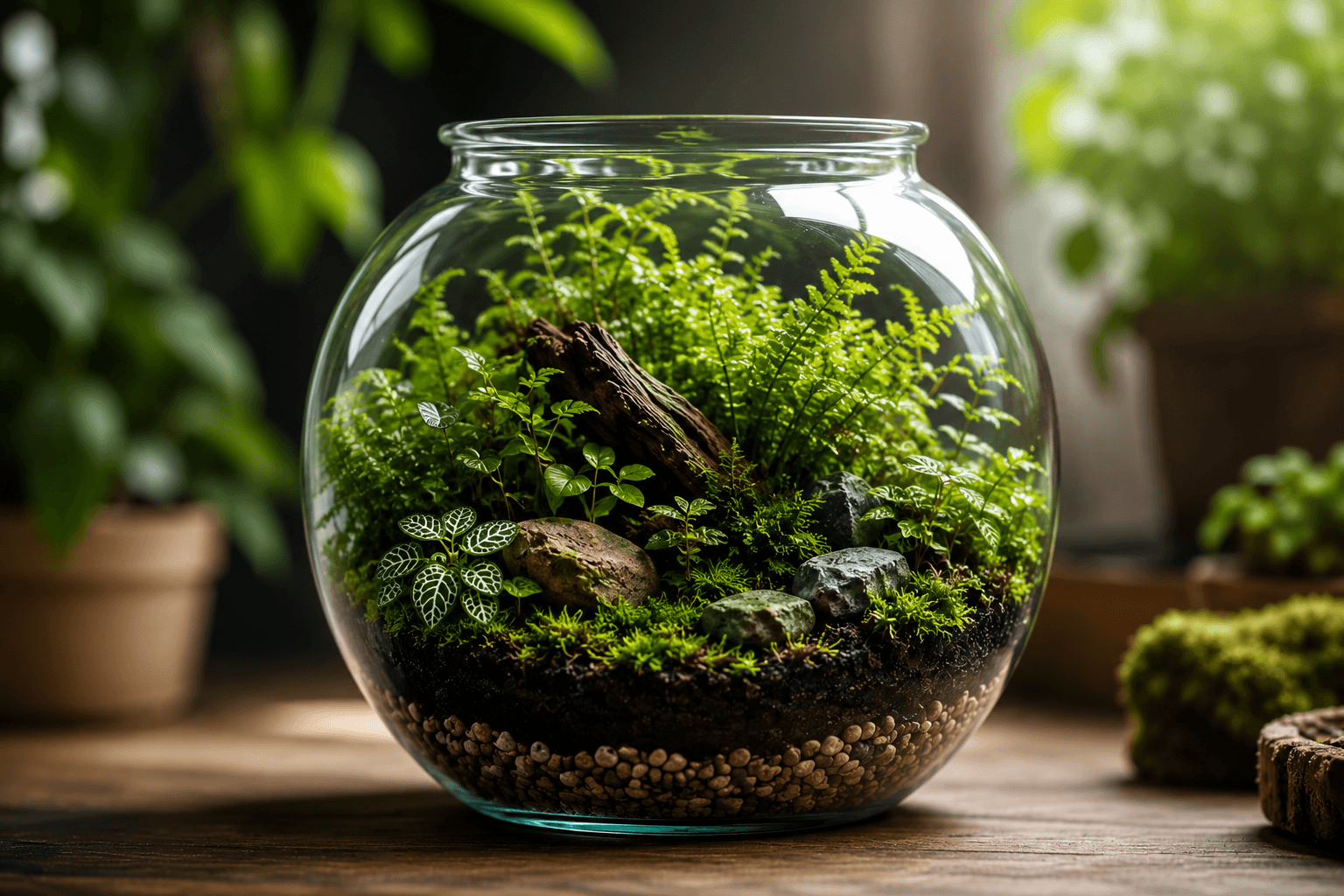
A terrarium is a small plant environment created inside a transparent container, usually made of glass. It typically includes layers of stones, soil, plants, and sometimes moss, charcoal, or decorative natural materials.
The container creates a controlled environment for the plants. Depending on whether it is open or closed, the terrarium can either allow airflow or trap moisture inside.
A closed terrarium works almost like a tiny greenhouse. Moisture evaporates from the soil and plants, condenses on the glass, and falls back into the soil. This creates a small water cycle within the container.
An open terrarium, on the other hand, allows air to circulate more freely. It is better suited for plants that prefer drier conditions, such as succulents and cacti.
In simple terms, a terrarium is a small ecosystem where plants, water, soil, and light interact in a visible and contained space.
How Does a Terrarium Work?
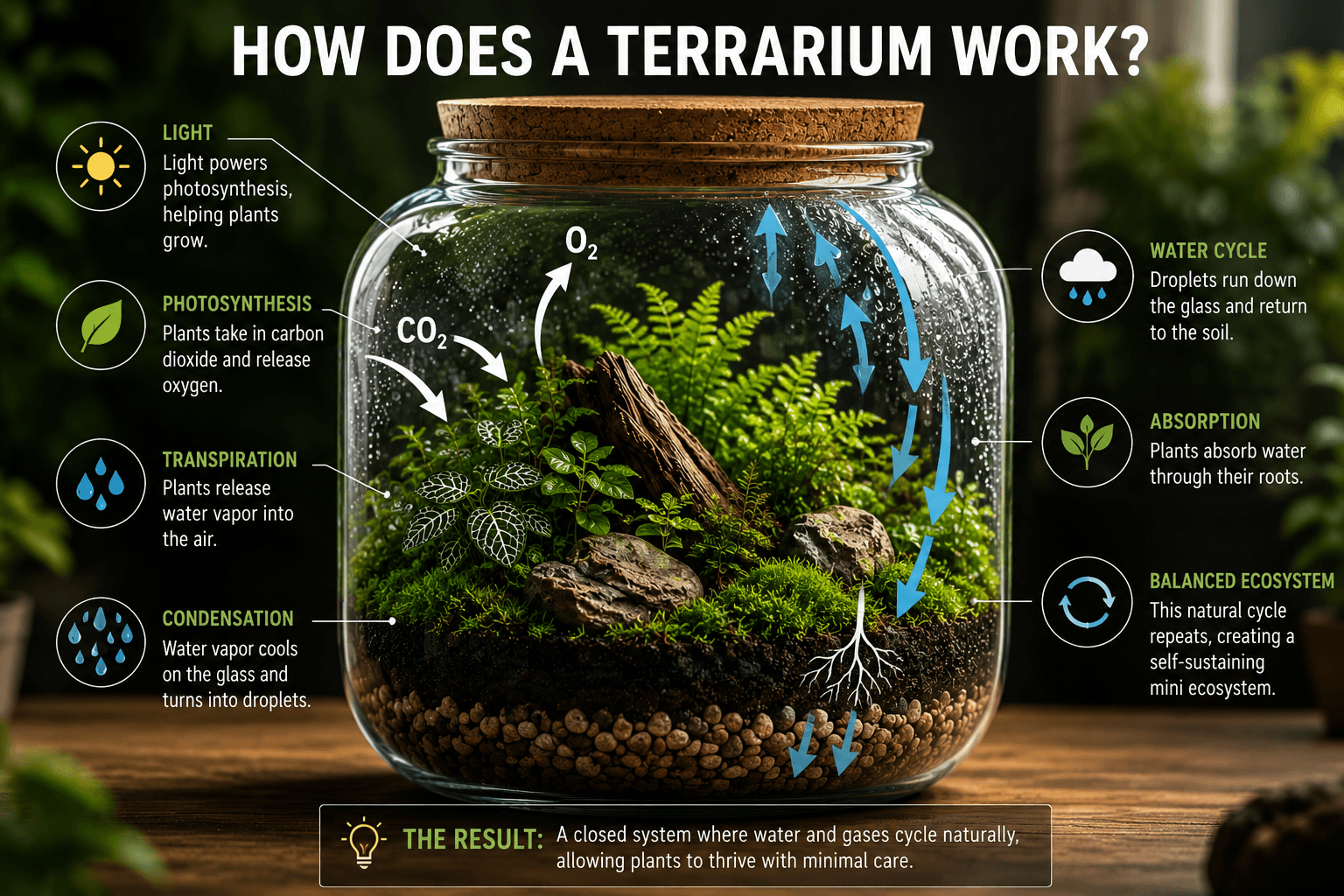
A terrarium works by recreating some of the basic processes found in natural ecosystems.
In a closed terrarium, water plays a central role. After watering, moisture from the soil and plants evaporates inside the container. Since the container is sealed, the moisture cannot easily escape. It condenses on the glass and eventually returns to the soil, creating a continuous cycle.
Light is another important factor. Plants use light for photosynthesis, the process through which they convert light energy into food. During this process, plants absorb carbon dioxide and release oxygen.
At the same time, plants also respire, using oxygen and releasing carbon dioxide. In a balanced terrarium, these processes continue in a small, controlled environment.
This is why terrariums are often described as mini ecosystems. They show how natural cycles work together, even within a small glass container.
Open Terrarium vs Closed Terrarium
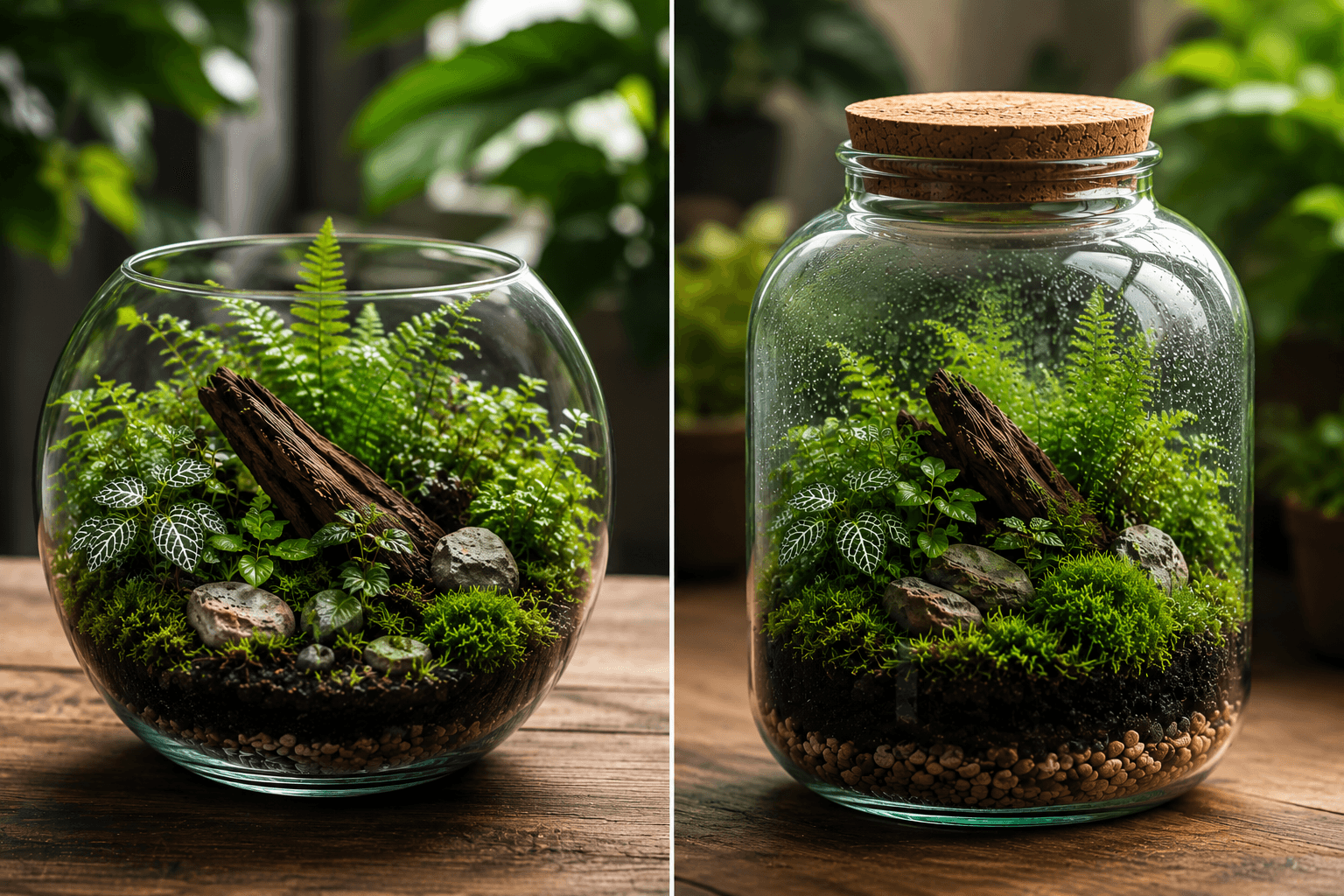
Not all terrariums function in the same way. The two most common types are open terrariums and closed terrariums.
An open terrarium has no lid and allows air to circulate. It is better for plants that prefer dry conditions and do not like excessive humidity. Succulents, cacti, and other drought-tolerant plants are commonly used in open terrariums.
A closed terrarium is sealed or partially sealed. It traps moisture inside and creates a humid environment. This makes it ideal for plants that enjoy moisture, such as mosses, ferns, fittonia, and small tropical plants.
The choice between open and closed terrariums depends mainly on the type of plants used. A common mistake is mixing plants with very different needs in the same container. For example, succulents need dry conditions, while mosses and ferns prefer humidity.
Types of Terrariums
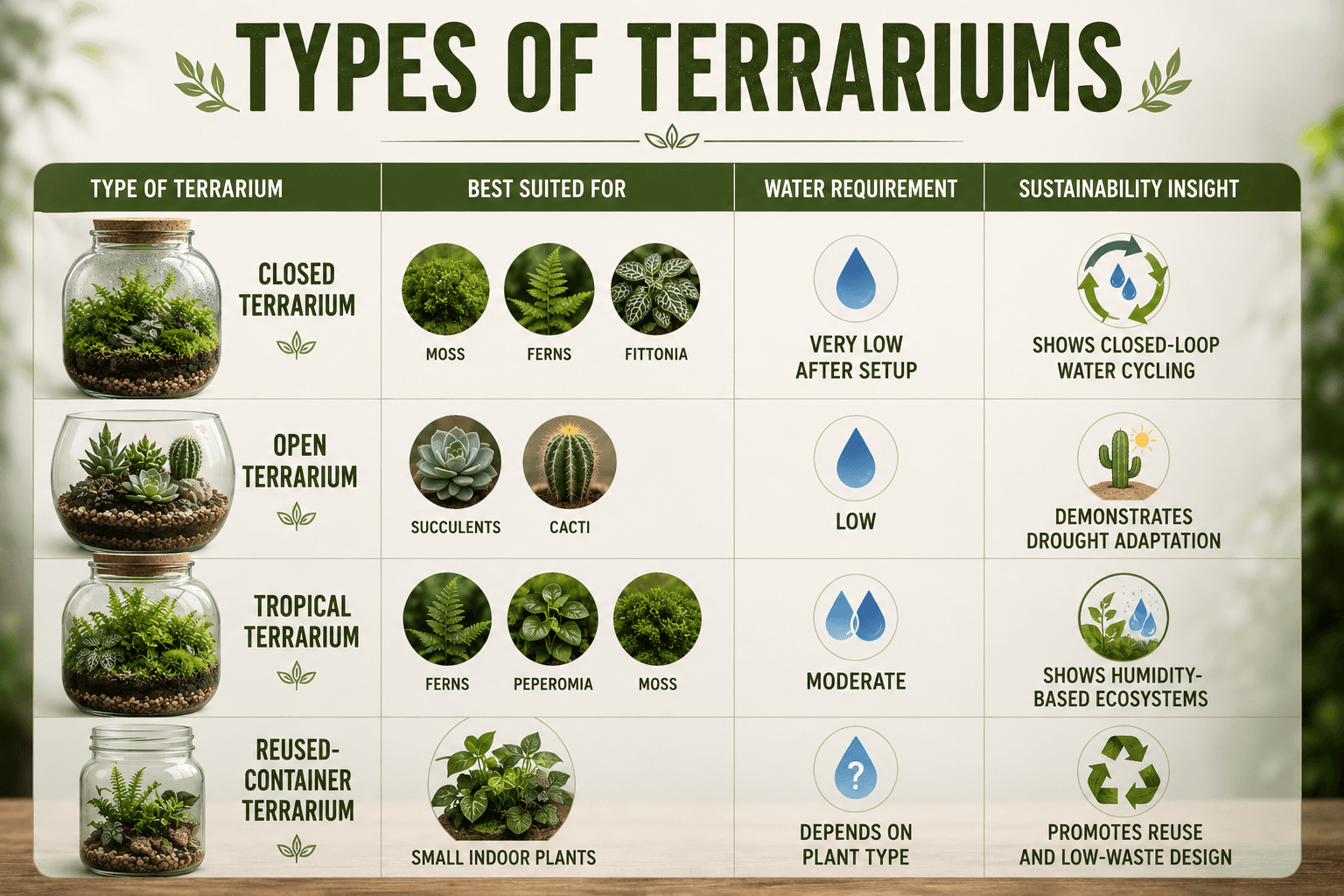
Different terrariums are designed for different plant environments. The table below gives a simple comparison.
Type of Terrarium | Best Suited For | Water Requirement | Sustainability Insight |
Closed terrarium | Moss, ferns, fittonia | Very low after setup | Shows closed-loop water cycling |
Open terrarium | Succulents, cacti | Low | Demonstrates drought adaptation |
Tropical terrarium | Ferns, peperomia, moss | Moderate | Shows humidity-based ecosystems |
Reused-container terrarium | Small indoor plants | Depends on plant type | Promotes reuse and low-waste design |
This comparison shows why terrariums are not just about decoration. Each type reflects a different relationship between plants, water, light, and airflow.
Best Plants for a Terrarium
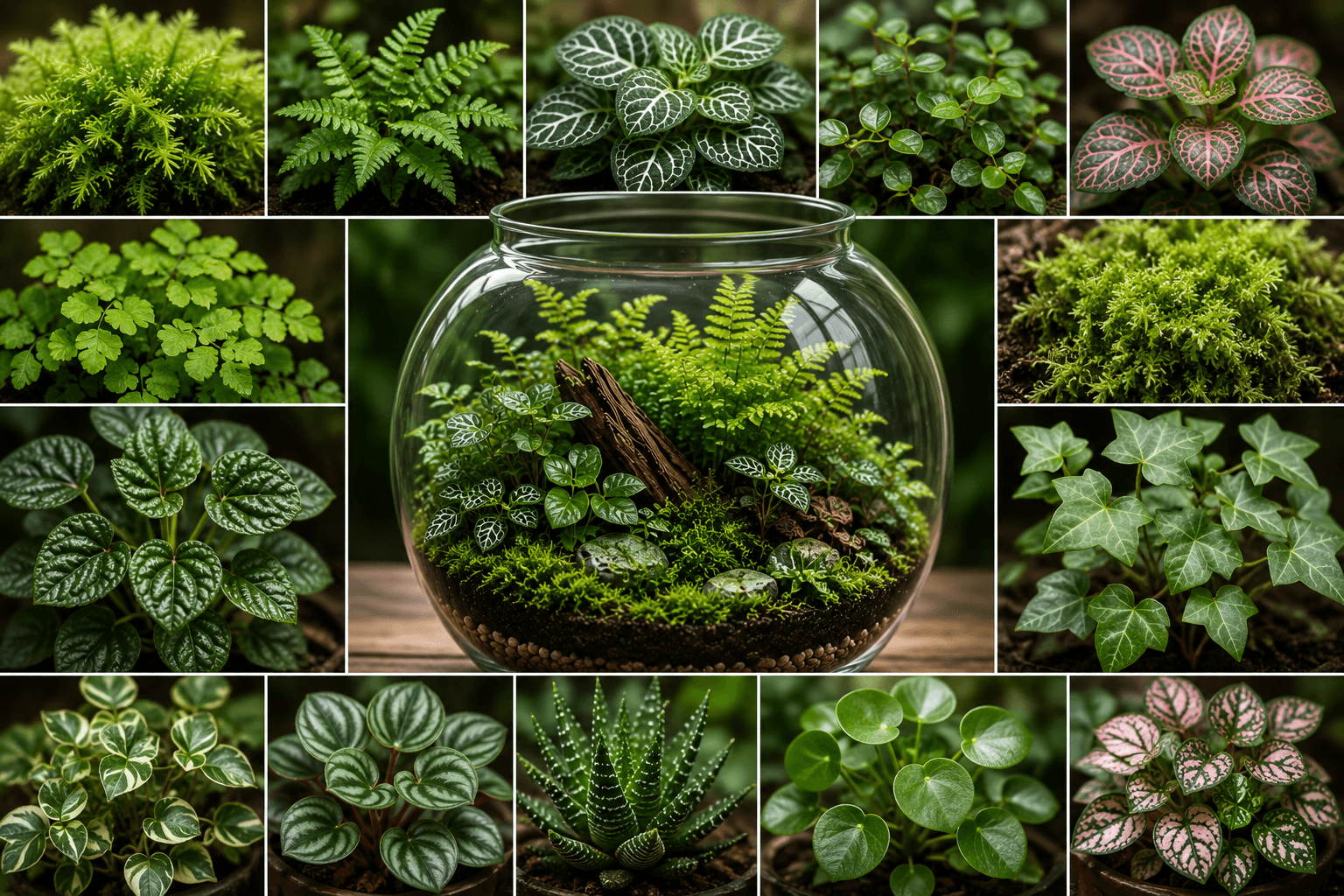
Choosing the right plants is one of the most important parts of building a healthy terrarium.
For closed terrariums, moisture-loving plants work best. These include mosses, ferns, fittonia, peperomia, and small tropical plants. These plants can tolerate humidity and grow well in enclosed spaces.
For open terrariums, plants that prefer dry conditions are more suitable. Succulents, cacti, haworthia, and small drought-tolerant plants are commonly used.
The key is to choose plants with similar needs. A terrarium works best when all plants inside require similar levels of water, light, and humidity.
This is also one of the first sustainability lessons a terrarium teaches: systems work better when elements are compatible with their environment.
What Terrariums Teach Us About Sustainability
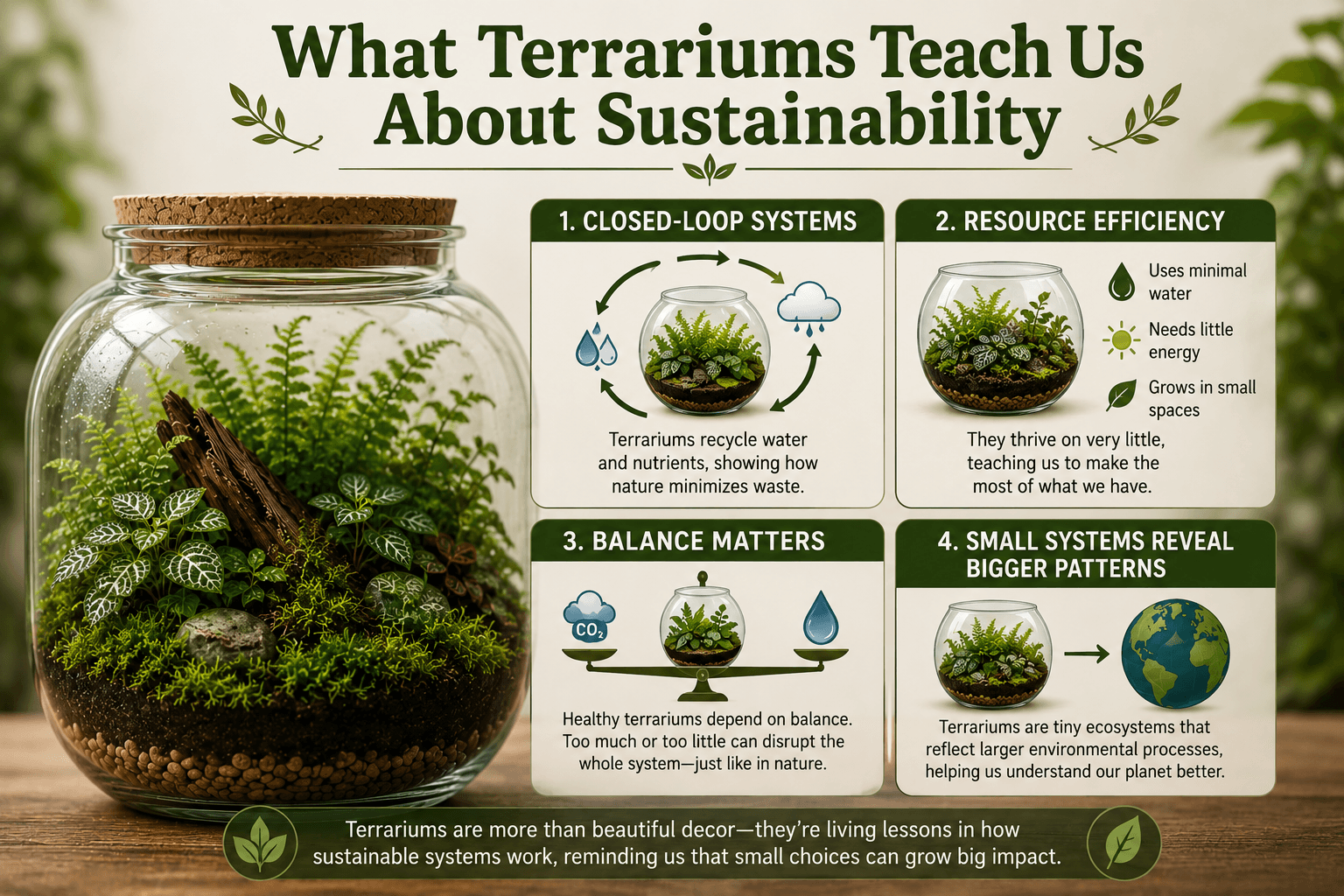
A terrarium may be small, but it reflects several important sustainability principles.
1. Closed-Loop Systems
A closed terrarium shows how resources can circulate within a system. Water evaporates, condenses, and returns to the soil. This is similar to how natural systems recycle resources instead of wasting them.
In sustainability, closed-loop thinking is important because it encourages reuse, regeneration, and reduced waste.
2. Resource Efficiency
Terrariums usually require very little water once established, especially closed terrariums. This makes them a useful example of how design can reduce resource consumption.
Instead of constantly adding inputs, a well-balanced system uses what it already has more efficiently.
3. Balance Matters
Too much water can cause mold or root rot. Too much sunlight can overheat the container. Too little light can weaken the plants.
This balance reflects a larger ecological truth. Ecosystems depend on the right conditions. When one factor changes too much, the entire system can be affected.
4. Small Systems Reveal Bigger Patterns
A terrarium makes natural processes visible. It helps people observe moisture cycles, plant growth, decomposition, and adaptation in a simple way.
This makes terrariums useful not just as decorative objects, but as educational tools for understanding ecosystems.
Terrariums and Urban Living
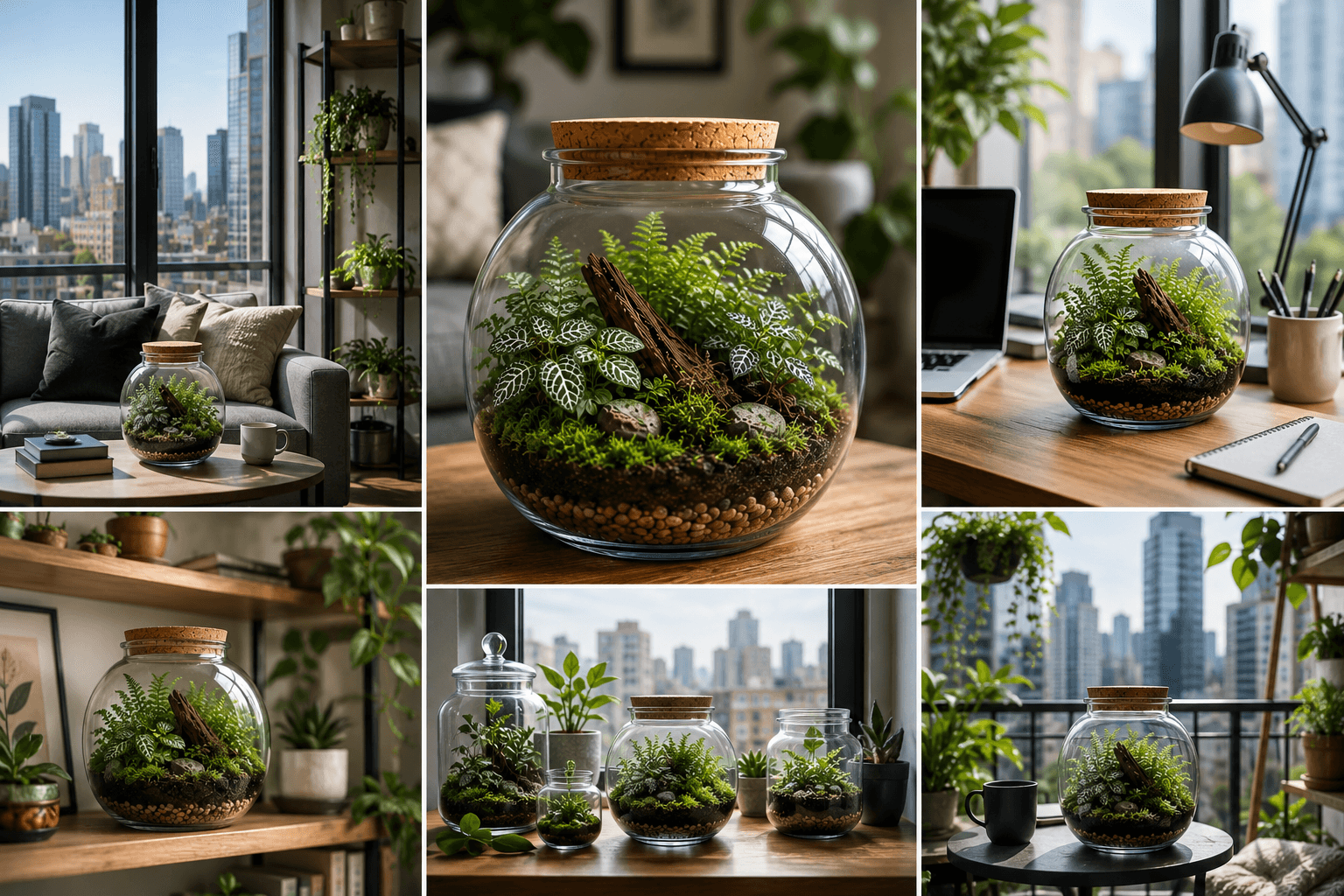
As cities become denser, people are increasingly looking for ways to bring nature into indoor spaces. Terrariums offer a practical solution because they require little space and can be maintained indoors.
They are especially relevant for apartments, offices, classrooms, and small urban homes where outdoor gardening may not be possible.
Terrariums also connect to the broader idea of biophilic design, which focuses on bringing natural elements into built environments. While terrariums cannot replace outdoor ecosystems, they can help create a closer connection with plants and natural processes.
In urban settings, even small forms of greenery can influence how people experience indoor spaces. A terrarium offers a compact reminder that nature can exist even in limited spaces.
Are Terrariums Sustainable?
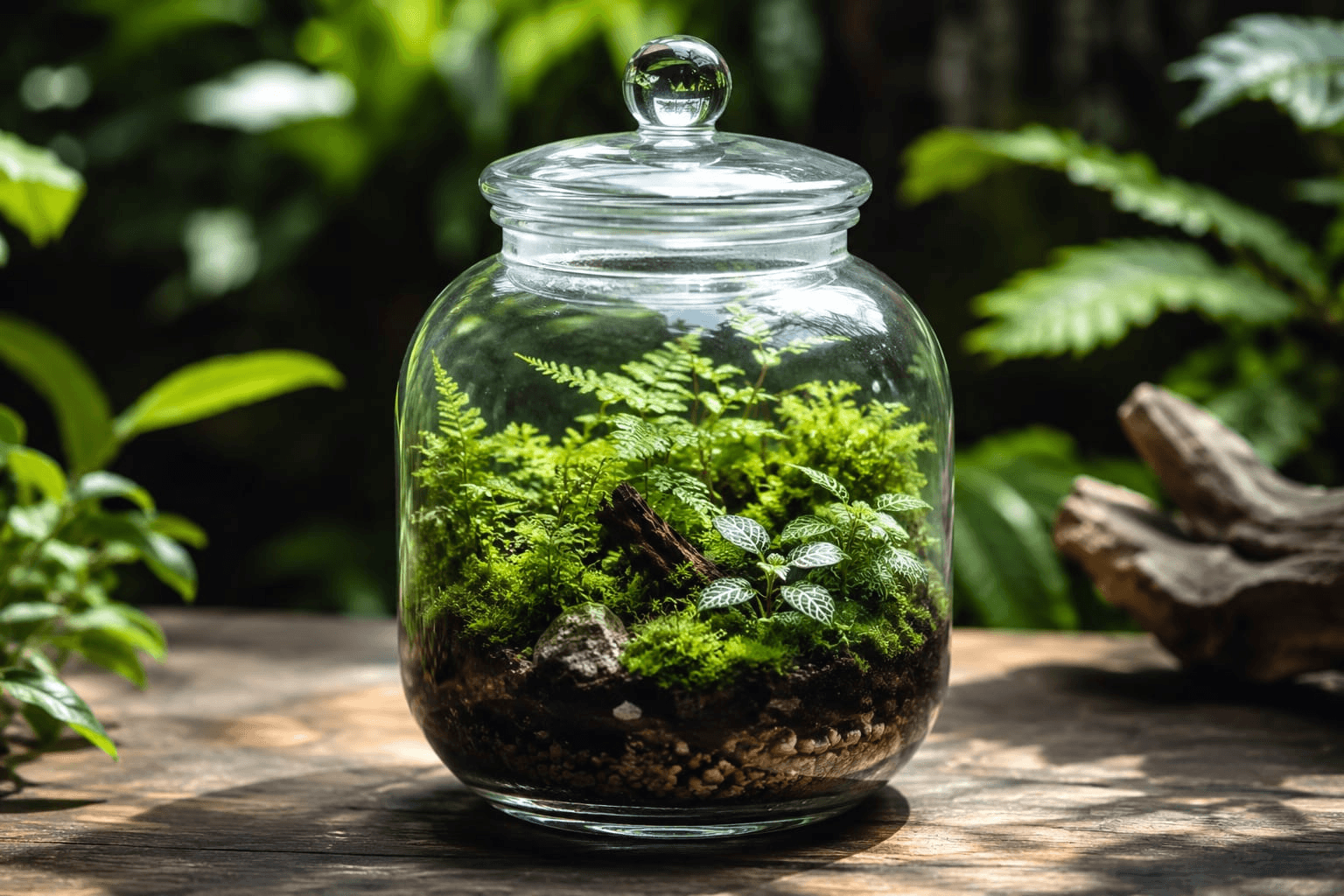
Terrariums can be sustainable, but it depends on how they are made.
A terrarium made using a reused glass jar, locally available materials, and suitable plants can be a low-waste and resource-efficient way to bring greenery indoors. It encourages reuse and reduces the need for disposable décor.
The U.S. Environmental Protection Agency highlights that reducing and reusing materials helps save energy, prevent pollution, and reduce waste sent to landfills and incinerators. A reused-container terrarium is a small but practical example of this principle.
However, a terrarium becomes less sustainable if it relies heavily on imported decorative materials, plastic accessories, or plants that require high maintenance and frequent replacement.
The sustainability of a terrarium therefore depends on design choices. Reuse, plant compatibility, low maintenance, and minimal material inputs make a terrarium more environmentally responsible.
Common Mistakes in Terrarium Care
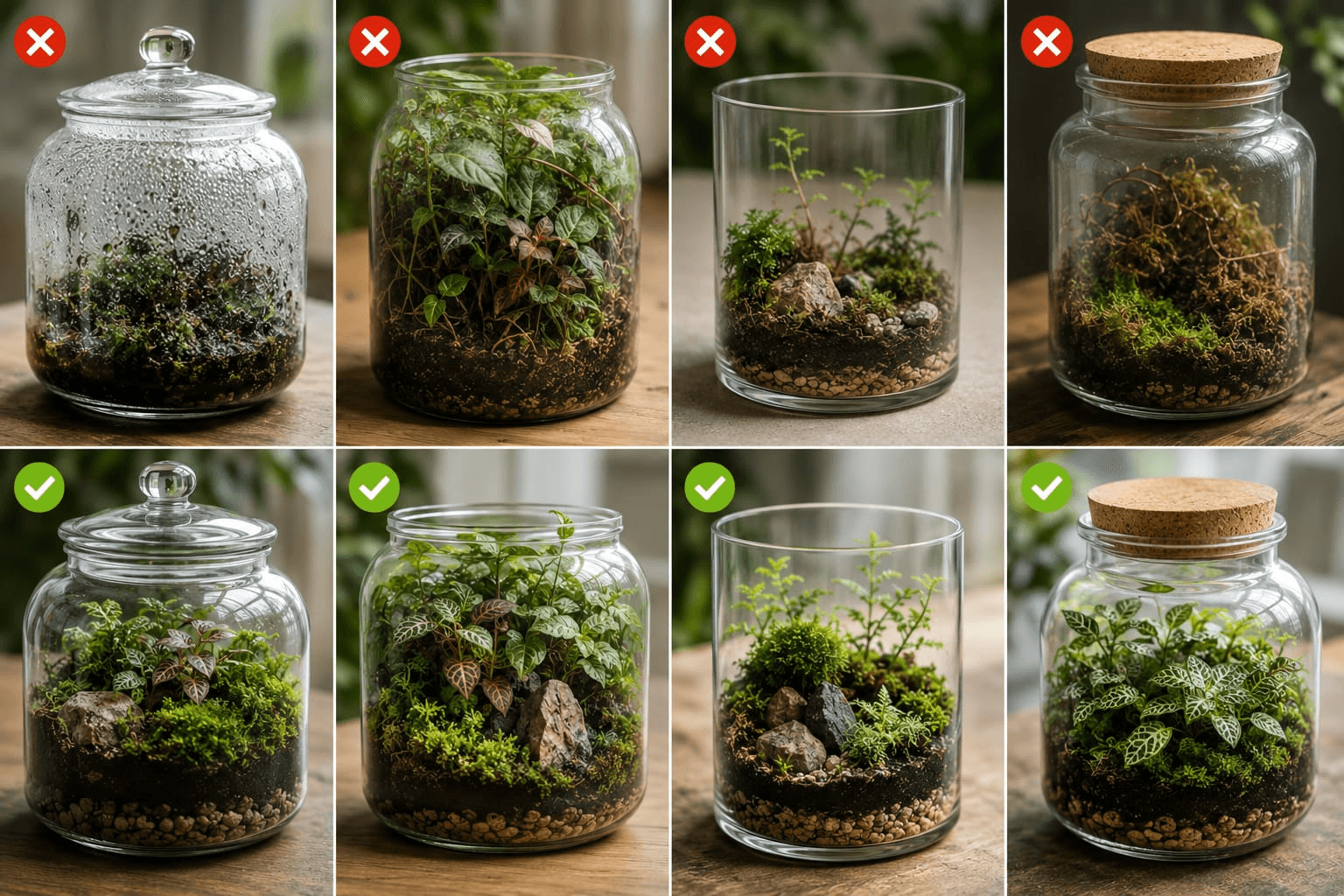
Terrariums are low-maintenance, but they are not maintenance-free. Most problems happen when the internal balance of the system is disturbed.
One of the most common mistakes is overwatering. In a closed terrarium, water has nowhere to escape easily. Too much moisture can lead to mould, fungal growth, and plant decay.
Another mistake is placing the terrarium in direct sunlight. Glass containers can trap heat quickly, which may damage or kill the plants inside. Bright but indirect light is usually better.
Using the wrong plants is also a common issue. Succulents and mosses should generally not be placed together because they prefer different moisture conditions.
Poor drainage can also create problems. Without a proper base layer, water may collect around the roots and cause rot.
A successful terrarium is not about adding more. It is about creating the right balance.
Terrariums as Learning Tools
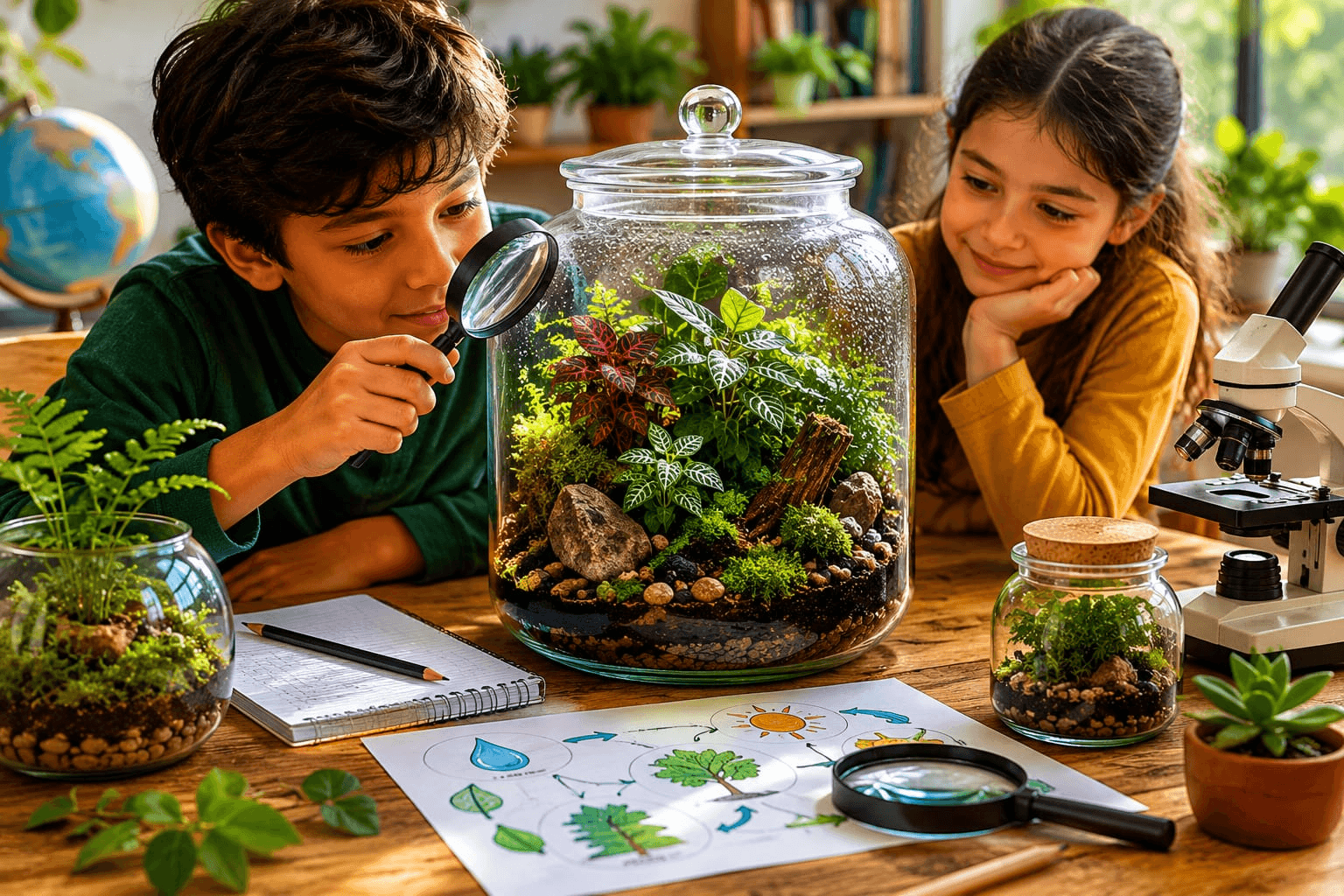
One of the most valuable aspects of a terrarium is that it makes ecological relationships visible.
In schools, homes, and workplaces, terrariums can help people understand how plants respond to light, water, humidity, and space. They can also introduce ideas such as ecosystems, resource cycles, decomposition, and plant adaptation.
This makes terrariums especially useful for sustainability education. They simplify complex environmental ideas without removing their meaning.
A terrarium teaches that sustainability is not only about large systems like forests, cities, or industries. It is also about understanding relationships, limits, and balance at every scale.
The Bigger Picture: Mini Ecosystems and System Thinking
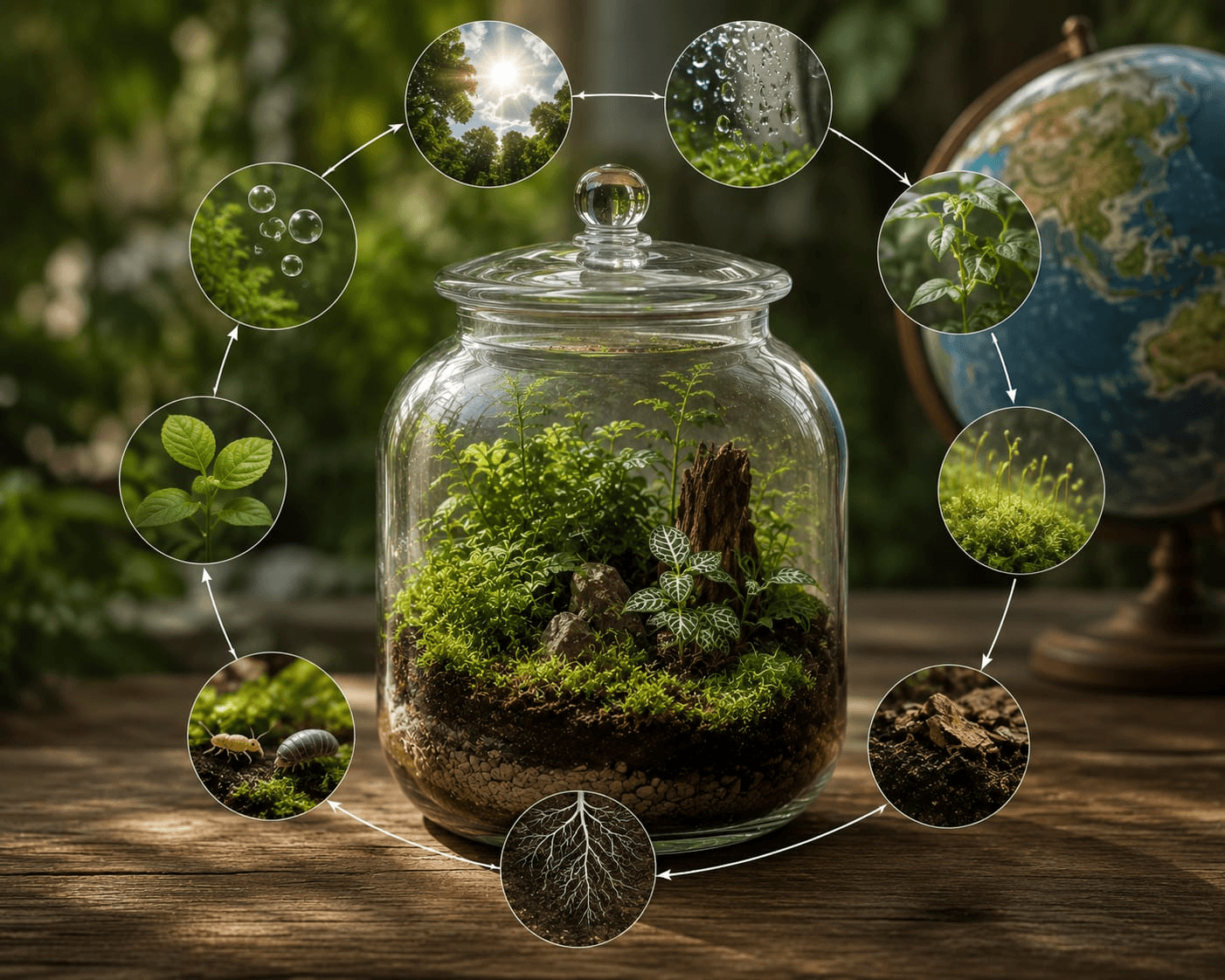
A terrarium is small, but the idea behind it is much larger.
It shows that systems function best when their parts work together. Plants, soil, water, light, and air are not separate elements. They interact continuously.
This is the same principle that applies to sustainability. Waste systems, energy systems, water systems, and ecosystems all depend on balance. When resources are used carefully and cycles are maintained, systems become more resilient.
A terrarium helps us see this in a simple and tangible way.
Conclusion
A terrarium is more than a glass container with plants. It is a living model of how ecosystems work.
By showing water cycles, plant growth, humidity, and balance in a small space, terrariums help us understand larger sustainability principles. They remind us that healthy systems depend on the careful interaction of different elements.
For urban homes, offices, and educational spaces, terrariums offer a simple way to bring nature indoors. But their deeper value lies in what they teach.
A well-designed terrarium shows that sustainability is not only about scale. It is about balance, resource efficiency, and creating systems where every element has a role.
FAQs
1. What is a terrarium?
A terrarium is a small plant ecosystem created inside a glass or transparent container.
2. How does a terrarium work?
A terrarium works by balancing plants, soil, moisture, air, and light inside a controlled environment.
3. What is the difference between open and closed terrariums?
Open terrariums allow airflow and suit dry plants, while closed terrariums trap moisture and suit humidity-loving plants.
4. What plants are best for a terrarium?
Moss, ferns, fittonia, peperomia, succulents, and cacti are commonly used depending on the terrarium type.
5. Do terrariums need sunlight?
Terrariums need bright, indirect light. Direct sunlight can overheat the container and damage plants.
6. How often should you water a terrarium?
Closed terrariums need very little watering, while open terrariums may need occasional watering based on plant type.
7. Are terrariums sustainable?
Terrariums can be sustainable when made with reused containers, suitable plants, and low-maintenance materials.
8. Why do closed terrariums need less water?
Closed terrariums recycle moisture through evaporation and condensation, creating a small water cycle.
9. Can terrariums be kept indoors?
Yes, terrariums are ideal for indoor spaces such as homes, offices, classrooms, and apartments.
10. What do terrariums teach about sustainability?
Terrariums show how ecosystems depend on balance, resource efficiency, and closed-loop natural cycles.

Other articles

We work with individuals, startups, and NGOs dedicated to forging a sustainable future. Tell us about your mission.

