
Textile Waste to Fibre: The SaXcell Story
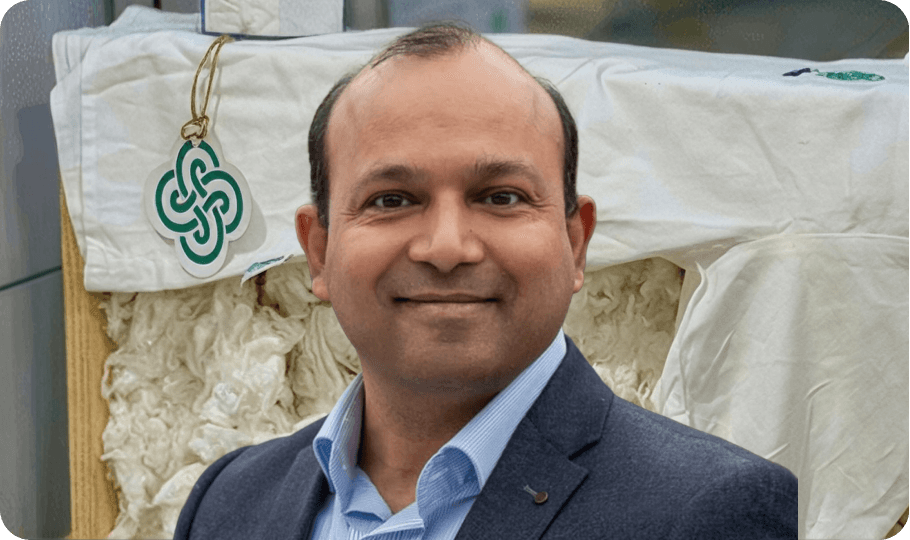
Every piece of clothing has a journey.
It begins as a fibre, moves through farms or factories, passes through spinning, weaving, dyeing, finishing, stitching, shipping, selling, and finally reaches a wardrobe. But for most clothes, the journey does not end well. Once discarded, they often become waste, even when the material still holds value.
For SaXcell, this is where the story begins.
SaXcell is working on a simple but powerful idea: cotton-rich textile waste should not be treated as the end of a product’s life. It can become the beginning of a new fibre.
At Mission Sustainability, our Change Makers conversations are about people and organisations who are changing the sustainability landscape through real work, not just ideas. In this conversation, we spoke with Pramod from SaXcell about textile waste, chemical recycling, innovation, collaboration and the choices we all make as consumers.
Why Textile Waste Needs a New Solution
The textile industry is one of the most essential industries in the world. Clothing is not a luxury; it is a basic human need.
But the way the industry works today has created serious sustainability challenges.
Textiles are produced in large volumes, often across global supply chains. Cotton may be grown in one country, spun in another, dyed somewhere else, stitched into garments elsewhere and finally sold in another market. Each stage uses water, energy, chemicals and labour.
Cotton is often seen as a natural and sustainable fibre, but its impact depends on how it is grown, processed, transported, used and discarded. Polyester, on the other hand, has grown rapidly because it is cheap and scalable, but it comes from fossil-based sources.
Then comes the issue of use.
Many clothes are used for a short time and discarded. Some are never sold at all. Some are downcycled into lower-value applications. Some are exported. Some are dumped or burned.
The problem is not only that we produce too much. The problem is that we do not keep materials in circulation for long enough.
That is the gap SaXcell is trying to address.
Meet Pramod: From a Small Village to Clean Technology
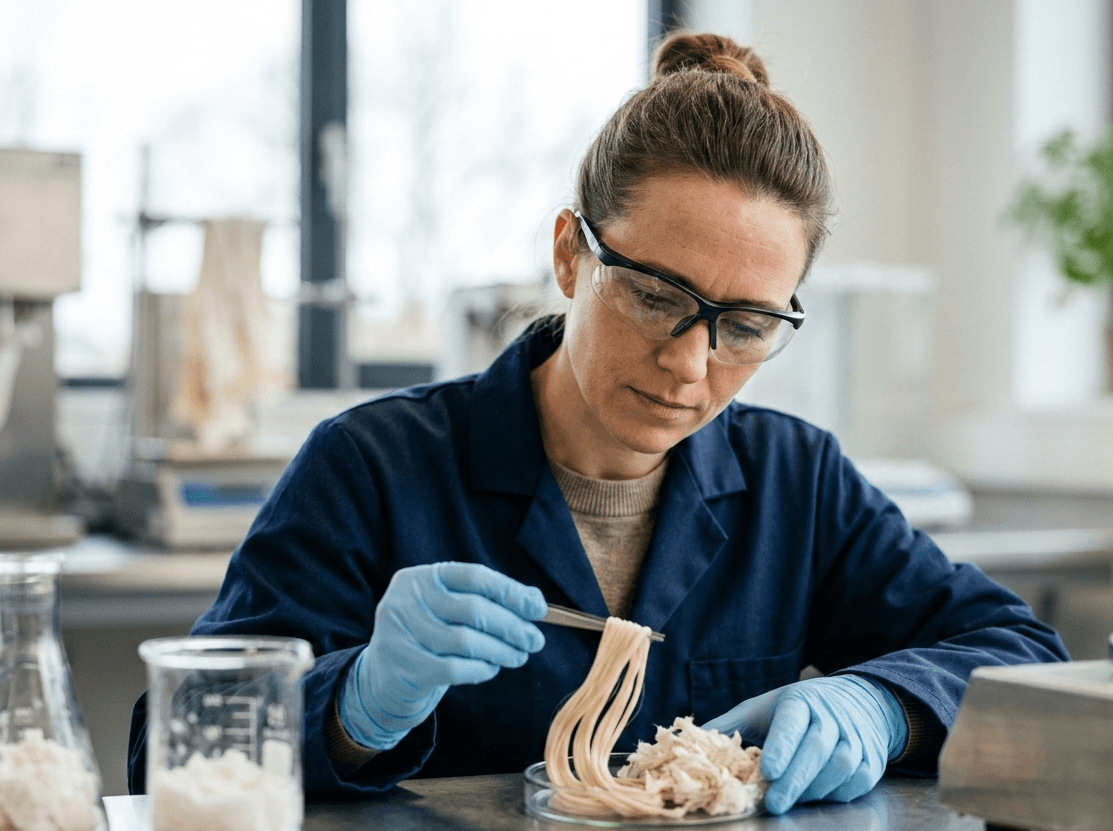
Pramod’s journey did not begin in a laboratory or a boardroom. It began in a small village in central India, east of Nagpur in Maharashtra.
He studied in a Marathi medium government school and grew up in a place where resources were limited. Life was simple, practical and naturally low-waste. Milk came without packaging. Groceries were carried in cloth bags. Clothes and objects were used for as long as possible.
At that time, these choices were not called sustainability. They were simply how people lived.
His academic journey began with pharmacy. After his diploma and bachelor’s studies, he moved towards biotechnology and bioprocess technology. This introduced him to green chemistry, enzymes and cleaner ways of processing materials.
Later, his work took him to the Netherlands, where he explored how enzyme technology could be used in textile processing. Traditional textile processing can involve harsh chemicals, high temperatures and multiple treatment steps. His research looked at whether biological processes could make parts of textile treatment cleaner.
But over time, he began asking a deeper question.
What is the use of knowledge if it never reaches society?
The Turning Point: Why Research Must Reach Society
Pramod speaks about a common challenge in innovation: many ideas stay trapped in research.
A scientist may spend years solving a problem, writing papers, publishing research and developing patents. But the solution may still never reach industry or people.
This is where Technology Readiness Levels, or TRLs, become important.
TRL 1 to 3 is where early research happens. TRL 7 to 9 is where real commercial production happens. But between them is the difficult middle stage, TRL 4 to 6, where an idea must become a working prototype and then move towards scale.
This middle stage is often called the valley of death in innovation.
Many technologies fail here, not because the science is weak, but because the bridge between research and real-world adoption is missing.
For Pramod, this became a personal turning point. He did not want innovation to remain only in papers. He wanted knowledge to become something useful for society.
This thinking eventually brought him closer to applied innovation and to SaXcell.
What Is SaXcell?
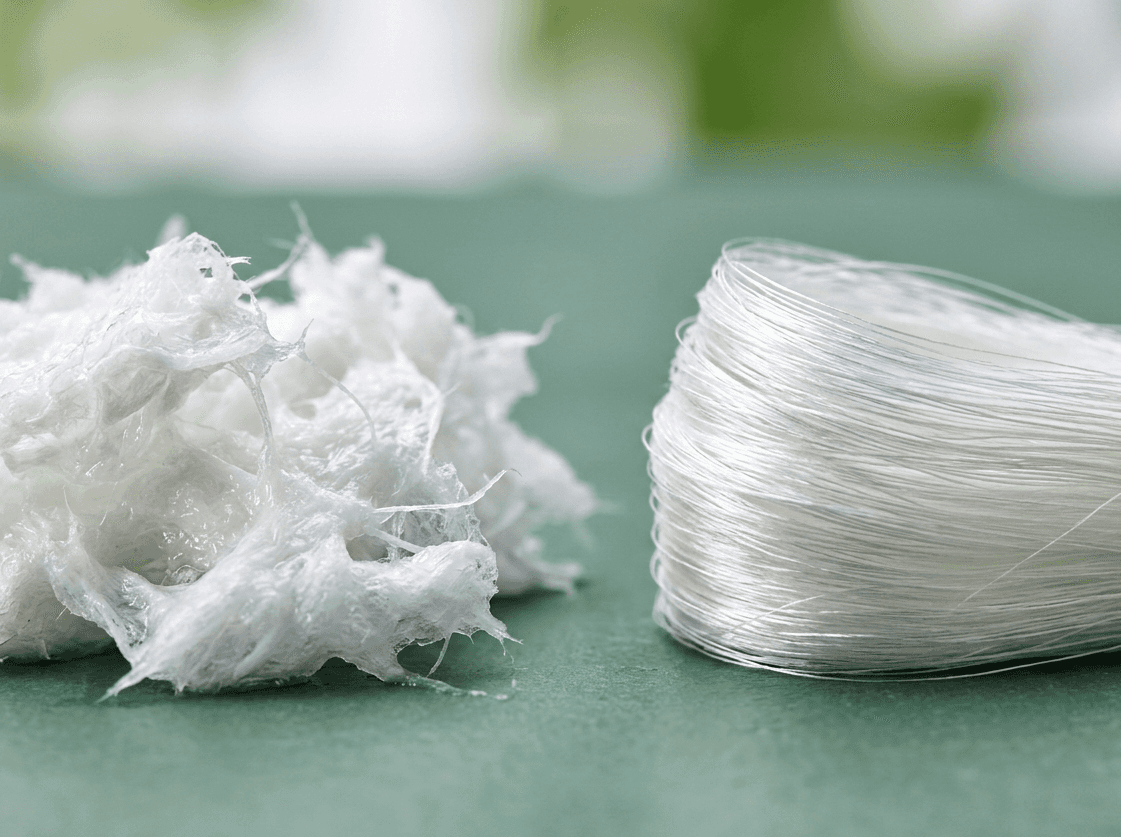
SaXcell is built from two words: Saxion, the university where the innovation was born, and cellulose, the natural material found in cotton and other plant-based fibres.
The idea behind SaXcell’s technology is to take cotton-rich textile waste and convert it into pulp. This pulp can then be used to make lyocell fibre, a man-made cellulosic fibre that can go back into textile supply chains.
In simple terms, SaXcell is working to turn old textile waste into new fibre.
This is different from simply cutting old fabric and using it in lower-value products. SaXcell focuses on chemical recycling, where cotton-rich waste is processed into pulp that can become a high-quality fibre again.
The goal is not only recycling. The goal is textile-to-textile recycling at a quality that can support real industry use.
How SaXcell Turns Textile Waste Into Fibre
Textile recycling can happen in different ways.
Mechanical recycling is one common method. In this process, textiles are cut, opened and broken down into fibres. These fibres can then be spun again into yarn. Mechanical recycling is useful, but it has limitations. As fibres become shorter and weaker, it becomes harder to use high percentages of recycled material in fine or high-quality textiles.
SaXcell takes a different route.
It uses cotton-rich textile waste and processes it into pulp. This pulp can then be used to make new lyocell fibre. For this to work, the pulp quality must be very high. Even small impurities can create challenges in fibre production.
This is why SaXcell’s work is significant. It is not only about recycling old textiles. It is about creating a material that can re-enter textile supply chains with quality and consistency.
Pramod explains that SaXcell is not a garment company or a yarn company. It is more like an ingredient company. It creates a fibre solution that can be integrated into the wider textile ecosystem.
Why This Matters for India
India has one of the strongest textile ecosystems in the world. It has raw materials, spinning, weaving, dyeing, garmenting, home textiles, manufacturing and a large domestic market.
This gives India a major opportunity.
If textile waste can be treated as a resource, India can build more circular supply chains around one of its most important industries. Cities and clusters such as Panipat, Tiruppur and Coimbatore already have strong textile and recycling activity. With better sorting, collection, technology and industry collaboration, textile waste can become part of the future raw material base.
This matters even more as cotton faces pressure from climate variability, water stress, land-use change and changing production patterns.
For a country like India, textile circularity is not only an environmental opportunity. It is also an industrial opportunity.
Technologies like SaXcell ask an important question: can yesterday’s textile waste become tomorrow’s raw material?
The Role of Collaboration

One of the strongest messages from the conversation is that sustainability cannot scale in isolation.
SaXcell does not see itself as a company that can change the textile industry alone. Textile circularity needs many actors: waste collectors, sorters, recyclers, fibre producers, spinners, weavers, brands, policymakers, investors and consumers.
Each has a role to play.
Pramod compares it to an orchestra. Every part has to be placed and played in the right tone. If the system works together, it becomes music. If it does not, it becomes noise.
That analogy captures the reality of sustainability.
A technology may be strong, but without the right ecosystem, it cannot scale. A brand may want sustainable materials, but without supply, processing and cost alignment, adoption becomes difficult. Consumers may want better products, but they also need awareness and access.
The future of textile circularity will depend on collaboration across the full value chain.
The Market Challenge
Sustainable innovation often faces a difficult market question: will people pay for it?
Pramod is clear that sustainability also has to be economically workable. Many companies appreciate sustainability, but when purchasing decisions are made, price still matters.
This is why SaXcell is also working on the value proposition of its fibre. If a material can reduce dye use, improve product life or support better quality, it becomes more than an environmental choice. It becomes a business case.
This is an important lesson for sustainability innovators.
A solution must be better for the planet, but it must also make sense for the market. Without that, adoption remains slow.
Pramod’s Message on Conscious Consumption
Towards the end of the conversation, Pramod brings the discussion back to personal choices.
His message is simple: buy consciously, use products longer and avoid unnecessary purchases.
He speaks about keeping good-quality clothes for many years, using garments fully, avoiding impulse buying and thinking about the end of a product’s life before buying it.
This is especially important in fashion.
A sustainable material can help, but consumption habits matter too. If a garment is bought casually, used briefly and thrown away, the system remains wasteful. If it is bought thoughtfully, used for years and then responsibly recycled, its impact changes.
The most sustainable product is often not the newest one. It is the one we already own and continue to use well.
The Future of Textile-to-Textile Recycling
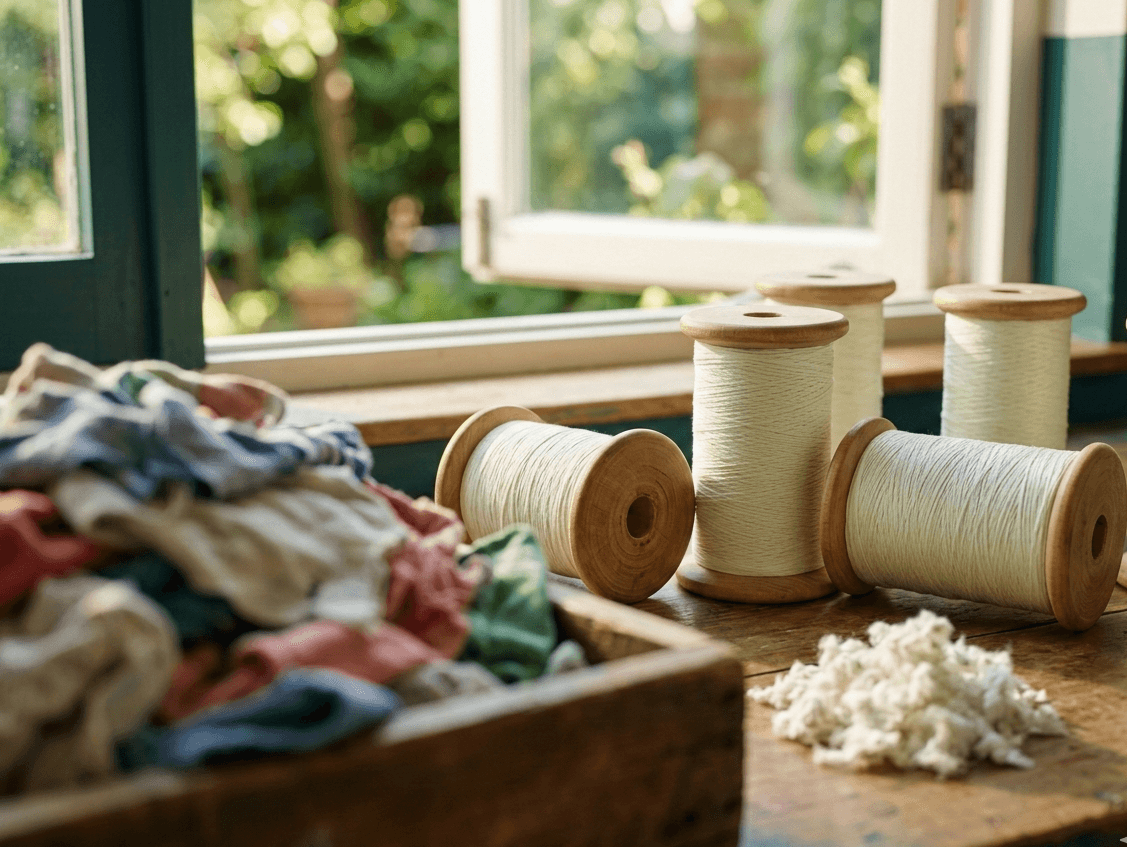
SaXcell’s work represents a larger shift happening in sustainability.
For years, waste was seen as something to manage after use. Today, the conversation is changing. Waste is increasingly being seen as a material stream, a resource and a design challenge.
Textile-to-textile recycling is part of this shift.
It asks the industry to move beyond the linear model of make, use and discard. It asks whether materials can remain in circulation for longer. It asks whether high-quality fibres can come not only from farms and fossil resources, but also from discarded textiles.
For this to happen at scale, technology is only one part of the answer. Collection systems, sorting infrastructure, supportive policy, brand adoption and consumer demand will all matter.
But innovations like SaXcell show that another path is possible.
Conclusion
The SaXcell story is not only about recycling textiles. It is about changing the way we think about materials.
It is about taking something considered waste and asking whether it can become valuable again. It is about moving innovation from research to real-world use. It is about building bridges between science, industry, policy, brands and consumers.
Pramod’s journey from a small village in India to clean technology in the Netherlands reflects the same idea at a human level. Resourcefulness, careful use and respect for materials were part of his early life long before they became sustainability vocabulary.
Today, through SaXcell, that thinking is being applied to one of the world’s most complex industries.
The future of textiles will not be built by one technology alone. It will require many solutions working together. But SaXcell shows that textile waste does not have to be the end of the story.
It can become the beginning of a new one.
FAQs
1. What is SaXcell?
SaXcell is a textile recycling innovation that converts cotton-rich textile waste into pulp, which can be used to make new lyocell fibre.
2. What does SaXcell do with textile waste?
SaXcell uses chemical recycling to turn discarded cotton-rich textiles into high-quality pulp for new fibre production.
3. Why is textile waste a sustainability problem?
Textile waste is a problem because clothes use water, energy, chemicals and raw materials, but many garments are discarded after limited use.
4. How is SaXcell different from mechanical recycling?
Mechanical recycling breaks textiles back into fibres, while SaXcell chemically converts cotton-rich textile waste into pulp for new fibre.
5. What is textile-to-textile recycling?
Textile-to-textile recycling means turning old or discarded textiles into new fibres, yarns, fabrics or garments.
6. What is lyocell fibre?
Lyocell is a man-made cellulosic fibre that can be produced from cellulose-based pulp and used in textile applications.
7. Why does textile recycling matter for India?
Textile recycling matters for India because the country has a large textile ecosystem and can turn waste into a future raw material source.
8. Can textile waste become a valuable resource?
Yes. With proper collection, sorting and recycling technology, textile waste can be converted into new materials for circular supply chains.
9. What role do consumers play in textile sustainability?
Consumers can support textile sustainability by buying consciously, using clothes longer, avoiding impulse purchases and choosing better materials.
10. Why is collaboration important for circular textiles?
Circular textiles need collaboration between waste collectors, recyclers, fibre producers, brands, policymakers, investors and consumers.

Other articles

We work with individuals, startups, and NGOs dedicated to forging a sustainable future. Tell us about your mission.

