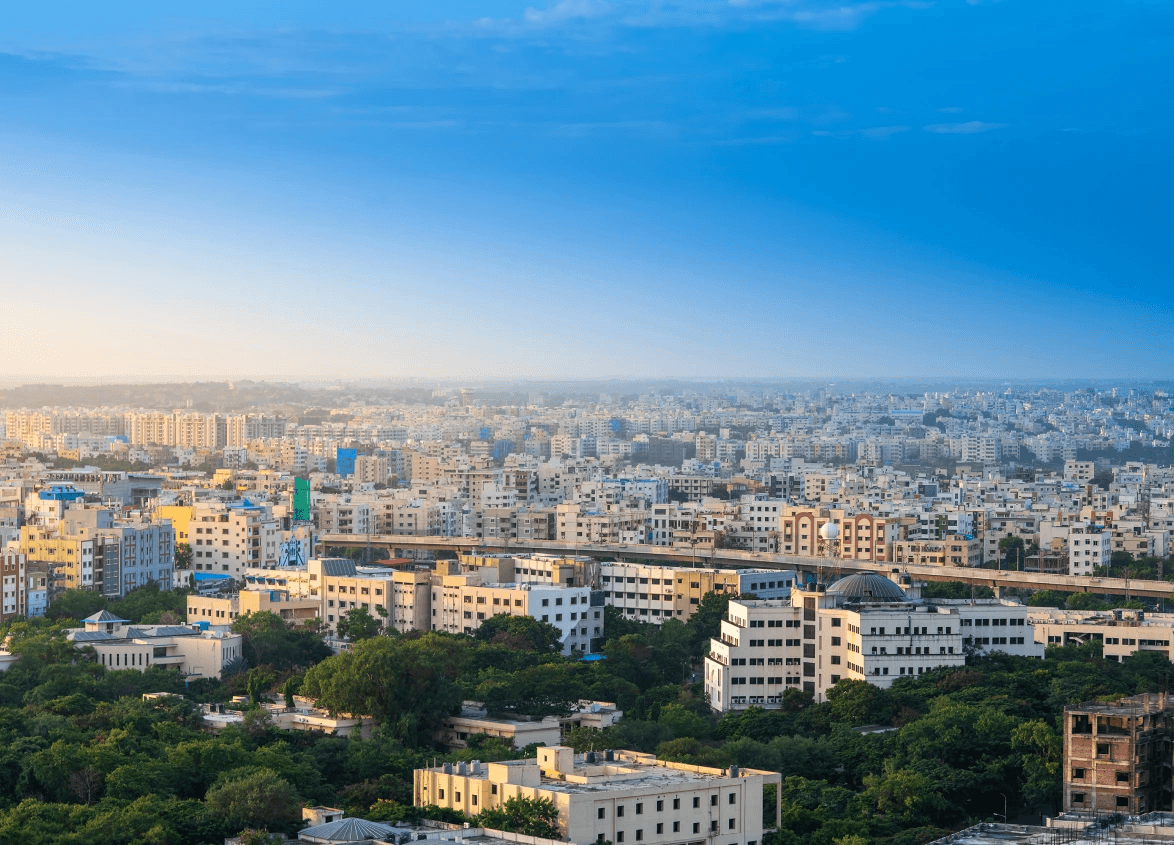
Smart Cities Mission
Urban sustainability in India is increasingly shaped by how cities manage infrastructure, resources, and climate risks rather than by isolated green initiatives. As urban populations grow and environmental pressures intensify, the question is no longer whether cities should become sustainable, but how effectively they are translating policy intent into measurable outcomes, a challenge repeatedly highlighted in national urban policy discussions led by the Ministry of Housing and Urban Affairs under India’s urban development agenda.
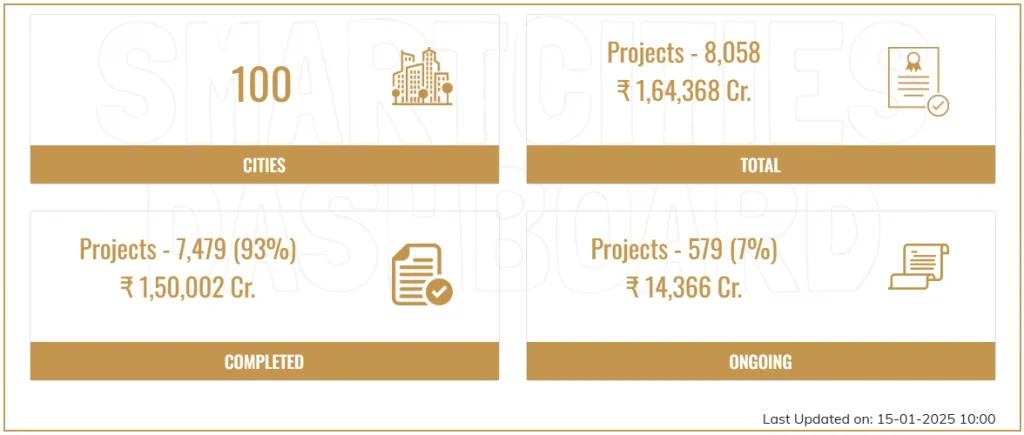
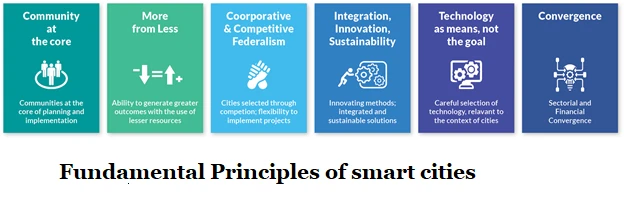
India’s approach to sustainable urban development has largely been channelled through the Smart Cities Mission, launched in 2015 to improve liveability through integrated planning, infrastructure upgrades, and technology-enabled governance, as outlined on the official Smart Cities Mission portal. To strengthen the climate dimension of urban planning, the ClimateSmart Cities Assessment Framework (CSCAF) was introduced by the National Institute of Urban Affairs to help cities assess performance across energy use, mobility, waste management, water systems, and climate resilience, moving sustainability evaluation beyond standalone projects or visual indicators of “greenness” as detailed in NIUA’s CSCAF documentation.
This blog examines ten Indian cities that demonstrate relatively strong progress on urban sustainability, based on observable improvements in governance, infrastructure systems, environmental management, and climate responsiveness. Rather than ranking cities on a single metric or equating sustainability with natural scenery alone, the focus here is on how urban systems function in practice, the geographic and institutional constraints cities operate under, and the specific policy and implementation levers that are shaping sustainable outcomes on the ground, consistent with broader global perspectives on sustainable urban development discussed by the World Economic Forum.
For this blog, sustainability is interpreted through urban systems and outcomes, not rankings or one-off initiatives. A city is considered sustainable if it demonstrates consistent, on-ground progress across multiple dimensions, instead of excelling in only one area.
Key criteria used in this assessment
Urban governance and service delivery: The ability of city institutions to plan, implement, and sustain improvements in core services such as water, sanitation, waste management, and public spaces.
Waste management and cleanliness: Performance in waste segregation, collection, processing, and long-term cleanliness outcomes, rather than short-term campaigns.
Energy use and climate responsiveness: Efforts to improve energy efficiency, adopt renewable energy, and address climate risks such as heat stress, flooding, or water scarcity.
Mobility, air quality, and public spaces: Progress toward public transport, walking, cycling, and cleaner mobility systems that reduce congestion and emissions while improving liveability.
Green and blue infrastructure: Protection and integration of green cover, lakes, rivers, wetlands, and open spaces into urban planning for heat mitigation, flood management, and ecological resilience.
Geographic and climatic context: Cities are assessed relative to their environmental setting—coastal, hill, floodplain, or inland—recognising that sustainability depends on managing local constraints effectively.
This approach avoids equating sustainability with natural scenery or heritage alone and instead focuses on how urban systems function in real conditions.
The Top 10 Green Cities of India today are:
1. Mysuru, Karnataka
Geographical context
Mysuru is an inland city in southern Karnataka, located on the Deccan Plateau. Its sustainability priorities are shaped by moderate rainfall, seasonal water availability, and controlled urban expansion rather than river-based infrastructure.
Why Mysuru ranks among India’s most sustainable cities (2026)
Mysuru stands out for consistent urban governance outcomes, particularly in cleanliness, waste management, and liveability, achieved through sustained municipal systems rather than one-off projects.
Key sustainability strengths
Waste management & cleanliness: Mysuru has been a consistent top performer under national urban cleanliness assessments, reflecting long-term improvements in segregation, collection, and citizen participation, as tracked through Swachh Survekshan .
Urban green cover: The city has focused on protecting and expanding green spaces through structured plantation and hill-area conservation efforts, including initiatives around Chamundi Hill, documented in independent sustainability case studies.
Planned urban governance: Mysuru’s relatively stable growth and service delivery align with the objectives of India’s Smart Cities Mission, emphasising integrated planning and municipal capacity rather than technology-led pilots.
Why it matters
Mysuru shows that mid-sized cities can achieve urban sustainability through governance consistency and system-level management, even without metropolitan-scale budgets or infrastructure.
2. Bengaluru, Karnataka
Geographical context
Bengaluru is located on the Deccan Plateau in southern India at a relatively high elevation, which historically gave it a moderate climate. Rapid urban expansion, however, has placed increasing pressure on water systems, green cover, mobility, and air quality.
Why Bengaluru ranks among India’s most sustainable cities (2026)
Despite severe growth pressures, Bengaluru continues to rank among India’s more sustainable large cities due to its active civil institutions, expanding climate governance, and early adoption of urban sustainability and resilience planning.
Key sustainability strengths
Urban climate planning: Bengaluru was among the first Indian cities to adopt a city-level climate action plan, focusing on emissions reduction, heat mitigation, and resilience, supported through municipal initiatives documented by the Bruhat Bengaluru Mahanagara Palike and climate-focused urban programmes.
Green spaces and urban biodiversity: The city retains a network of large urban parks and lake systems such as Lalbagh, Cubbon Park, and restored urban wetlands, which play a role in heat reduction and flood mitigation, as highlighted in urban ecology assessments by institutions like the Indian Institute of Science.
Public transport and mobility transition: Bengaluru has invested in mass transit systems such as Namma Metro and is expanding electric buses and non-motorised transport infrastructure, aligning with national sustainable mobility objectives under the Smart Cities and urban transport missions.
Civic engagement and decentralised action: Strong citizen participation in waste segregation, lake restoration, and neighbourhood-level sustainability initiatives has helped compensate for governance gaps, a feature frequently noted in independent urban governance studies.
Why it matters
Bengaluru demonstrates how large, fast-growing cities can still advance sustainability through institutional capacity, civic participation, and climate-aware planning, even while facing infrastructure stress.
3. Indore
Geographical context
Indore is located on the Malwa Plateau in central India and does not rely on a major river system, making sanitation, waste management, and service efficiency central to its urban sustainability outcomes.
Why Indore ranks among India’s most sustainable cities (2026)
Indore stands out for converting cleanliness and waste management from a campaign-driven exercise into a citywide operational system, supported by strong municipal enforcement and citizen participation.
Key sustainability strengths
Integrated waste management: Indore has consistently topped national urban cleanliness rankings by institutionalising waste segregation, decentralised processing, and daily monitoring, as reflected in outcomes tracked through Swachh Survekshan.
Behavioural change at scale: The city’s approach emphasises sustained public compliance and accountability rather than short-term drives, a model frequently cited in urban governance discussions around Indore’s transformation.
Systems-led Smart City focus: Indore’s Smart City initiatives prioritise transport, health services, and digital governance over isolated infrastructure projects, as outlined by Indore Smart City Limited.
Why it matters
Indore demonstrates that urban sustainability can be driven by operational discipline and governance consistency, even in fast-growing cities without major natural advantages.
4. Chandigarh
Geographical context
Chandigarh lies at the foothills of the Shivalik range in northern India. As a planned city with defined sectors, its sustainability outcomes are closely tied to land-use control and long-term urban design.
Why Chandigarh ranks among India’s most sustainable cities (2026)
Chandigarh stands out for planning-led sustainability, where green infrastructure, mobility, and public spaces are embedded into the city’s original design rather than added later as corrective measures.
Key sustainability strengths
High green cover: Chandigarh maintains one of the highest proportions of green cover among Indian cities, supported by structured green belts and protected urban forests managed by the city administration.
Urban planning continuity: The sector-based planning model continues to support walkability, low congestion, and equitable access to open spaces, helping preserve liveability despite population growth.
Environmental management: Tree density and non-forest green cover in Chandigarh remain among the highest nationally, as reflected in official environmental and land-use assessments referenced by state and central agencies.
Why it matters
Chandigarh demonstrates how strong urban design and planning continuity can deliver durable sustainability outcomes, even without heavy reliance on new technology or large-scale retrofits.
5. Pune
Geographical context
Pune is located on the leeward side of the Western Ghats in western India. Rapid population growth and daily commuter inflows place sustained pressure on transport systems, air quality, and land use.
Why Pune ranks among India’s most sustainable cities (2026)
Pune’s sustainability performance is driven primarily by mobility reform and people-centric street design, positioning transport as a core lever for reducing emissions and improving liveability.
Key sustainability strengths
Sustainable transport leadership: Pune has invested in public transport, cycling, and pedestrian infrastructure, earning international recognition through the Sustainable Transport Award, documented by the Institute for Transportation and Development Policy.
Active mobility and street design: The city has expanded footpaths, cycle tracks, and complete-street initiatives, helping shift short trips away from private vehicles.
Urban climate action: Pune has adopted city-level climate and resilience planning to manage emissions growth and heat stress as part of broader municipal sustainability efforts supported by national urban programmes.
Why it matters
Pune shows how transport and street-level design can anchor urban sustainability in fast-growing Indian cities facing congestion and air-quality challenges.
6. Gandhinagar
Geographical context
Gandhinagar is a planned capital city in western India, characterised by low-density development, defined green belts, and relatively controlled urban expansion.
Why Gandhinagar ranks among India’s most sustainable cities (2026)
Gandhinagar stands out for integrating renewable energy, green cover, and water management into everyday municipal functioning rather than treating sustainability as a separate add-on.
Key sustainability strengths
Renewable energy adoption: The city has expanded rooftop and public solar infrastructure, including solar-powered public buildings, aligning with Gujarat’s broader clean energy push documented in Smart City and urban development initiatives.
High per-capita green cover: Gandhinagar is known for its extensive tree cover and planned green corridors, which help moderate heat and support urban liveability.
Water efficiency measures: Rainwater harvesting and groundwater recharge systems are integrated into public buildings and urban layouts, reinforcing long-term water security.
Why it matters
Gandhinagar demonstrates how planned cities can mainstream sustainability through energy and ecological design, reducing the need for costly retrofits later.
7. Diu
Geographical context
Diu is a small coastal town with limited land area and high solar potential, making energy efficiency and resource optimisation central to its sustainability approach.
Why Diu ranks among India’s most sustainable cities (2026)
Diu stands out for demonstrating how small cities can achieve measurable climate outcomes by aligning infrastructure scale with renewable energy adoption.
Key sustainability strengths
Solar-powered urban operations: Diu became the first city in India to meet its daytime electricity demand entirely through solar power, a transition documented through government-led renewable energy reporting and Smart City programme updates.
Low-emission urban management: Compact city size has enabled effective street cleanliness, waste handling, and public-space maintenance without high resource intensity.
Climate-appropriate planning: Coastal conditions have shaped infrastructure choices that prioritise efficiency over expansion.
Why it matters
Diu shows that urban sustainability is not dependent on city size, and that targeted renewable energy adoption can deliver outsized climate benefits.
8. Surat
Geographical context
Surat is a riverine city located along the Tapi River in western India, making flood risk, water management, and climate resilience central to its urban sustainability priorities.
Why Surat ranks among India’s most sustainable cities (2026)
Surat stands out for embedding climate adaptation and resilience into urban planning, moving beyond reactive infrastructure toward system-level risk management.
Key sustainability strengths
Flood resilience and water systems: Surat has invested in drainage upgrades, river management, and early-warning systems to manage recurring flood risks, shaping its approach to climate-responsive urban governance through Smart City and municipal programmes.
Land restoration and biodiversity: Through projects supported under CITIIS, Surat has converted degraded urban land into biodiversity parks and water-retention spaces, aligning ecological restoration with public use.
Integrated urban planning: Sustainability efforts are coordinated across water, waste, and land-use planning rather than addressed through isolated projects.
Why it matters
Surat demonstrates how climate resilience can become a core pillar of urban sustainability, particularly for cities exposed to flooding and extreme weather.
9. Bhubaneswar
Geographical context
Bhubaneswar is located in eastern India on the coastal plains of Odisha, exposed to heat stress, cyclones, and rapid urban growth—making public space design and resilience planning essential.
Why Bhubaneswar ranks among India’s most sustainable cities (2026)
Bhubaneswar stands out for placing people-centric public spaces and active mobility at the core of its sustainability strategy, rather than treating sustainability as a purely environmental add-on.
Key sustainability strengths
Public space–led planning: The city’s Smart City projects prioritise streets, parks, and playgrounds as everyday urban infrastructure, supporting health, walkability, and social inclusion through initiatives implemented by Bhubaneswar Smart City Limited under the national Smart Cities framework.
Active mobility and liveability: Redesign of key corridors and neighbourhood spaces has focused on pedestrian safety, shaded walkways, and accessible open areas rather than vehicle throughput alone.
Citizen participation: Community involvement in managing and activating public spaces has helped sustain outcomes beyond initial capital investment.
Why it matters
Bhubaneswar shows how public spaces and active mobility can anchor urban sustainability, especially in climate-exposed, fast-growing cities.
10. Jamshedpur
Geographical context
Jamshedpur is an inland industrial city in eastern India, shaped by steel manufacturing and planned townships along the Subarnarekha and Kharkai river systems.
Why Jamshedpur ranks among India’s most sustainable cities (2026)
Jamshedpur stands out for maintaining high liveability and green cover within an industrial urban context, supported by long-term planning and integrated civic management rather than short-term environmental programs.
Key sustainability strengths
Green cover and open spaces: Nearly one-third of the city area is under green spaces, including parks and ecological buffers that moderate heat and improve urban air quality, a legacy of planned development around industrial townships.
Integrated urban services: Waste management, water supply, and public-space maintenance benefit from coordinated civic systems developed through institutional stewardship associated with the city’s industrial foundations, particularly Tata Steel’s long-standing urban management role.
Industrial–environment balance: Environmental management practices around manufacturing and urban services reflect an effort to balance industrial activity with ecological responsibility, distinguishing Jamshedpur from many peer industrial cities.
Why it matters
Jamshedpur demonstrates that industrial cities can still prioritise sustainability and liveability through planning continuity and institutional accountability.
CITIIS
CITIIS, or City Investments to Innovate, Integrate and Sustain, is a sub-component of the Government of India’s Smart Cities Mission.
CITIIS 1.0 is a joint program of the Ministry of Housing and Urban Affairs (MoHUA), Agence Francaise de Development (AFD), the European Union (EU), and the National Institute of Urban Affairs (NIUA). It aims to enhance sustainability, inclusion and liveability in cities across India through innovation-driven urban infrastructure projects, capacity building, and knowledge dissemination.
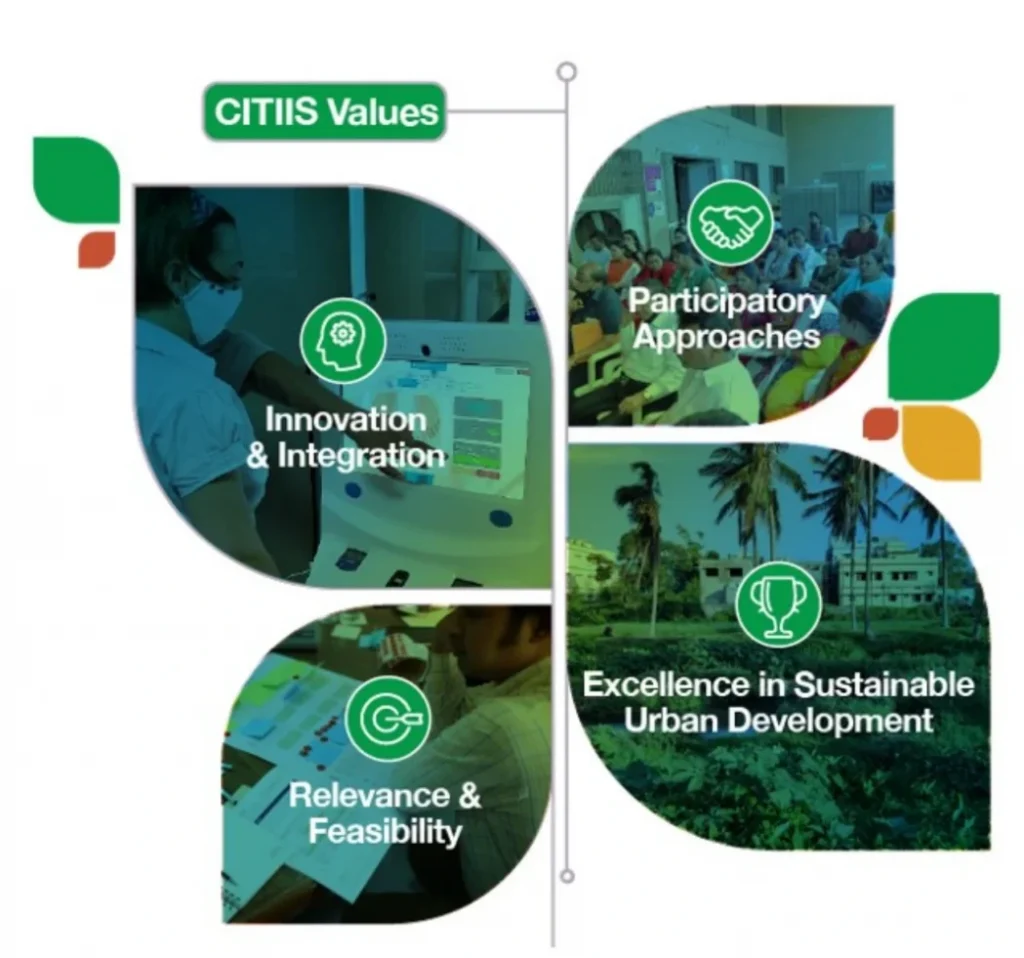
Some interesting projects under CITIIS:
Agartala gets a refreshed riverfront:
The capital city of the north-eastern Indian state of Tripura, Agartala sits along the Howrah River. The project called Agartala Smart City Limited (ASCL) is looking to reshape the riverfront – as well as the identity – of the city. It seeks to not only strengthen the embankments and build a responsible waste management system, but also sustain the biodiversity fostered by the river and build organic gardens. These gardens will further generate employment for the locals, especially women while preserving the area’s natural environment.
Bhubaneshwar reimagines public places:
Bhubaneshwar is the capital of the eastern state of Odisha and an important cultural centre in the region. The B-Active project designed by the Bhubaneshwar Smart City Limited (BSCL) aims to reinvent the city’s open spaces and find solutions to a number of other urban issues. BSCL’s initiatives are based on developing the city’s key assets, namely streets, parks and playgrounds, waterways and heritage areas. Besides empowering citizens to manage open spaces, these measures will also prioritize active recreation and organized sports as well as public health.
Surat, from wastelands to biodiversity hubs:
The historical port city of Surat lies in the western state of Gujarat. In order to increase Surat’s green cover and usable open spaces, the Surat Smart City Development Limited (SSCDL) proposed the winning idea of turning the city’s wastelands into an attractive biodiversity park. Not only will this clean up swathes of open spaces and turn them into flora and fauna habitats, but it will also provide a location for a public park. Moreover, the project will create and connect ponds, and help in the regulation and retention of rainwater.
Conclusion
These top 10 green cities of India in 2025 showcase the country’s commitment to sustainability and environmental conservation. Each city, with its unique initiatives and programs, contributes to a greener, cleaner, and more sustainable future. As these cities continue to innovate and implement eco-friendly practices, they set an example for others to follow, ensuring a healthier planet for future generations.
FAQs:
1. What makes a city sustainable in the Indian context?
A sustainable city in India is one that manages core urban systems—such as waste, water, energy, mobility, and public spaces—effectively over time, while reducing environmental risks and improving liveability. Sustainability depends on governance and outcomes, not just greenery or technology adoption.
2. How are sustainable cities different from smart cities?
Smart cities focus on improving service delivery using technology and data, while sustainable cities prioritise long-term environmental resilience, resource efficiency, and climate responsiveness. In India, programmes like the Smart Cities Mission increasingly integrate sustainability goals through frameworks such as climate action and resilience planning.
3. Are the top sustainable cities in India ranked officially?
No single official ranking comprehensively measures urban sustainability across all dimensions in India. This blog identifies cities based on observable system-level progress across governance, waste management, energy, mobility, and climate resilience, rather than a single score or ranking.
4. Why do mid-sized cities like Mysuru and Indore perform well on sustainability?
Mid-sized cities often benefit from manageable scale, stronger administrative control, and lower infrastructure stress compared to megacities. This allows sustainability initiatives—especially in waste management and service delivery—to be implemented more consistently and effectively.
5. How does the Smart Cities Mission support sustainability?
The Smart Cities Mission supports sustainability by funding integrated urban infrastructure, improving governance capacity, and enabling city-led planning. Tools like the ClimateSmart Cities Assessment Framework help cities assess and improve performance on climate and environmental indicators.
6. What role does CITIIS play in sustainable urban development?
CITIIS supports cities in implementing innovative, climate-responsive projects that integrate ecological restoration, resilience, and social inclusion. It helps translate sustainability goals into on-ground projects that can be replicated across cities.
7. Can large cities like Bengaluru and Pune still be sustainable?
Yes, but sustainability in large cities depends on system-level reforms rather than isolated projects. Investments in public transport, climate planning, and civic engagement play a crucial role in managing growth-related pressures.
8. Does renewable energy alone make a city sustainable?
No. While renewable energy is important, urban sustainability also depends on waste systems, water management, mobility, land use, governance, and climate resilience. Cities like Diu show how renewable energy can be a strong entry point, but it must be part of a broader system.
9. Why is climate resilience becoming central to urban sustainability?
Climate risks such as flooding, heat stress, and water scarcity increasingly affect Indian cities. Sustainable cities are those that plan for these risks proactively through infrastructure design, land use planning, and ecosystem protection

Other articles




We work with individuals, startups, and NGOs dedicated to forging a sustainable future. Tell us about your mission.

