
When heavy rain floods a city, the usual response is to build larger drains, deeper channels, or stronger concrete barriers. These systems are important, but they address only one part of the problem. Cities also need places where rainwater can spread, slow down, and temporarily collect.
Wetlands perform this function naturally.
Marshes, lakes, floodplains, mangroves, ponds, and other wet areas are often treated as unused land waiting to be developed. In reality, they are part of a city’s natural water infrastructure. They receive excess rainfall, reduce the speed of runoff, store water temporarily, improve water quality, and release water gradually.
The Convention on Wetlands identifies flood control, groundwater recharge, freshwater supply, and climate regulation among the important services wetlands provide. Protecting urban wetlands is therefore not only an environmental issue. It is also essential for disaster-risk reduction, water management, and sustainable urban development.
What Is a Wetland?

A wetland is an area where water covers the soil or remains close to the surface permanently or seasonally. The presence of water shapes the soil, vegetation, and ecological processes found there.
Wetlands include freshwater marshes, lakes, ponds, river floodplains, swamps, mangroves, estuaries, salt marshes, and peatlands. Some hold water throughout the year, while others become wet only during the monsoon or after heavy rainfall.
This seasonal character is important. A dry-looking depression or floodplain may still be an active wetland. During intense rain, it may become a temporary storage area that protects surrounding neighbourhoods.
Wetlands can also be human-made. Constructed wetlands, retention ponds, and restored urban lakes can support stormwater management when designed and maintained properly.
Why Urban Flooding Is Increasing
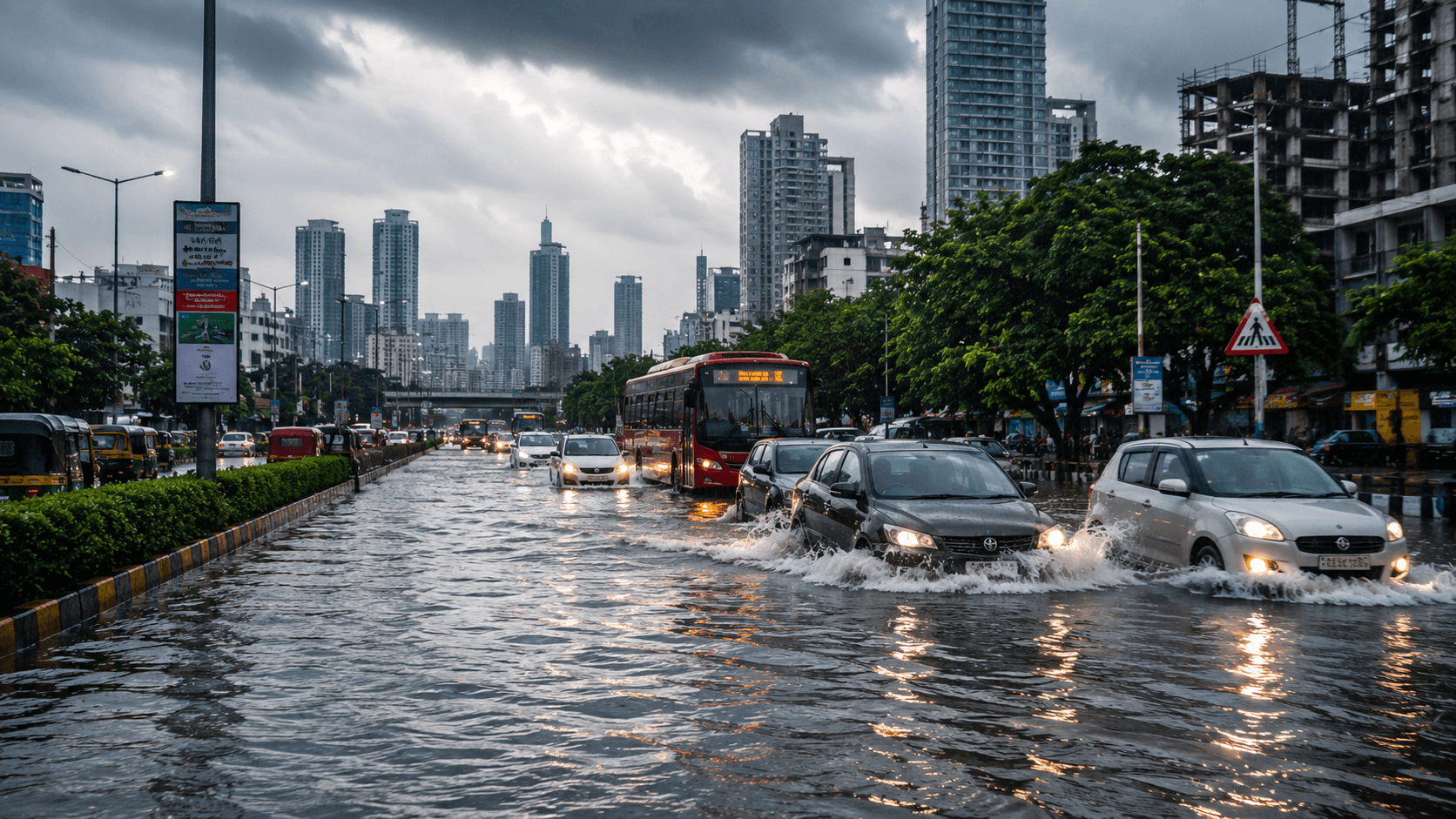
Urban floods are not caused by rainfall alone. They are often intensified by the way cities are built.
Natural soil absorbs part of the rain that falls on it. Vegetation slows water, while ponds, wetlands, lakes, and floodplains provide space for temporary storage. As cities expand, these surfaces are replaced by roads, buildings, parking areas, and concrete.
Rainwater then moves quickly across impermeable surfaces and enters drains in a short period. If drainage systems are blocked, undersized, poorly connected, or unable to handle the volume, water accumulates on streets and in low-lying areas.
The loss of wetlands removes another layer of protection. Water that would once have spread across a marsh or floodplain is forced into narrower drains and channels, increasing pressure on the urban drainage system.
Urban flooding is therefore both a drainage problem and a land-use problem.
How Wetlands Reduce Flooding
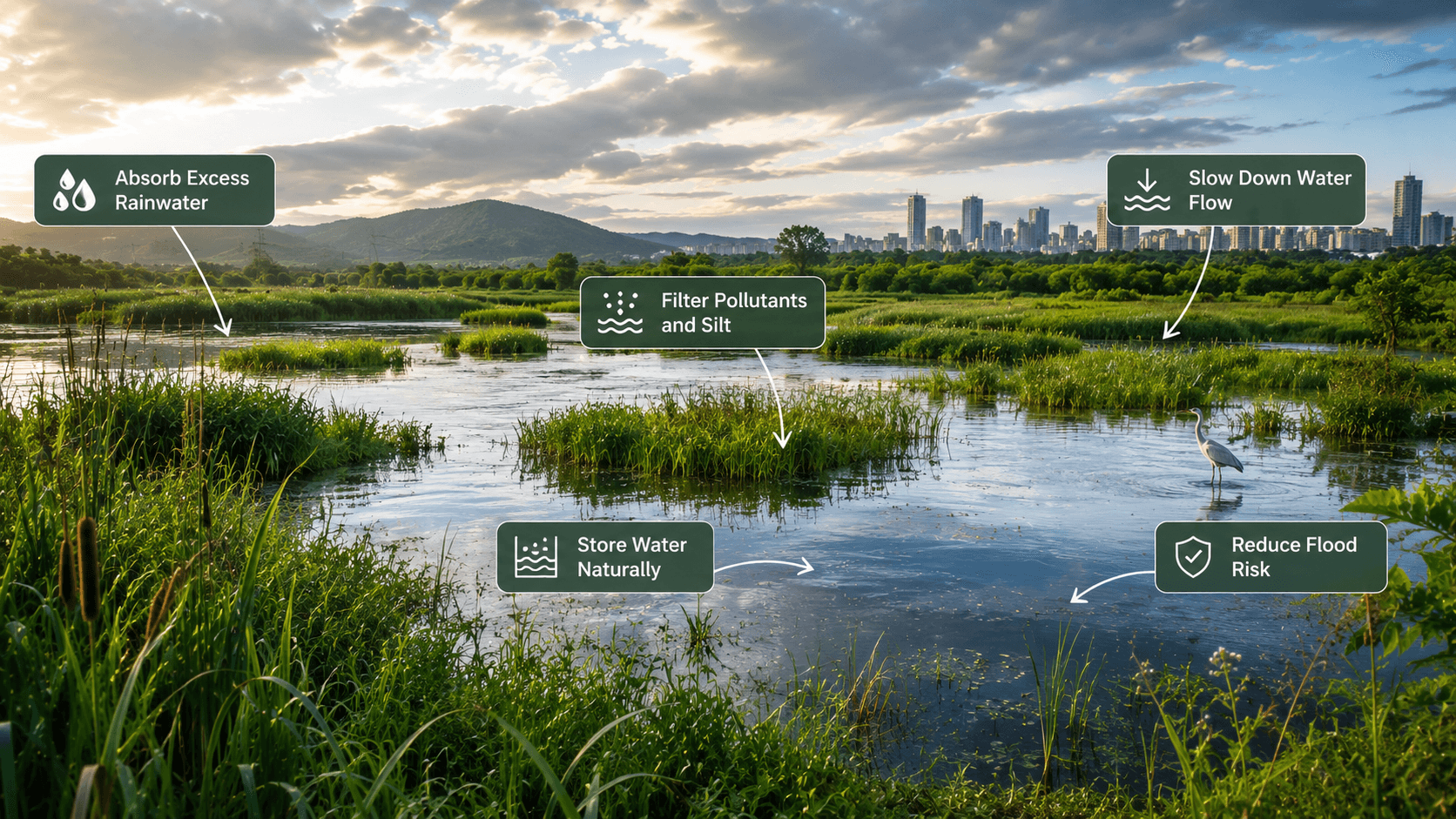
Wetlands are often described as natural sponges, but their role is more complex than simply absorbing water.
They provide space for excess water
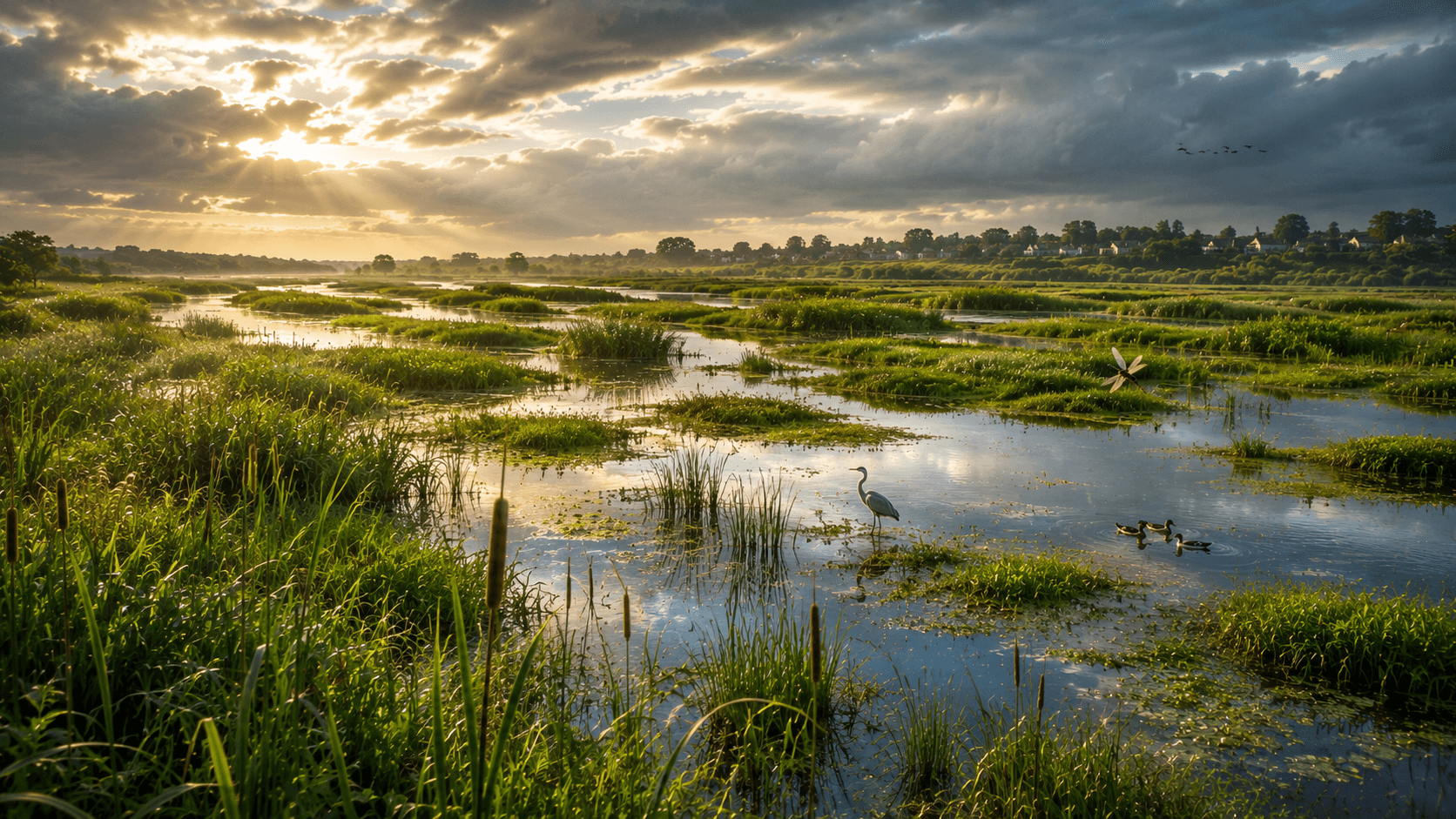
During heavy rainfall, wetlands temporarily store runoff from surrounding land. This reduces the amount of water entering urban drains and rivers at the same time.
The storage may last only a few hours or continue for several days, depending on the wetland, soil, vegetation, and rainfall. Even temporary storage can lower peak flood flows and give drainage systems more time to function.
The United Nations Environment Programme explains that wetlands soak up excess water and release it slowly, helping reduce the impact of flooding.
They slow the movement of runoff

Wetland plants, shallow water, uneven ground, and natural channels create resistance. Water moves more slowly through these landscapes than it does across concrete or through straightened drains.
Reducing water speed can lower erosion and decrease sudden pressure on downstream areas.
They support infiltration and recharge
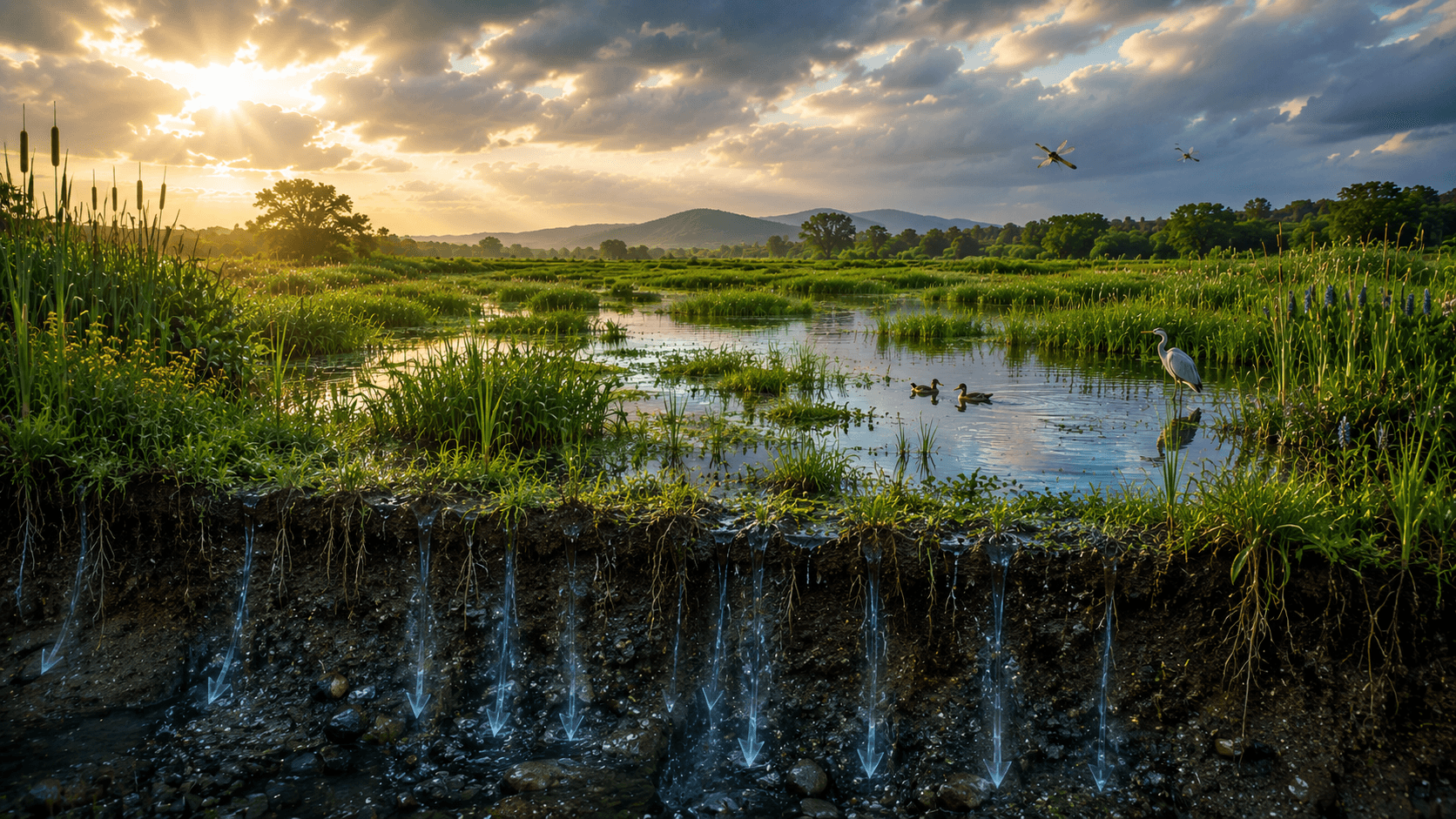
Some wetlands allow water to enter the soil and contribute to groundwater recharge. The amount depends on local geology, soil, and the type of wetland.
Not every wetland functions mainly as a recharge zone. However, retaining water within the landscape for longer can support infiltration compared with rapidly sending it out of the city.
They connect urban water systems
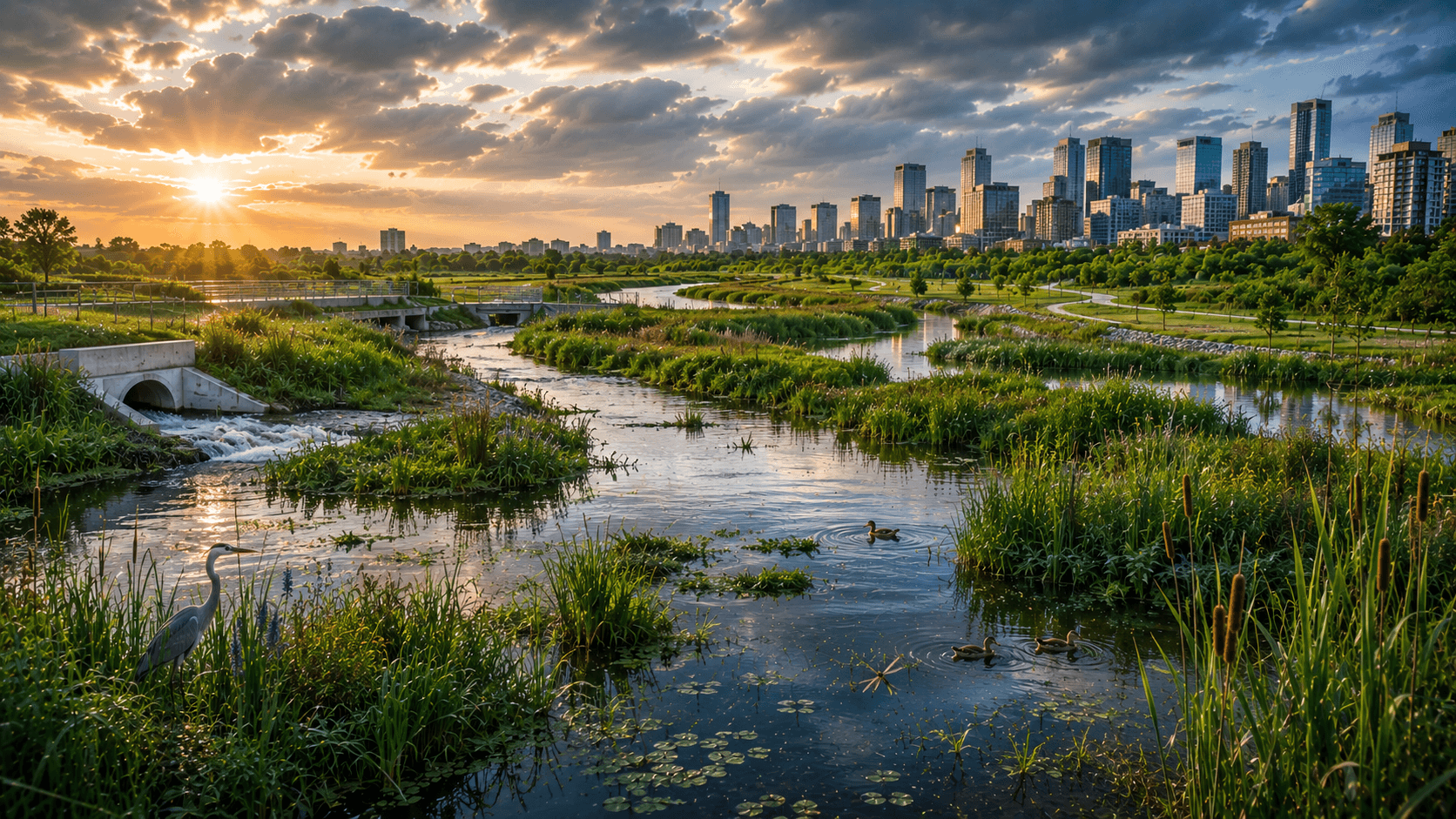
Wetlands are rarely isolated. They may be connected to lakes, streams, rivers, groundwater, drainage channels, and coastal ecosystems.
When these connections remain functional, water moves more naturally through the landscape. When wetlands are filled, divided by roads, or disconnected from their catchments, the wider drainage system becomes less effective.
Wetlands Do More Than Control Floods
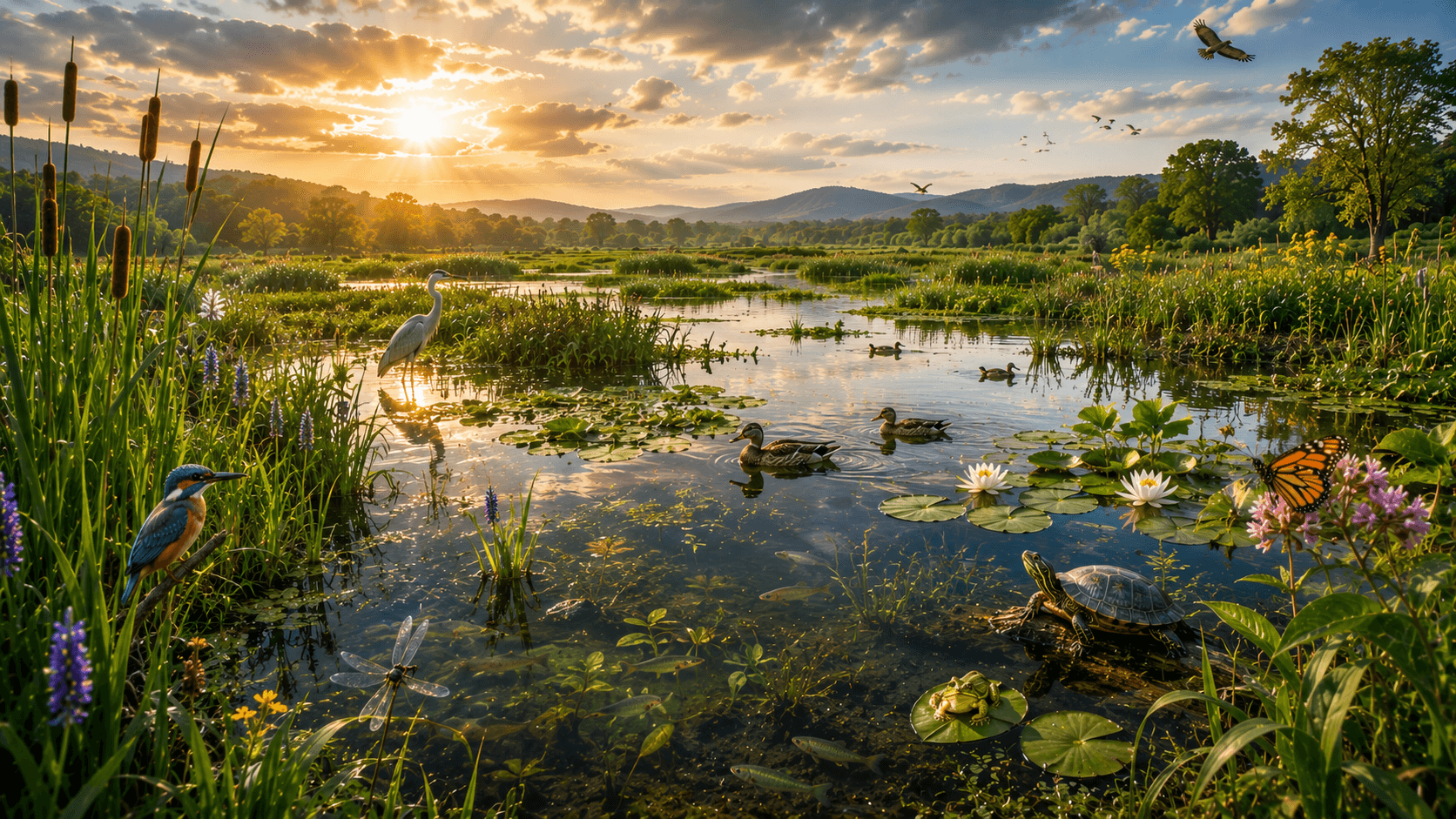
Flood protection is only one of the services provided by urban wetlands.
Wetland vegetation and soil can trap sediments and remove some nutrients and pollutants from water. This is why wetlands are sometimes called the kidneys of the landscape. However, they are not unlimited treatment plants. Excessive sewage, industrial discharge, solid waste, and chemicals can overwhelm and damage them.
Wetlands can also help regulate local temperatures. Open water, wet soil, and vegetation contribute to cooling, which is valuable in cities facing rising heat stress.
They support fish, birds, insects, amphibians, and plant life, while also providing recreation, education, livelihoods, and public open space. These benefits make well-managed wetlands social and economic assets, not obstacles to development.
Why Wetlands Disappear from Cities
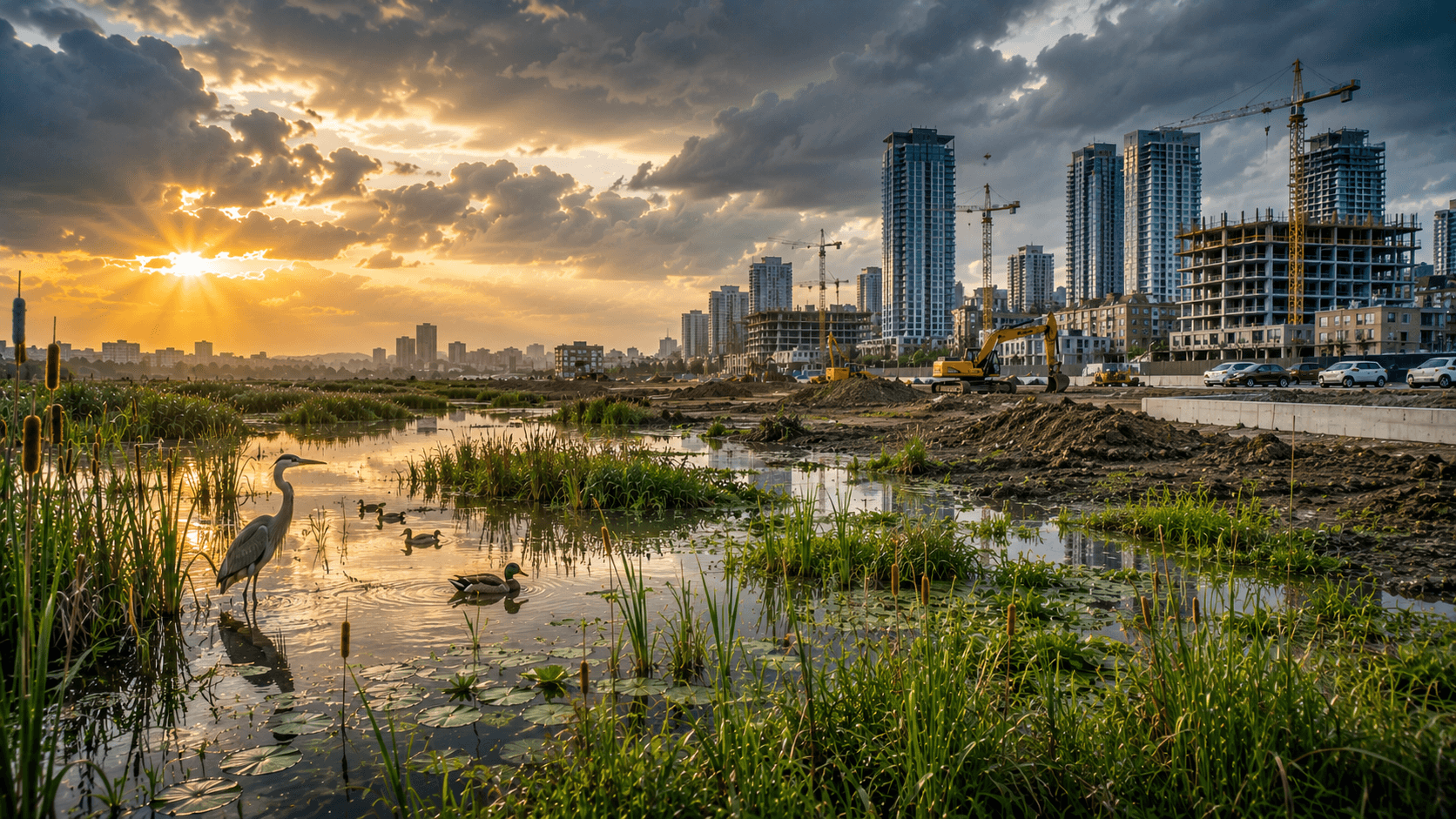
Urban wetlands are frequently lost because they are misunderstood.
Seasonal wetlands may appear dry for part of the year and be classified as vacant or developable land. Lakes and marshes may be filled for roads, housing, commercial construction, dumping grounds, or other infrastructure. Natural channels may be narrowed or blocked.
Pollution is another major threat. Untreated sewage, industrial wastewater, construction debris, plastics, and solid waste can reduce water quality and change the ecological character of a wetland.
Sometimes the waterbody remains visible, but its function is lost. A lake surrounded by concrete, disconnected from its inflow channels, and filled with sewage may no longer provide the same flood-storage capacity as a healthy wetland system.
Wetland protection must therefore focus on the full catchment, water connections, buffer zones, and ecological condition, not only the visible edge of the waterbody.
What Indian Cities Can Learn
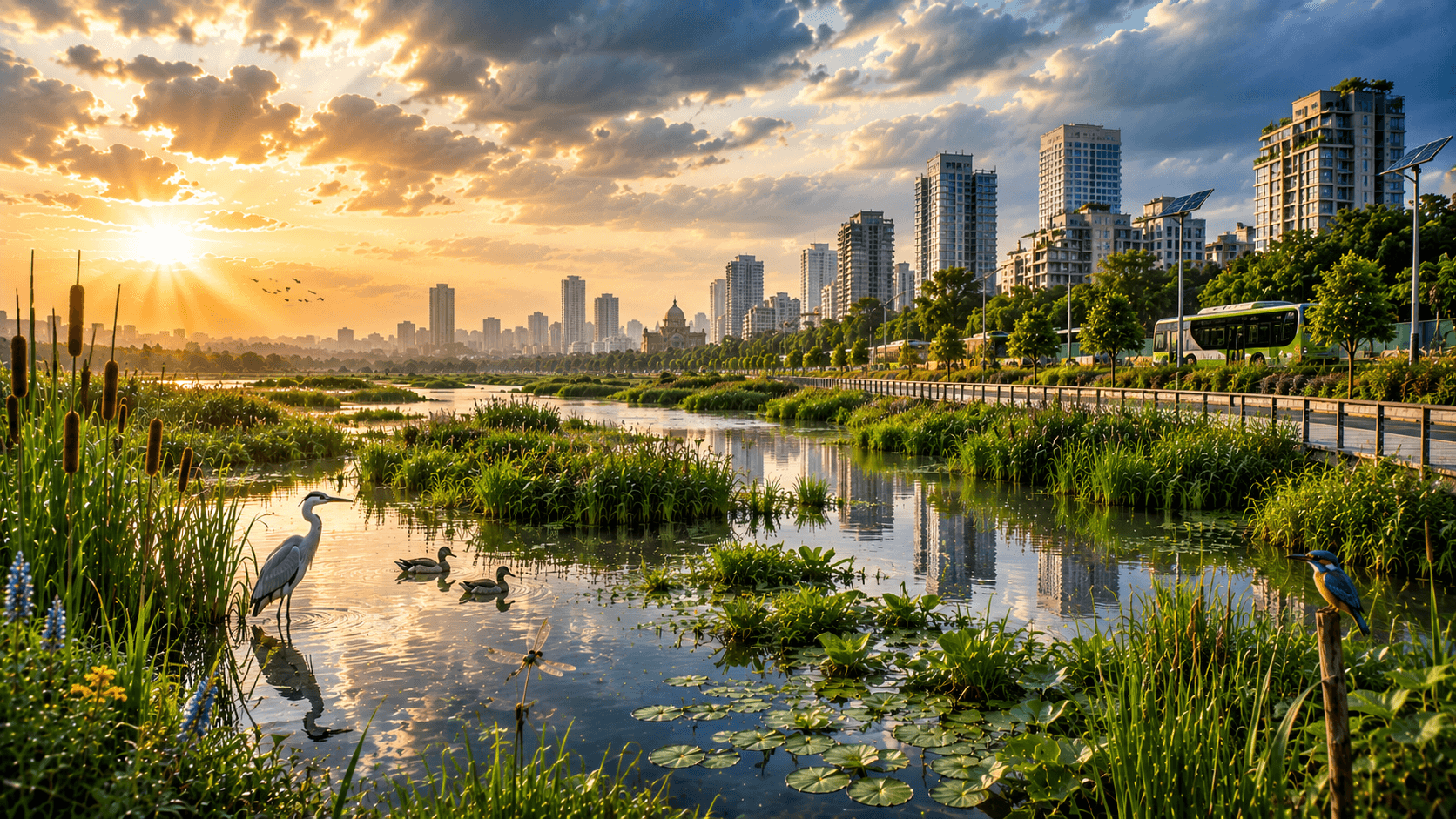
The relationship between wetlands and urban flooding is particularly relevant to rapidly growing Indian cities.
The Pallikaranai Marsh in Chennai is an important example. Its Ramsar documentation recognises the wetland’s role in flood prevention by receiving and holding water from surrounding areas. Protecting such wetlands is essential because they form part of the metropolitan drainage landscape.
Government audits of stormwater management have also shown that encroached drains, inadequate planning, poor maintenance, and disrupted water pathways contribute to waterlogging and flooding.
In Bengaluru, the Comptroller and Auditor General of India examined weaknesses in stormwater management and the disruption of interconnected lakes and drains.
The lesson is not that wetlands can replace drains. Cities need both. Wetlands, lakes, rivers, open spaces, rainwater harvesting, permeable surfaces, and engineered drainage must work as one connected system.
Wetlands and Grey Infrastructure Must Work Together

Traditional flood management relies on grey infrastructure such as drains, culverts, pumps, embankments, and concrete channels. These remain necessary, especially in dense urban areas.
But expanding drains alone may not solve flooding if natural storage areas continue to disappear. Moving water faster can also transfer flood risk downstream.
A more resilient approach combines grey infrastructure with nature-based solutions. Wetlands provide storage and slow runoff, while drains and pumps move water safely through built-up areas.
This approach is valuable because natural systems offer several benefits at once: flood reduction, water purification, cooling, habitat, and recreation.
The Ramsar guidance on urban wetlands encourages cities to integrate wetlands into urban planning, water management, and climate adaptation instead of treating them as isolated conservation areas.
How Cities Can Protect and Restore Wetlands
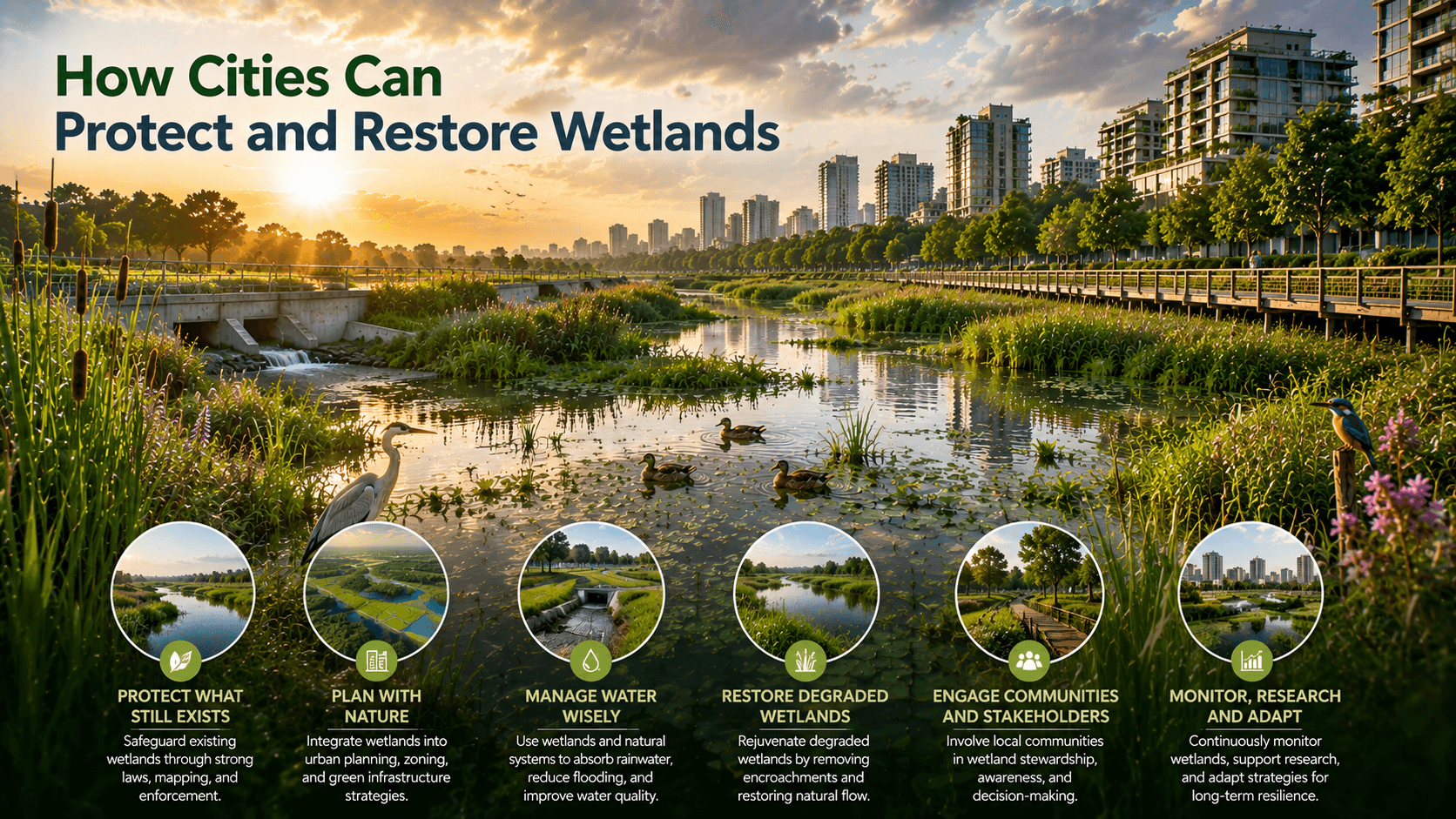
The first step is identification. Cities need updated maps of wetlands, floodplains, lakes, streams, drains, and catchment areas. Seasonal wetlands and smaller waterbodies should not be ignored simply because they are dry during part of the year.
Wetland boundaries and buffer areas must then be protected through land-use planning and enforcement. Construction should not block natural inflows, outflows, or flood-storage zones.
Restoration may involve:
removing solid waste and construction debris
preventing untreated sewage from entering the wetland
reopening blocked water channels
restoring native vegetation
reconnecting the wetland with its catchment
controlling invasive plant species
Desilting may sometimes be necessary, but it should be based on ecological and hydrological assessment rather than treated as a universal solution.
Cities should also monitor water quality, water levels, encroachment, and changes in wetland area. Local communities, researchers, planners, businesses, and government agencies all need to participate because wetlands are connected to many competing uses.
India’s Wetlands (Conservation and Management) Rules, 2017 provide a regulatory framework for the conservation and management of notified wetlands. Effective protection, however, also depends on local planning, enforcement, monitoring, and public participation.
Most importantly, restoration should not turn every wetland into a landscaped park. Excessive paving, lighting, construction, and beautification can damage the ecological functions that restoration is meant to protect.
Can Constructed Wetlands Support Cities?
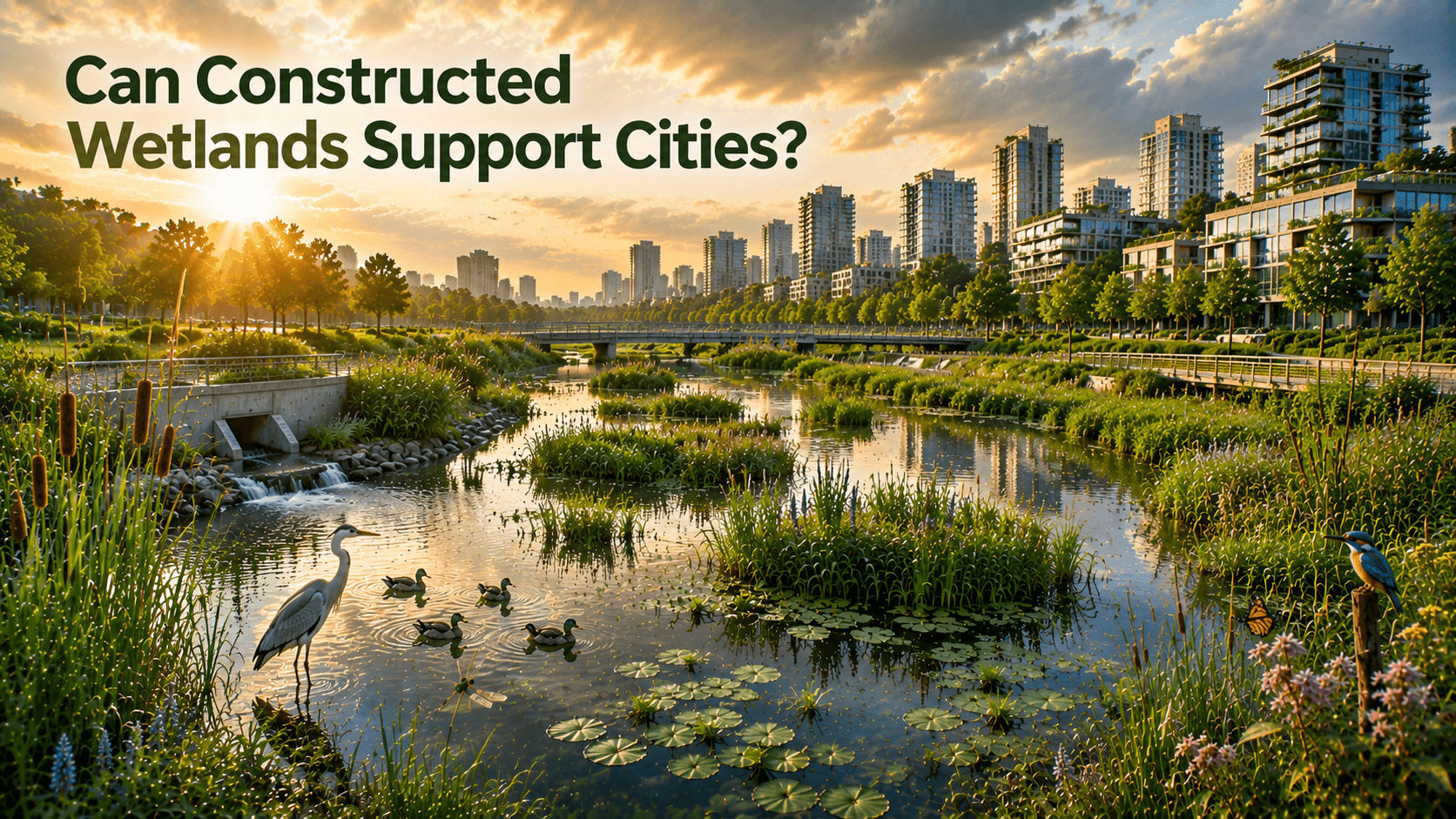
Constructed wetlands are engineered systems that use vegetation, soil, and shallow water to store or treat runoff and wastewater. They may be integrated into parks, housing projects, institutional campuses, industrial sites, and drainage networks.
They can support stormwater management and water treatment where properly designed. However, constructed wetlands should not become an excuse to destroy natural wetlands.
A newly created system rarely reproduces the full hydrological, ecological, and social value of a wetland that has developed over decades or centuries. Protecting existing wetlands should therefore remain the priority.
Conclusion
Wetlands are among the most useful forms of natural infrastructure available to cities. They create space for rainwater, reduce the speed and peak of runoff, support groundwater processes, improve water quality, cool urban areas, and strengthen resilience.
When wetlands are filled, polluted, or disconnected, cities lose these functions. The result becomes visible during intense rainfall, when drains overflow and water has nowhere to go.
Protecting wetlands does not mean rejecting urban development. It means planning development around the natural systems that make cities safer and more liveable.
The future of urban flood management cannot depend only on larger drains and higher walls. Resilient cities will need to retain water, restore natural pathways, protect floodplains, and treat wetlands as essential infrastructure.
A wetland may look like open land during a dry season. During a storm, however, it can become one of the most important parts of the city.
FAQs
1. What is a wetland?
A wetland is an area where water covers the soil permanently or seasonally, shaping its plants, soil, and ecosystem.
2. How do wetlands reduce flooding?
Wetlands store excess rainwater, slow runoff, and release water gradually, reducing pressure on drains and rivers.
3. Why are wetlands important for cities?
Wetlands support flood control, water management, cooling, pollution reduction, and urban resilience.
4. Can wetlands prevent urban flooding?
Wetlands cannot prevent every flood, but they can significantly reduce flood peaks and slow stormwater runoff.
5. What types of wetlands are found in cities?
Urban wetlands may include lakes, ponds, marshes, floodplains, mangroves, swamps, and seasonal waterbodies.
6. Why are urban wetlands disappearing?
Wetlands are often lost because of construction, encroachment, pollution, dumping, and blocked water channels.
7. Do wetlands help recharge groundwater?
Some wetlands support groundwater recharge by holding water longer and allowing it to enter the soil.
8. Can wetlands improve water quality?
Yes. Wetland soil and vegetation can trap sediments and remove some nutrients and pollutants from water.
9. Are constructed wetlands useful for cities?
Yes. Constructed wetlands can manage stormwater and treat wastewater, but they cannot fully replace natural wetlands.
10. How can cities protect wetlands?
Cities can protect wetlands through mapping, buffer zones, pollution control, restoration, monitoring, and better land-use planning.

Other articles



We work with individuals, startups, and NGOs dedicated to forging a sustainable future. Tell us about your mission.

